
The Weaning Transition

Weaning is the most consequential nutritional transition in a young Collared Aracari's life, and the way it is handled shapes the bird's dietary habits, independence, and psychological health for years to come. Unlike parrots, which may take weeks or months to wean fully, ramphastid fledglings tend to transition to self-feeding relatively quickly once they begin showing interest in solid food, typically between five and seven weeks of age. The key is to let the chick drive the pace rather than imposing an artificial timeline.

The first sign that weaning is approaching is the chick's growing curiosity about food items in its environment. A fledgling Collared Aracari will begin picking up, mouthing, and tossing small pieces of fruit well before it actually consumes any meaningful quantity. This exploratory behavior is essential and should be encouraged by placing shallow dishes of diced soft fruits in the enclosure from around five weeks of age. Papaya, banana, blueberries, and seedless grapes cut into appropriately small pieces are excellent first foods. Every fruit offered should be low in iron, consistent with the lifelong dietary requirement that protects ramphastids against hemochromatosis.

During the active weaning period, continue offering hand-feeding formula alongside the solid food options. Do not abruptly withdraw formula in an attempt to force the chick to eat solids. A chick that is pushed too hard during weaning may develop food anxiety, refuse new items, or lose weight precipitously. Instead, gradually reduce the number of daily formula feedings as the chick's solid food intake increases and its weight remains stable. Most Collared Aracari fledglings complete the transition from formula to a fully solid diet between seven and nine weeks of age, though individual variation is normal.

Weigh the chick daily throughout the weaning process. Weight is the most objective indicator of whether the transition is proceeding safely. A gradual weight plateau is expected during weaning as the chick's growth rate naturally slows and its activity level increases. A sharp decline in weight, however, signals that the chick is not consuming enough solid food to compensate for reduced formula intake, and the formula schedule should be temporarily increased until the chick demonstrates more consistent self-feeding.

Diet & Nutrition for Growing Aracaris

Once a juvenile Collared Aracari has fully weaned, establishing the correct long-term diet becomes the caregiver's most important ongoing responsibility. Ramphastid nutrition is fundamentally different from parrot nutrition, and applying parrot dietary principles to a toucan or aracari can have serious health consequences. The central dietary constraint for all ramphastids is iron. These birds absorb dietary iron with unusual efficiency and store it in the liver, where it accumulates over time and eventually causes organ damage if intake is not carefully controlled.

The foundation of a juvenile Collared Aracari's diet should be fresh, low-iron fruits. Papaya, banana, melon, blueberries, and grapes are staples. Citrus fruits should be offered sparingly or avoided entirely, as the vitamin C content enhances iron absorption, counteracting the low-iron strategy that protects the bird's liver. Dark leafy greens, which are high in iron, should not be a dietary component for ramphastids despite being recommended for many other bird species. This distinction catches many first-time aracari keepers off guard, particularly those with prior parrot experience.

A high-quality, low-iron softbill pellet should comprise approximately 40 to 50 percent of the daily diet by volume, with fresh fruits making up most of the remainder. Several manufacturers produce pellets specifically formulated for ramphastids, with iron content below 100 parts per million. Read labels carefully. Standard avian maintenance pellets often contain iron levels three to five times higher than what is safe for toucans and aracaris. If a ramphastid-specific pellet is not available locally, consult your avian veterinarian before substituting any alternative.

Protein supplementation is important during the juvenile growth phase. Small amounts of cooked egg, mealworms, or waxworms offered several times per week support muscle development and feather growth. In the wild, Collared Aracaris supplement their fruit diet with insects, small lizards, and the eggs of other bird species, so the inclusion of animal protein in the captive diet is biologically appropriate. Keep protein portions modest, as excessive protein can stress developing kidneys.

Fresh water must be available at all times. Aracaris tend to drink frequently, and they also enjoy bathing in their water dishes, which means the water should be changed multiple times daily. Consider providing a separate shallow bathing dish in addition to the drinking water to reduce contamination. Hydration is especially important for ramphastids because their high-fruit diet produces semi-liquid droppings that represent significant fluid output.

Flight Training & Physical Development

The juvenile stage is when a Collared Aracari develops the flight skills, coordination, and physical strength that will define its mobility and confidence for the rest of its life. Aracaris are agile, direct fliers in the wild, moving through forest canopy with rapid wingbeats and short glides. Providing a young aracari with adequate space and opportunity to develop these skills in captivity is not a luxury. It is a welfare requirement.

First flights typically occur between 40 and 45 days of age, coinciding with fledging from the nest cavity in the wild. In captivity, the fledgling may make its initial flight attempts within the brooder enclosure or rearing cage, often launching from a perch and fluttering to the floor. These early attempts are clumsy and brief. The bird's landing skills develop more slowly than its launch and sustained flight abilities, so expect crash landings and awkward recoveries for the first week or two. Ensure the rearing space has no hazards at floor level, and pad hard surfaces beneath perches during this learning period.

Once the fledgling demonstrates consistent short flights within its enclosure, supervised flight time in a larger, bird-safe room accelerates skill development dramatically. Close all windows and doors, cover mirrors and glass surfaces that the bird may not perceive as barriers, turn off ceiling fans, and remove any standing water in which the bird could land and become waterlogged. A juvenile aracari's flight feathers are not yet fully hardened, and the bird lacks the judgment to avoid hazards that an experienced adult would navigate instinctively.

Perching skills develop alongside flight. Juvenile Collared Aracaris need perches of varying diameters and textures to strengthen their feet and develop confident grip. Natural wood branches with bark intact are preferable to smooth dowels. The zygodactyl foot structure of ramphastids, with two toes pointing forward and two backward, gives them excellent grip strength, but the muscles and tendons supporting that grip need exercise during the juvenile period to reach their full capability. Provide perches at multiple heights within the enclosure to encourage climbing and controlled descent, both of which build the core muscle strength the bird needs for sustained flight.

The juvenile period is also when the bird's bill reaches its adult proportions. The Collared Aracari's bill, while not as dramatically oversized as that of larger toucan species, is still a significant structure relative to body size. The bird must learn to use it effectively for manipulating food, preening, perching balance, and social interaction. Offering whole fruits that require the bird to tear, hold, and manipulate with its bill supports the development of fine motor control that comes naturally in the wild but requires environmental enrichment to develop fully in captivity.

Enclosure & Housing Requirements

Housing a juvenile Collared Aracari properly requires a fundamentally different approach than housing a parrot of similar size. Aracaris are active, flight-oriented birds that spend their days moving through space rather than climbing and hanging the way parrots do. A standard parrot cage, no matter how large, is the wrong shape for a ramphastid. These birds need horizontal flight space, not vertical climbing space, and the enclosure must accommodate that need from the juvenile stage onward.

The minimum enclosure for a single juvenile Collared Aracari should be at least four feet long, two feet wide, and three feet tall. Larger is always better. Flight cages or small aviaries designed for softbills, with horizontal dimensions exceeding the vertical, allow the bird to fly short distances within its living space. Bar spacing should be no wider than three-quarters of an inch to prevent the bird from wedging its bill or head through the bars. Ramphastid bills are large relative to body size, and a bird that gets its bill caught in cage bars can injure itself seriously before being freed.

Perch placement should encourage movement across the full length of the enclosure. Position perches at each end with clear flight paths between them, rather than clustering them in the center. Use natural wood branches of varying diameters, secured firmly so they do not rotate or shift when the bird lands on them. Aracaris prefer perches that are slightly rough in texture, providing traction for their zygodactyl feet. Avoid sandpaper perch covers, which can abrade the skin on the underside of the toes and lead to bumblefoot infections.

The enclosure must include a roosting spot that mimics the enclosed tree cavities where Collared Aracaris sleep in the wild. A wooden nest box or a deep, enclosed roosting log mounted high in the cage gives the bird a dark, snug retreat for sleeping. Aracaris in the wild roost with their tails folded over their backs to fit inside tight cavities, and captive birds retain this behavior. The roosting box should be large enough for the bird to enter and turn around but small enough to feel secure. In cooler climates, the box also provides insulation during overnight temperature drops.

Cleanliness is paramount. The high-fruit diet produces voluminous, semi-liquid droppings that can quickly soil surfaces and create unsanitary conditions. Cage trays should be lined with disposable material and changed daily. Perches should be scrubbed regularly, and the roosting box should be cleaned at least twice weekly. Food and water dishes should be washed and refilled multiple times per day, as fruit residue in warm conditions becomes a medium for bacterial growth within hours.

Behavioral Development & Enrichment

Juvenile Collared Aracaris undergo rapid behavioral development that parallels their physical maturation. This is the stage when the bird's personality emerges, its social preferences solidify, and its intellectual curiosity demands engagement from its environment and its caregivers. Aracaris are intelligent, playful birds that can develop behavioral problems including feather destruction, excessive vocalization, and aggression if their enrichment needs are not met during this formative period.

Play behavior becomes prominent during the juvenile stage. Young aracaris are endlessly curious and will investigate, manipulate, and often destroy any object within reach. Provide a rotating selection of bird-safe toys that offer different textures, sounds, and challenges. Foraging toys that require the bird to extract food from compartments or unwrap items are particularly valuable because they engage the problem-solving skills the bird would use in the wild to locate fruit and insects in the forest canopy. Simple enrichment items like crumpled paper balls, untreated willow rings, and small cardboard boxes filled with treats can be as engaging as commercially manufactured toys.

Social interaction with humans should continue to deepen during the juvenile stage. Collared Aracaris that were hand-raised are typically comfortable with handling, but the nature of that interaction evolves as the bird matures. A juvenile aracari may enjoy sitting on a shoulder, riding along on a forearm, or playing interactive games with its caregiver. Establish consistent handling routines so the bird learns what to expect. Aracaris respond well to routine and can become anxious or resistant if interaction patterns change unpredictably.

If the bird will eventually be housed with a companion, the juvenile stage is the ideal time for supervised introductions. Collared Aracaris are generally gregarious and accept companions more readily than many parrot species, but introductions should still be gradual. Begin with the birds in adjacent cages where they can see and hear each other without physical contact. Once both birds appear relaxed and curious rather than fearful or aggressive, supervised direct contact in a neutral space can be attempted. Watch for bill fencing, which is a normal social behavior in aracaris, versus genuine aggression, which involves lunging, biting, and sustained chasing.

Bathing opportunities are an essential and often underappreciated form of enrichment for juvenile aracaris. These birds are enthusiastic bathers and should have daily access to a shallow dish of clean water large enough to splash in. Some aracaris prefer a gentle mist from a spray bottle, while others will eagerly enter a shallow stream of water from a faucet. Bathing promotes feather health, provides sensory stimulation, and serves as a natural outlet for energy. A bird that bathes regularly is a bird that is engaging with its environment in a healthy way.

Health Monitoring Through Adolescence

The juvenile and adolescent period is a window during which certain health conditions common to ramphastids may first become detectable. Regular veterinary check-ups, combined with attentive daily monitoring at home, form the health management framework that protects a young Collared Aracari as it matures. The avian veterinarian who examined the bird during the newborn stage should continue to provide care, building a longitudinal health record that makes early detection of trends and anomalies possible.

Iron storage disease remains the primary health concern throughout the Collared Aracari's life, and the juvenile period is when the foundation for prevention or early management is laid. A serum iron panel at six months of age, compared against the baseline established during the newborn screening, provides the first data point in what should be a lifelong monitoring trend. If iron levels are rising despite a carefully controlled low-iron diet, the veterinarian may recommend dietary adjustments, increased tannin-containing foods such as certain teas added to the water or diet, or other interventions to slow iron accumulation before it reaches clinically significant levels.

Feather development should be monitored throughout the juvenile molt cycle. The first partial molt, in which juvenile body feathers are gradually replaced by adult plumage, typically begins between three and five months of age. During this period, the bird may appear scruffy, may scratch and preen more frequently, and may be slightly more irritable than usual. These are normal responses to the physical discomfort of feather replacement. What is not normal is the appearance of stress bars across developing feathers, which indicate nutritional deficiency or illness during the period when those feathers were forming. Balding patches, broken feathers at the base, or feathers that fail to emerge from their sheaths properly also warrant veterinary evaluation.

Gastrointestinal health requires ongoing attention. The rapid transit time of food through a ramphastid's digestive system means that dietary indiscretions or low-grade infections can produce symptoms quickly. Monitor droppings daily for changes in consistency, color, or volume. A juvenile aracari on a proper low-iron fruit and pellet diet will produce semi-formed droppings with a noticeable but not overwhelming fruit-derived coloration. Droppings that become watery with no solid component, that develop an unusually strong odor, or that contain visible undigested food suggest digestive compromise that should be investigated.

Respiratory health deserves consistent monitoring, particularly if the bird is housed in a climate with significant temperature or humidity variations. Listen for any abnormal breathing sounds at rest, including clicking, wheezing, or wet respiratory noises. Aracaris that develop persistent tail-bobbing or labored breathing at rest, even without audible abnormalities, may be experiencing air sac disease or early aspergillosis. Annual or semi-annual wellness examinations that include a complete physical, blood work, and fecal screening form the minimum veterinary care standard for a juvenile Collared Aracari being managed for long-term health.

Preparing for Adulthood

The transition from juvenile to adult Collared Aracari is gradual rather than abrupt, occurring over several months as the bird's plumage, behavior, and physical proportions reach their mature form. Understanding what this transition looks like helps caregivers adjust their management approach at the right time rather than continuing juvenile-stage practices that the maturing bird has outgrown or abandoning supportive measures before the bird is ready to function independently.

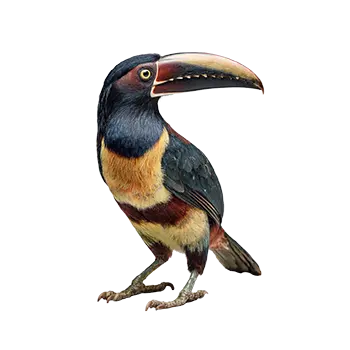
Physically, the juvenile-to-adult transition is marked by the completion of the first full molt, which brings the bird into its adult plumage. The distinctive black head, the vibrant yellow breast with its central red band, and the multicolored bill with its characteristic serrated edges all reach their final coloring during this period. The bill, which in juveniles is smaller and less colorfully marked than the adult structure, grows to its full proportions and hardens completely. By nine to twelve months of age, most Collared Aracaris are physically indistinguishable from adults, though behavioral maturity takes longer to develop fully.

Behaviorally, the late juvenile period often brings increased assertiveness and boundary-testing. A bird that was previously compliant during handling may begin resisting certain interactions, nipping more firmly, or vocalizing more loudly when its preferences are not accommodated. This is a normal developmental phase, analogous to adolescence in mammals, and should be met with calm, consistent responses rather than confrontation. Maintain established handling routines and boundaries without escalating in response to the bird's testing behavior. The phase passes, and the patterns established during this period become the baseline for the adult relationship.

Diet should be fully stabilized by this point. The bird should be consistently eating a balanced mix of low-iron softbill pellets and fresh fruits, with modest protein supplementation several times per week. If any dietary adjustments are needed based on the six-month iron panel or the veterinarian's assessment of body condition, implement them during this transition rather than waiting for the bird to be settled in its adult routine.

Housing needs may change as the bird reaches full size and activity level. Evaluate whether the juvenile enclosure still provides adequate flight space for an adult aracari. If the bird will eventually be housed with a companion, the enclosure must be large enough for two birds to fly, roost, and retreat to separate areas when needed. Begin any enclosure upgrades during the late juvenile period so the bird has time to acclimate to its new space before reaching full behavioral maturity. A move to a larger enclosure is a positive change, but any environmental transition should be managed gradually to minimize stress in a species that thrives on routine and predictability.

Always consult a qualified professional before making any health-related decisions. This content is provided for informational reference only and should not replace professional guidance specific to your animal.