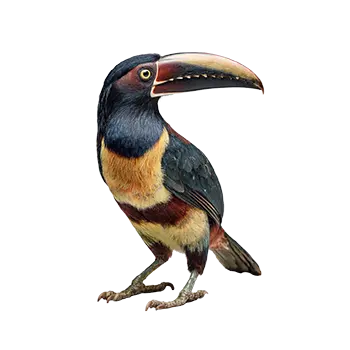

Collared Aracari chicks hatch after an incubation period of approximately 16 days, which is notably shorter than many parrot species of comparable size. The newly emerged chick is altricial, meaning it arrives blind, naked, and entirely helpless. At hatching, the chick weighs roughly 6 to 8 grams and bears no resemblance to the vividly colored adult it will become. The skin is translucent and pinkish, and the oversized bill is soft, pale, and disproportionately small compared to the adult structure it will eventually develop. During these first hours, the chick's survival depends entirely on warmth, humidity, and the timely onset of feeding.
In parent-raised clutches, the adults typically begin feeding the chick within the first few hours after hatching. Collared Aracaris in the wild are cooperative breeders, and in captive settings with group housing, multiple adults may participate in feeding duties. The first meals consist of regurgitated fruit pulp and small insects, providing the sugars, moisture, and protein the chick needs to fuel its rapid early metabolism. If you are hand-raising the chick, the first feeding should not be attempted until the yolk sac is fully absorbed, which generally occurs within six to ten hours post-hatch. Offering formula before yolk absorption is complete risks serious digestive complications.
The brooder environment is critical from the moment the chick leaves the egg. Ramphastid chicks are exceptionally sensitive to temperature fluctuations during the first 48 hours. Maintain brooder temperatures between 95 and 97 degrees Fahrenheit with relative humidity of 60 to 65 percent. Use a reliable digital thermometer and hygrometer placed at chick level, not at the top of the brooder where readings may differ significantly. The substrate should be soft paper towels or clean cloth, changed after every feeding to prevent bacterial buildup in the warm, humid environment.
Watch the chick carefully for signs of distress during this initial period. A healthy newborn Collared Aracari will exhibit a feeding response when the area around the beak is gently touched, will make soft vocalizations, and will have skin that appears uniformly pink without blotching or discoloration. Labored breathing, failure to respond to feeding stimulation, or a distended abdomen may indicate problems that require immediate veterinary attention from a practitioner experienced with ramphastid species.