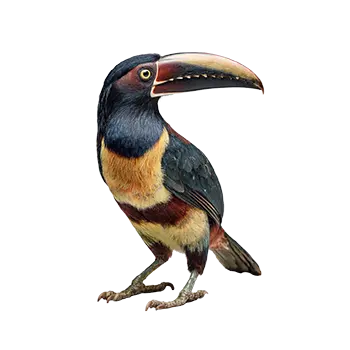

Understanding the Adult Collared Aracari

The Collared Aracari reaches full physical and behavioral maturity between twelve and eighteen months of age, entering a prime adult period that can span a decade or more under proper care. This is the stage at which the bird's plumage, bill coloring, and body proportions have reached their definitive form. The striking combination of a black head and upper breast, vivid yellow underparts marked by a single red band across the belly, and a multicolored bill with its distinctive serrated edge makes the adult Collared Aracari one of the most visually arresting birds in aviculture.

Physically, the adult Collared Aracari typically measures 15 to 16 inches in total length, with the bill accounting for roughly a quarter of that measurement. Body weight in a healthy adult ranges from 175 to 230 grams, with males tending toward the upper end of the range. Maintaining the bird within its healthy weight range is an ongoing management responsibility. An overweight aracari is at increased risk for fatty liver disease, which compounds the existing susceptibility to iron storage disease. An underweight bird may be experiencing illness, stress, or nutritional imbalance. A gram-accurate scale and weekly weigh-ins are essential tools for the adult bird's caregiver.

Behaviorally, the adult Collared Aracari is an active, curious, and social bird that requires consistent engagement with its environment and its human companions. Unlike many parrot species that may become one-person birds, aracaris generally maintain a broader social orientation, accepting interaction with multiple family members provided those relationships were established during the juvenile period. The bird's daily rhythm in captivity mirrors its wild pattern: active and vocal in the morning, somewhat quieter during midday, and active again in the late afternoon before retreating to the roosting box at dusk.

The prime adult years represent the period of greatest resilience and lowest health risk for the Collared Aracari, but this should not breed complacency. The dietary, environmental, and veterinary management practices established during the juvenile stage must continue without interruption. Iron accumulation is a gradual process that produces no visible symptoms until organ damage is already advanced. The healthy-looking adult bird eating an improper diet today may be the bird with liver failure three years from now. Prevention during the prime years is the only reliable strategy.

Adult Diet & Iron Management

Dietary management in the adult Collared Aracari is defined by a single imperative: keep iron intake low enough to prevent hepatic iron accumulation while providing complete nutrition that supports the bird's active lifestyle and annual molt cycle. This is not a passive concern that can be addressed with a single product choice and then forgotten. It requires ongoing attention to every item the bird consumes, including treats, enrichment foods, and anything the bird may encounter during supervised out-of-cage time.

The daily diet should consist of approximately 40 to 50 percent low-iron softbill pellets by volume and 50 to 60 percent fresh, low-iron fruits. Staple fruits include papaya, banana, cantaloupe, honeydew melon, blueberries, and seedless grapes. All fruits should be washed thoroughly and cut into pieces appropriate for the bird to pick up and manipulate with its bill. Aracaris do not shell seeds or crack nuts the way parrots do. Their bill is designed for grasping, tearing, and tossing fruit, and the food offered should accommodate that feeding style.

Foods to avoid in the adult diet include any pellet or treat with iron content exceeding 100 parts per million, dark leafy greens such as spinach and kale that are high in bioavailable iron, citrus fruits that enhance iron absorption through their vitamin C content, and raisins or other dried fruits that concentrate both sugars and minerals including iron. Red meat, liver, and other organ meats are absolutely prohibited. Even foods marketed as avian treats or supplements should have their iron content verified before being offered. The margin for error with ramphastid iron management is narrow, and cumulative exposure over years is what creates the clinical problem.

Protein supplementation remains appropriate for adults, though at reduced frequency compared to the juvenile growth phase. Offering small quantities of cooked egg, mealworms, crickets, or waxworms two to three times per week supports muscle maintenance and provides behavioral enrichment through prey-capture activity. In the wild, Collared Aracaris are opportunistic feeders that supplement their fruit diet with insects, spiders, small lizards, and the eggs of other birds. The inclusion of animal protein in the captive diet respects this biological need.

Fresh water must be available at all times and changed multiple times daily. Aracaris drink frequently and also use their water dishes for bathing and food-dunking behavior, which rapidly contaminates the water. Some keepers add a small amount of iron-chelating tea to the drinking water as a prophylactic measure against iron absorption. This practice has anecdotal support among experienced ramphastid breeders, but any supplementation strategy should be discussed with the avian veterinarian who manages the bird's iron monitoring.

Enclosure Design for Adult Birds

The adult Collared Aracari requires an enclosure that prioritizes horizontal flight space, accommodates the bird's social and roosting needs, and supports the environmental conditions appropriate for a tropical species. This is not a bird that thrives in a standard parrot cage. The enclosure must be designed around the aracari's natural movement patterns, which emphasize direct horizontal flight between perches rather than the vertical climbing that characterizes parrot locomotion.

The minimum recommended enclosure size for a single adult Collared Aracari is five feet long, three feet wide, and four feet tall. For a pair, the dimensions should increase to at least eight feet in length. Flight aviaries, whether indoor or outdoor with appropriate climate control, are the gold standard for ramphastid housing. The enclosure should allow the bird to fly a minimum of four to five wingbeats in a straight line between perches. Flight is not optional exercise for an aracari. It is the primary form of locomotion and cardiovascular conditioning that the bird's physiology requires.

Perch placement should create clear flight paths across the longest dimension of the enclosure. Position primary perches at each end, elevated to the upper third of the space, with additional perches at intermediate positions and varying heights to encourage movement throughout the full volume. Natural wood branches with bark intact are preferred for their varied diameter and texture, which exercises the foot muscles and prevents the pressure sores that can develop on smooth, uniform-diameter perches. Manzanita, eucalyptus, and fruit wood branches are commonly used. Avoid softwoods that splinter easily and any wood that has been treated with pesticides or preservatives.

The roosting box remains essential for the adult bird. Collared Aracaris roost inside enclosed cavities, folding their tails over their backs and tucking their bills against their breast feathers. The box should be mounted at the highest point in the enclosure, as the bird will naturally seek the most elevated available cavity. Line the interior with clean wood shavings or paper, and clean it at least twice weekly. If housing a pair or a small group, provide a roosting box large enough for all birds to enter simultaneously, as Collared Aracaris are communal roosters that derive security from physical proximity during sleep.

Temperature and humidity management are ongoing considerations for indoor-housed aracaris. The ambient temperature should remain between 65 and 82 degrees Fahrenheit. Brief excursions outside this range are tolerable for a healthy adult, but sustained exposure to temperatures below 60 degrees or above 90 degrees creates physiological stress. Humidity should be maintained between 50 and 65 percent. In dry climates or during winter months when heating systems reduce indoor humidity, a room humidifier near the enclosure helps prevent the dry skin, brittle feathers, and respiratory irritation that low humidity can produce in tropical species.

Social Needs & Companion Considerations

The Collared Aracari is among the most social of all ramphastid species. In the wild, these birds live in flocks of six to fifteen individuals, forage cooperatively, roost communally in tree cavities, and engage in extensive mutual preening and social play. A solitary captive aracari can be a well-adjusted and contented companion if its human family provides sufficient daily interaction, but the bird's social nature means that prolonged isolation without any companionship, human or avian, is a serious welfare concern.

For keepers who are able to provide multiple hours of daily interaction, a single Collared Aracari can thrive as the sole bird in the household. The critical factor is consistency. An aracari that receives three hours of social engagement every day adjusts its expectations accordingly. An aracari that receives five hours one day and thirty minutes the next becomes anxious and may develop stress-related behavioral problems including excessive vocalization, repetitive movements, or self-directed aggression. Establish a realistic daily interaction schedule and adhere to it.

Keeping a pair of Collared Aracaris is often recommended for households where the human family cannot guarantee consistent daily interaction. Two aracaris housed together will preen each other, play together, roost together, and provide the constant social feedback that a single bird would otherwise need from its human companions. Pair bonds in Collared Aracaris are generally amicable, though disputes over food, roosting position, or nesting resources can occur. Providing ample space, multiple feeding stations, and a roosting box large enough for both birds reduces the likelihood of conflict.

Introducing a new aracari to a resident bird should be done gradually regardless of the birds' ages or temperaments. Begin with the birds in separate enclosures within visual and auditory range of each other. Once both birds appear relaxed and interested rather than fearful or aggressive, allow supervised contact in a neutral space that neither bird considers its territory. Watch for bill fencing, which is a normal social behavior that involves rhythmic clacking and light sparring with the bills. Distinguish this from genuine aggression, which involves lunging, sustained chasing, and bites directed at the feet or eyes. Most introductions between Collared Aracaris proceed smoothly, but never leave newly introduced birds unsupervised until they have demonstrated consistent amicable behavior over several weeks.

Cross-species companionship is not recommended for Collared Aracaris. While aracaris are not typically aggressive toward other birds, their size, bill strength, and active play behavior can inadvertently injure smaller species. Conversely, larger parrots with powerful beaks can seriously harm an aracari, whose lightweight skeletal structure and thin skin make it vulnerable to bite injuries that a more robust bird might sustain without consequence.

Enrichment & Mental Stimulation

An adult Collared Aracari that lacks adequate mental stimulation will find ways to entertain itself, and the results are rarely constructive. Boredom in captive ramphastids manifests as destructive behavior directed at enclosure fixtures, repetitive stereotypic movements such as route-tracing or head-swaying, excessive vocalization, and in severe cases, self-directed feather destruction. Preventing these outcomes requires a sustained enrichment program that addresses the bird's cognitive, physical, and sensory needs.

Foraging enrichment is the most effective single category of stimulation for a captive aracari. In the wild, Collared Aracaris spend a significant portion of their waking hours searching for and extracting food. In captivity, food presented in a dish eliminates this natural time budget, leaving the bird with excess energy and unfulfilled foraging drive. Scatter feeding, where fruit pieces are distributed throughout the enclosure rather than concentrated in a dish, is the simplest form of foraging enrichment. Hiding food inside destructible containers such as paper bags, cardboard tubes, or wrapped in leaves extends the foraging challenge further. Commercial foraging toys designed for softbills can be incorporated into a rotation, but homemade enrichment is often equally effective and significantly less expensive.

Novelty is essential to maintaining the effectiveness of any enrichment program. The same toy or foraging puzzle becomes routine within days for an intelligent bird, and routine items lose their enrichment value. Maintain a library of enrichment items and rotate them on a schedule so that the bird encounters familiar objects infrequently enough that they retain some of their novelty. Introduce new items regularly and retire items that the bird consistently ignores. The goal is not to overwhelm the bird with constant novelty, which can itself become stressful, but to maintain a baseline level of environmental complexity that keeps the bird engaged.

Bathing continues to serve as both hygiene and enrichment for the adult bird. Offer bathing opportunities daily, varying the method occasionally between a shallow dish, a gentle spray mist, and a dripping faucet or fountain if the bird shows interest. Some aracaris develop strong preferences for a particular bathing method, while others enjoy variety. Bathing stimulates preening behavior, which occupies time and promotes feather condition. A bird that has just bathed and is engaged in an extended preening session is a bird that is behaviorally occupied in a species-appropriate way.

Acoustic enrichment is often overlooked but can be valuable for a social species like the Collared Aracari. The bird's natural sound environment includes a complex mix of bird calls, insect sounds, wind, and rain. Playing recordings of natural soundscapes at moderate volume during the day provides ambient auditory stimulation. Some keepers report that their aracaris vocalize more expressively and appear more settled when environmental sounds are provided compared to quiet or human-dominated sound environments.

Annual Health Management

The annual health management program for an adult Collared Aracari is built around two pillars: regular veterinary examinations and consistent daily monitoring at home. The adult bird's relative resilience during its prime years can create a false sense of security if the caregiver assumes that a healthy-appearing bird does not need veterinary attention. The most serious health threats facing captive ramphastids, particularly iron storage disease, develop gradually over years and produce no visible symptoms until the damage is advanced. By the time the bird looks sick, the window for effective intervention may have narrowed considerably.

Annual veterinary examinations should include a complete physical examination, a serum iron panel including ferritin levels, a complete blood count, blood chemistry including liver function markers, and a fecal analysis for parasites. The iron panel is the most critical component for ramphastid health management. Trending the bird's iron and ferritin values over time provides the earliest possible warning of iron accumulation. A rising trend, even if the absolute values are still within normal reference ranges, may prompt the veterinarian to recommend dietary adjustments or prophylactic interventions before clinical iron overload develops.

The annual molt is a physiologically demanding event that typically occurs once per year in adult Collared Aracaris. During the molt, the bird replaces its flight feathers and body feathers over a period of several weeks. Nutritional demands increase during this time, and the bird may benefit from slightly increased protein supplementation to support feather growth. Monitor the quality of incoming feathers. Well-formed, glossy feathers with clean edges indicate adequate nutrition. Feathers that emerge with stress bars, frayed edges, or dull coloring suggest nutritional deficiency or physiological stress during the growth period.

At home, the caregiver's daily monitoring should include observation of droppings, appetite, activity level, breathing, and general demeanor. Establish a clear picture of the bird's normal baseline so that deviations are recognizable. A bird that suddenly stops vocalizing when it is normally vocal, that perches with fluffed feathers and closed eyes during the active part of the day, that produces droppings dramatically different from its norm, or that shows labored breathing or tail-bobbing at rest is communicating a problem. Do not wait for multiple symptoms to accumulate before seeking veterinary advice. A single significant deviation from baseline warrants at least a phone consultation with the avian veterinarian.

Maintain a written health log that includes weekly weight, any observations about appetite or droppings, dates of veterinary visits, test results, and dietary changes. This longitudinal record is invaluable for identifying slow-developing trends that might not be apparent from a single data point. It also provides the veterinarian with the historical context needed to make informed clinical decisions when a health concern does arise.

Common Behavioral Challenges

Even well-socialized, properly housed adult Collared Aracaris can present behavioral challenges that require understanding and management rather than punishment. Aracaris are not domesticated animals. They are wild species maintained in captivity, and some degree of behavior that conflicts with human household expectations is inherent to the arrangement. The caregiver's task is to understand the biological motivations behind problematic behaviors and address the underlying needs rather than attempting to suppress the behavior through negative reinforcement.

Nipping and bill-jabbing are among the most commonly reported behavioral concerns in adult aracaris. The aracari's bill is a multipurpose tool used for feeding, preening, exploring, and social interaction. In the wild, aracaris use bill contact as part of their social communication, including during play, courtship, and establishment of social hierarchy. A captive aracari that nips at its caregiver's hands, ears, or face is not necessarily being aggressive. It may be engaging in social behavior that is normal for its species but painful or unwelcome for the human recipient. Redirecting bill activity toward appropriate targets, such as toys or offered food items, is more effective than punishment, which the bird does not understand in the way a dog or cat might.

Excessive vocalization is another common challenge, particularly in single birds that are left alone for extended periods. Collared Aracaris are not loud birds compared to macaws or cockatoos, but their sharp, yelping contact calls can be piercing at close range and can become problematic if the bird falls into a pattern of persistent calling. The most common trigger for excessive vocalization is social isolation or inconsistency in the daily routine. Addressing the underlying cause, providing more interaction, maintaining a consistent schedule, or adding an avian companion, is far more effective than attempting to quiet the bird through scolding or cage covers.

Territorial behavior may emerge in adult aracaris, particularly around the roosting box or preferred feeding stations. A bird that becomes aggressive when the caregiver approaches the roosting box or attempts to clean food dishes is expressing a natural protective instinct. Manage territorial behavior by establishing predictable routines around cage maintenance so the bird can anticipate and adjust to the intrusion. Approaching the cage calmly, speaking to the bird before reaching inside, and working efficiently during cleaning reduce the frequency and intensity of territorial displays.

Food-related behavioral patterns deserve attention as well. Some aracaris develop fixations on specific food items and refuse others, narrowing their dietary diversity over time. This selectivity can undermine the carefully balanced low-iron diet that the bird needs. Address food selectivity gradually by mixing preferred items with less-preferred ones, offering new foods consistently over time rather than giving up after a single refusal, and presenting familiar foods in new forms such as skewered, frozen, or hidden inside foraging toys. Patience and persistence are the most effective tools for expanding an adult aracari's dietary repertoire.

Always consult a qualified professional before making any health-related decisions. This content is provided for informational reference only and should not replace professional guidance specific to your animal.