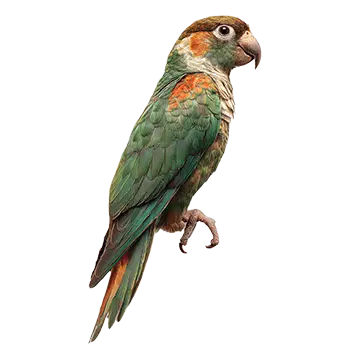

The juvenile stage of the Cape Parrot is a period of remarkable physical transformation. By the time a chick reaches approximately eight to twelve weeks of age, it has transitioned from the brooder to a weaning cage and is covered in a full set of juvenile plumage. The feathers at this stage are slightly duller than the vibrant greens of a mature adult, and the characteristic olive-brown head coloring may appear more muted. Over the coming months, successive molts will gradually replace juvenile feathers with the richer, more defined adult plumage.
Weight gain, which was rapid and consistent during the baby phase, begins to plateau as the young bird approaches its adult weight of approximately 300 to 400 grams. Some weight fluctuation is normal during weaning, and a modest temporary dip is expected as the bird transitions from formula to solid foods. However, significant or prolonged weight loss during this period should prompt a veterinary consultation to rule out illness or nutritional deficiency.
The beak and feet continue to strengthen and harden throughout the juvenile period. Cape Parrots have particularly robust beaks relative to their body size, and young birds will begin testing the strength of their beak on everything within reach. Providing appropriate chew materials such as untreated wood blocks, foraging toys, and natural branches is essential to support healthy beak development and wear.
Flight feathers reach full length during this stage, and the young Cape Parrot begins practicing flight with increasing confidence. This is a critical developmental period for building coordination, spatial awareness, and the chest musculature needed for sustained flight. Whether the bird will be flighted or clipped in the long term, allowing fledging to occur naturally is widely recommended by avian behaviorists, as it contributes to physical fitness and psychological confidence.