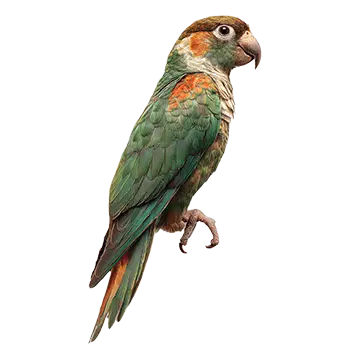

Breeding Readiness

Cape Parrots reach sexual maturity between four and six years of age, though breeding readiness involves far more than physical maturity alone. Successful breeding requires a pair that is in excellent health, well bonded, housed in appropriate conditions, and cared for by an experienced aviculturist who understands the species' specific requirements. Given the Cape Parrot's conservation status as a vulnerable species in the wild, captive breeding carries both a privilege and a responsibility that should not be taken lightly.

Before any breeding attempt, both birds should undergo a comprehensive veterinary examination including bloodwork, fecal analysis, and screening for common avian diseases such as Psittacine Beak and Feather Disease, polyomavirus, and chlamydiosis. Breeding birds that carry infectious diseases risks transmitting those diseases to offspring and other birds in the collection. DNA sexing should be confirmed if not already on record, as visual sexing of Cape Parrots can be unreliable despite some dimorphism in head coloring.

Pair compatibility is a significant factor in Cape Parrot breeding success. Unlike some parrot species that will readily accept any mate, Cape Parrots can be selective about their partners. A compatible pair will preen each other, share food, roost in close proximity, and demonstrate coordinated behavior. Aggression, persistent avoidance, or indifference between the birds suggests poor compatibility, and forcing a pairing rarely produces positive results. Some breeders maintain small groups from which birds can self-select their mates, an approach that more closely mirrors natural pair formation.

The breeding environment should be calm, private, and free from frequent disturbances. Cape Parrots in the wild nest in forest canopy cavities, and captive pairs require a sense of seclusion and security before they will commit to nesting. Positioning the breeding enclosure in a quiet area of the aviary or home, minimizing foot traffic and loud noise, and limiting the frequency of cage cleaning during the breeding season all help create the sense of safety that encourages reproductive behavior.

Courtship & Mating

Cape Parrot courtship is a nuanced and often subtle process that unfolds over days to weeks before mating occurs. The male typically initiates courtship through a combination of vocal displays, postural changes, and feeding behavior. Head bobbing, eye pinning, tail fanning, and wing drooping are common courtship signals, and the male will often regurgitate food for the female as a pair-bonding ritual that also serves as a nutritional supplement for the hen as she prepares for egg production.

The female's receptivity is indicated by her acceptance of regurgitated food, solicitation posture in which she crouches low on the perch with tail raised, and increased time spent inside or investigating the nest box. Once the female demonstrates consistent interest in the nesting site, mating typically follows within a few days. Copulation in parrots involves the male balancing on the female's back and briefly aligning their cloacae for sperm transfer, a process that may last only seconds but may be repeated multiple times over the course of several days.

Not all courtship leads to successful mating, and caregivers should resist the urge to intervene or manipulate the process. Environmental factors such as photoperiod, temperature, and food availability all influence breeding behavior, and artificially manipulating these conditions can lead to stress, aggression, or abnormal reproductive patterns. In the Southern Hemisphere, where Cape Parrots originate, the natural breeding season spans from approximately August through February, and captive birds often retain sensitivity to seasonal light cycle changes even in the Northern Hemisphere.

Monitoring the pair during the courtship and mating period should be as unobtrusive as possible. Remote observation through cameras or brief visual checks from a distance are preferable to frequent close approaches that may disrupt the pair's sense of privacy. Documenting behavioral observations, mating dates, and any changes in feeding or activity patterns creates a valuable record for tracking the breeding timeline.

Egg Laying & Incubation

Cape Parrots typically lay clutches of two to four eggs, with each egg laid approximately two to three days apart. The eggs are white and roughly oval, consistent with most parrot species. The hen usually begins incubation after the second or third egg is laid, which means the eggs will hatch asynchronously over the course of several days, producing chicks of slightly different ages and sizes within the same clutch.

The nest box should be of adequate size for the Cape Parrot pair, typically a wooden box measuring approximately 12 by 12 by 24 inches with a circular entrance hole of about 4 inches in diameter. A layer of untreated wood shavings or pine shavings on the floor of the box provides cushioning for the eggs and helps the hen maintain appropriate humidity levels within the nest. The box should be positioned high in the enclosure, as Cape Parrots prefer elevated nesting sites.

Incubation is performed primarily by the hen, who will spend the vast majority of her time inside the nest box for the duration of the approximately 28 to 30 day incubation period. The male takes on the role of provider, delivering food to the hen at the nest box entrance and standing guard against perceived threats. During this period, the hen's nutritional needs increase significantly, and the diet should be enriched with additional calcium sources, protein, and fresh produce to support her health during the demanding incubation period.

Candling the eggs at approximately 10 to 14 days into incubation can help determine fertility and embryo viability. This process involves briefly and carefully removing an egg from the nest and holding it against a bright, focused light source to visualize the developing embryo and blood vessels within. Fertile eggs will show a network of blood vessels and a visible embryo, while infertile or non-viable eggs will appear clear or show a blood ring indicating early embryonic death. Candling should be performed quickly and with clean hands to minimize contamination risk and disruption to the nesting hen.

Hatching & Early Chick Care

As the incubation period draws to a close, the first signs of hatching become apparent when the chick begins vocalizing from within the egg and creates a small pip, or crack, in the shell. The hatching process from initial pip to full emergence can take 24 to 48 hours, and caregivers must resist the overwhelming temptation to assist unless the chick is clearly unable to progress. Premature intervention can cause hemorrhaging from blood vessels that have not yet fully retracted, potentially leading to fatal blood loss.

Parent-raised chicks benefit enormously from the natural care provided by experienced breeding pairs. The hen broods the hatchlings almost continuously during the first week, maintaining body temperature and humidity at optimal levels. Both parents participate in feeding, with the hen doing the majority of direct feeding while the male supplies food to the hen. Monitoring should be conducted through brief, non-intrusive checks to confirm that the chicks' crops are being filled and that all hatchlings appear warm, hydrated, and responsive.

If hand-rearing is necessary due to parental neglect, illness, or breeding program protocols, the chicks should be transferred to a properly calibrated brooder set between 96 and 98 degrees Fahrenheit with humidity maintained at 60 to 65 percent. Hand-feeding should begin only after the chick has fully absorbed its yolk sac, typically 12 to 24 hours after hatching. A high-quality hand-feeding formula prepared according to manufacturer directions and served at 104 to 108 degrees Fahrenheit is essential for safe and effective hand-rearing.

In clutches with asynchronous hatching, the size disparity between the oldest and youngest chicks requires careful observation. The oldest chick may compete more aggressively for food, potentially leaving younger siblings underfed. If weight monitoring reveals that younger chicks are failing to thrive despite parental feeding, supplemental hand-feeding of the smaller chicks while leaving them with the parents can bridge the nutritional gap without completely disrupting the parent-rearing dynamic.

Postpartum Care

The postpartum period encompasses the recovery of the breeding hen, the ongoing development of the chicks, and the gradual return of both parents to their normal activity patterns. The hen's body has endured significant physiological demands through egg production, incubation, and chick rearing, and she requires attentive nutritional support and monitoring during recovery.

Calcium depletion is one of the most serious postpartum health risks for the breeding hen. The calcium required for eggshell production and the metabolic demands of incubation can leave the hen with significantly depleted mineral reserves. Clinical signs of calcium deficiency include muscle tremors, weakness, difficulty perching, and in severe cases, seizures. Continued supplementation of calcium-rich foods and, if recommended by the avian veterinarian, direct calcium supplementation help rebuild the hen's reserves during the recovery period.

The breeding pair should be allowed to parent their chicks for as long as the arrangement remains healthy and productive. Cape Parrot parents typically begin encouraging independence in their offspring at approximately eight to twelve weeks of age, gradually reducing feeding frequency as the chicks develop the ability to eat solid food on their own. This natural weaning process produces well-adjusted chicks with strong social skills and appropriate feeding behaviors.

A postpartum veterinary examination for the hen is recommended within a few weeks of the chicks' hatching or weaning, whichever is applicable. This checkup should include bloodwork to assess organ function and mineral levels, a physical examination to check for any reproductive complications, and a general health assessment to ensure the hen is recovering well. Breeding should not be attempted again until the hen has fully recovered, which typically requires a rest period of at least six to twelve months between clutches.

Responsible Breeding Ethics

Breeding Cape Parrots carries a unique ethical weight due to the species' conservation status. The Cape Parrot is classified as vulnerable by the International Union for Conservation of Nature, with wild populations estimated in the low thousands and threatened by habitat loss, disease, and illegal trapping. Captive breeding programs play an increasingly important role in maintaining genetic diversity and species viability, making responsible breeding practices not merely a personal choice but a conservation imperative.

Genetic management is a critical component of ethical Cape Parrot breeding. Inbreeding depression, which results from mating closely related birds, can lead to reduced fertility, weakened immune function, and increased susceptibility to disease in offspring. Responsible breeders maintain detailed pedigree records and coordinate with other breeders to ensure genetic diversity within the captive population. Regional and international studbook programs, where they exist, provide frameworks for managing genetics across breeding collections.

Every chick produced should have a secure, permanent home identified before breeding occurs. The market for companion Cape Parrots can fluctuate, and producing chicks without confirmed placements risks contributing to the population of unwanted or rehomed parrots. Responsible breeders screen potential buyers carefully, provide comprehensive care information, and maintain contact with buyers to offer ongoing support and, if necessary, take birds back if the placement does not work out.

Breeding for health and temperament rather than color mutations or market trends is an ethical standard that benefits both individual birds and the species as a whole. Cape Parrots should be bred with the goal of producing healthy, well-socialized offspring that are representative of the species' natural characteristics. Pursuing rare color mutations through selective breeding can narrow the genetic pool and introduce health problems, while prioritizing robust health and sound temperament ensures the long-term welfare of the captive population.

Transparency with veterinary records, band numbers, DNA sexing documentation, and disease testing results is a hallmark of ethical breeding practice. Reputable breeders provide all of this documentation to buyers as a matter of course and welcome inquiries about their breeding protocols, veterinary relationships, and facility conditions. Any breeder who is reluctant to share this information or who cannot provide verifiable health documentation should be viewed with significant caution by prospective buyers.

Always consult a qualified professional before making any health-related decisions. This content is provided for informational reference only and should not replace professional guidance specific to your animal.