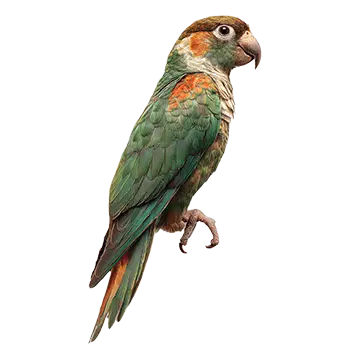

Peak Health Maintenance

A fully mature Cape Parrot is a robust and resilient bird when provided with consistent, attentive care. The adult stage, which begins around three to four years of age and extends through several decades, represents the longest phase of the Cape Parrot's life. During these prime years, the focus of care shifts from developmental milestones to maintaining peak physical condition and preventing the gradual onset of chronic health issues.

Annual veterinary examinations with an avian specialist form the cornerstone of preventive health care. These wellness visits should include a thorough physical exam, complete blood count, blood chemistry panel, and fecal analysis. Establishing annual baselines for blood values allows the veterinarian to detect subtle changes over time that might indicate early-stage liver disease, kidney dysfunction, or nutritional imbalances long before outward symptoms appear.

Weight management is a common challenge in captive Cape Parrots, as the combination of a calorie-rich diet and limited flight opportunity can lead to obesity. An overweight parrot faces increased risk of fatty liver disease, atherosclerosis, and joint stress. Regular weigh-ins, ideally weekly on a gram scale, help caregivers track trends and adjust diet and exercise accordingly. The target weight for an adult Cape Parrot typically falls between 300 and 400 grams, though individual variation exists.

Environmental safety remains an ongoing responsibility throughout the adult years. Cape Parrots are highly sensitive to airborne toxins, and many common household items pose serious risks. Nonstick cookware and appliances that release polytetrafluoroethylene fumes when overheated can be rapidly fatal to parrots. Aerosol sprays, scented candles, incense, cigarette smoke, and chemical cleaning products should never be used in proximity to the bird. Regular air quality awareness is as important as any dietary or veterinary consideration.

Nutrition at Maturity

The dietary needs of an adult Cape Parrot are well established by the time the bird reaches full maturity, but maintaining nutritional quality and variety requires ongoing attention. A high-quality pellet formulated for large parrots should constitute approximately 60 to 70 percent of the daily diet, providing balanced nutrition that is difficult to achieve through seeds and fresh foods alone.

Fresh vegetables and leafy greens should make up a significant portion of the remaining diet. Dark leafy greens such as kale, Swiss chard, dandelion greens, and collard greens are excellent sources of vitamins and minerals. Orange and yellow vegetables including sweet potato, butternut squash, and carrots provide beta-carotene and other beneficial nutrients. Fresh vegetables should be offered daily and removed before they spoil to prevent bacterial growth.

Fruit should be offered in moderation due to its high sugar content. Small portions of berries, mango, papaya, and pomegranate provide valuable antioxidants and add variety to the diet. Cape Parrots in the wild consume the fruits of yellowwood trees, which are high in fat and nutrients suited to their high metabolic demands. In captivity, healthy fats can be provided through limited quantities of nuts such as walnuts, almonds, and macadamia nuts, which also serve as excellent training rewards.

Seeds should be treated as occasional treats rather than dietary staples. Seed-heavy diets are one of the leading causes of malnutrition and obesity in captive parrots, as seeds are high in fat and deficient in many essential vitamins and minerals. Sunflower seeds and safflower seeds are particular favorites of Cape Parrots but should be limited to small quantities used primarily for training or foraging enrichment.

Fresh, clean water must be available at all times. Water dishes should be cleaned and refilled at least twice daily, as parrots frequently dunk food in their water, creating a breeding ground for bacteria. Some caregivers opt for water bottles as a cleaner alternative, though not all birds adapt readily to bottle drinking. Regardless of the delivery method, water quality and freshness are non-negotiable aspects of daily care.

Exercise & Enrichment

Physical and mental stimulation during the adult years is critical for preventing the behavioral and health problems that commonly affect under-stimulated captive parrots. Cape Parrots are intelligent, active birds that require daily opportunities for exercise, play, foraging, and social interaction to maintain their physical fitness and psychological wellbeing.

Flight remains the gold standard for parrot exercise, and adult Cape Parrots that are flighted should be given daily supervised flying time in a safe, enclosed space. The cardiovascular and musculoskeletal benefits of flight cannot be fully replicated by any other form of exercise. For flighted birds, the flying area should be carefully inspected for hazards each time before the bird is released, as even familiar rooms can present new dangers when furniture is moved or windows are opened.

Foraging enrichment addresses one of the most significant gaps between captive and wild parrot life. Wild Cape Parrots spend hours each day searching for, accessing, and processing food sources. In captivity, food is typically presented in an easily accessible bowl, eliminating the physical and mental effort of foraging. Introducing foraging challenges such as puzzle feeders, wrapped treats, foraging trays with hidden food items, and destructible toys that contain edible rewards restores this natural behavior and significantly reduces boredom.

Toy rotation is a simple but effective enrichment strategy. Rather than filling the cage with every available toy, offer a selection of three to five toys and rotate them every week or two. This approach keeps the bird's environment feeling fresh and novel without the expense of constantly purchasing new items. Include a mix of toy types: chewing and shredding toys for beak exercise, puzzle toys for cognitive challenge, swings and climbing structures for physical activity, and noise-making toys for auditory stimulation.

Social interaction with the human family is itself a form of enrichment that Cape Parrots crave. These birds form deep bonds with their caregivers and thrive on shared activities such as training sessions, mealtime companionship, conversation, and simply being present in the same room during daily activities. A Cape Parrot that is left alone in a quiet room for extended periods will eventually develop stress behaviors regardless of how well-equipped its cage may be.

Preventive Health Care

Beyond annual veterinary examinations, a comprehensive preventive health program for an adult Cape Parrot includes several ongoing practices that caregivers should integrate into their daily and weekly routines. Observation is the most powerful preventive tool available, as subtle changes in behavior, appetite, droppings, or vocalizations often provide the earliest indication that something is wrong.

Daily health monitoring should include visual assessment of droppings for changes in color, consistency, or volume. Normal Cape Parrot droppings consist of three components: feces, urates, and urine. The feces should be dark green to brownish green depending on diet, the urates should be white to slightly off-white, and the urine should be clear. Any significant deviation from these norms, particularly dark red or black feces, bright yellow or green urates, or excessive urine, warrants veterinary investigation.

Respiratory health requires constant vigilance. Parrots have a highly efficient but delicate respiratory system that makes them extraordinarily susceptible to airborne irritants and infections. Maintaining excellent air quality through regular ventilation, use of air purifiers with HEPA filters, and strict avoidance of aerosol products and fume-producing appliances near the bird is essential. Aspergillosis, a fungal respiratory infection, is a particular concern for Cape Parrots and thrives in damp, poorly ventilated environments.

Nail and beak maintenance is an ongoing aspect of adult parrot care. Providing natural wood perches of varying diameters helps maintain nail length naturally, but periodic trimming by an experienced handler or veterinarian may still be necessary. The beak, while largely self-maintaining through normal chewing activity, should be monitored for overgrowth, asymmetry, or abnormal texture. Beak abnormalities can indicate underlying nutritional deficiency, liver disease, or viral infection and should always be evaluated by a veterinarian.

Behavioral Maturity

By the time a Cape Parrot reaches full adulthood, its personality and behavioral patterns are well established, though the bird continues to learn and adapt throughout its life. Adult Cape Parrots are known for their even temperament, playful disposition, and strong capacity for bonding, qualities that make them exceptional companion birds when their social and environmental needs are met.

Hormonal behavior is a recurring feature of adult parrot life that caregivers must understand and manage. Cape Parrots typically experience hormonal surges during breeding season, which can manifest as increased territoriality, nesting behavior, regurgitation toward favored people or objects, and heightened sensitivity to handling. Managing hormonal behavior involves maintaining consistent light cycles of 10 to 12 hours of darkness, avoiding warm and enclosed spaces that mimic nesting cavities, and refraining from petting the bird on the back and under the wings, which can stimulate reproductive hormones.

Feather destructive behavior, commonly called feather plucking, is one of the most challenging behavioral issues in captive parrots and can emerge at any point during the adult years. The causes are multifactorial and may include boredom, stress, hormonal imbalance, nutritional deficiency, medical illness, or environmental factors. Addressing feather destructive behavior requires a thorough veterinary evaluation to rule out medical causes followed by a comprehensive assessment of the bird's diet, environment, social needs, and daily routine.

Socialization should continue throughout the adult years, not just during the juvenile period. Maintaining regular interaction with multiple people, introducing new experiences in a positive way, and providing opportunities for supervised exploration outside the cage all help prevent the social regression that can occur when a parrot's world becomes too small and predictable. An adult Cape Parrot that continues to encounter new people, places, and experiences remains more adaptable and resilient than one whose life has become rigidly routine.

Vocal development and language acquisition can continue well into adulthood. Cape Parrots are talented mimics and may add new words and sounds to their vocabulary for years after reaching maturity. Engaging the bird in regular conversation, narrating daily activities, and responding to the bird's vocalizations with enthusiasm reinforces communication and deepens the bond between bird and caregiver.

Grooming & Feather Care

Proper grooming supports the Cape Parrot's physical health, comfort, and appearance throughout the adult years. Feather care is a daily activity for the bird itself, as healthy parrots spend considerable time preening, aligning feather barbs, and distributing natural oils from the preen gland located at the base of the tail. A bird that has stopped preening or is preening excessively is communicating a health or behavioral problem that requires attention.

Bathing is an important component of feather maintenance. Most Cape Parrots enjoy regular bathing, whether through a gentle spray from a plant mister, a shallow dish of water, or supervised shower time with their owner. Bathing helps remove dust, dander, and debris from the feathers, stimulates preening behavior, and supports skin health. Water should be lukewarm and free of any soaps, shampoos, or additives. The frequency of bathing varies by individual preference, but most Cape Parrots benefit from bathing opportunities at least two to three times per week.

Molting occurs at least once annually and involves the gradual replacement of old feathers with new growth. During a molt, the bird may appear slightly disheveled and may be more irritable than usual due to the discomfort of new pin feathers emerging through the skin. Nutritional support during molting is important, as feather production demands significant protein and energy. Slightly increasing the proportion of protein-rich foods in the diet during active molting can support healthy feather regrowth.

Nail trimming should be performed as needed, typically every four to eight weeks depending on the bird's perching surfaces and activity level. Natural wood perches and concrete conditioning perches can help maintain nail length between trims. If nail trimming is performed at home, caregivers should have styptic powder readily available in case a nail is trimmed too short and bleeding occurs. Many caregivers prefer to have nail trims performed by an avian veterinarian or experienced bird groomer, particularly if the bird is anxious about the process.

Always consult a qualified professional before making any health-related decisions. This content is provided for informational reference only and should not replace professional guidance specific to your animal.