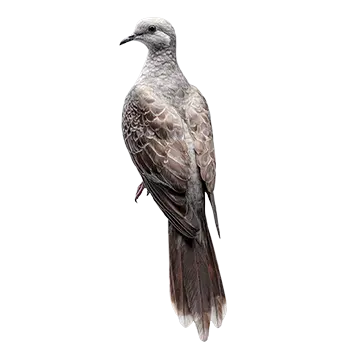

Cape Doves, with a typical captive lifespan of five to ten years, enter their senior period at approximately five to six years of age, though the onset of age-related changes varies by individual and is heavily influenced by lifetime husbandry quality. Recognizing the early signs of aging allows caregivers to make timely adjustments to diet, housing, and veterinary care that can significantly improve the bird's comfort and extend its functional years.
The most visible early sign of aging in a Cape Dove is a gradual change in plumage quality. Feathers may lose some of their crisp definition, appearing slightly duller or less tightly structured than in the bird's prime years. In males, the black facial bib may show small patches of grey or brown as individual feathers are replaced with less intensely pigmented successors. The long tail feathers, which are one of the Cape Dove's most distinctive features, may grow in shorter or less symmetrically after each successive molt. These changes are cosmetic and do not affect the bird's health, but they serve as visible markers that the aging process has begun.
Behavioral changes often precede physical decline. A senior Cape Dove may become less active overall, spending more time resting on a preferred perch and less time engaged in ground foraging, bathing, or flight. The bird's reaction time to stimuli may slow, and it may startle less readily than it did as a younger adult. Males may reduce or cease courtship displaying. These behavioral shifts are gradual and can be difficult to notice without the perspective of longitudinal observation, which is one reason that keeping behavioral notes over time is valuable.
Physical changes that accompany aging include a gradual reduction in muscle mass, particularly in the pectoral region, which may become apparent as a more prominent keel bone during handling. Joint stiffness can affect perching stability, and the bird may begin favoring wider, flatter perches over the natural branches it previously preferred. The feet themselves may show age-related changes such as thickened scales, drier skin, or mild swelling around the toe joints. None of these changes are emergencies on their own, but collectively they signal a bird whose physiological reserves are declining and whose care regimen should be recalibrated accordingly.