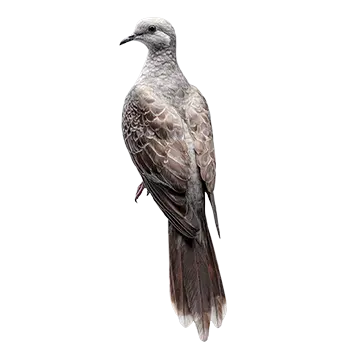

Breeding Readiness & Pair Selection

Successful Cape Dove breeding begins long before the first egg is laid. Selecting healthy, genetically compatible pairs and ensuring that both birds have reached full physiological maturity are foundational steps that determine clutch viability, chick health, and the welfare of the breeding pair itself. Cape Doves reach sexual maturity relatively early, with some individuals beginning to display courtship behavior as young as three to four months, but responsible breeders wait until birds are at least nine to twelve months old before allowing breeding to ensure full physical development.

Pair selection should prioritize health, vigor, and genetic diversity. Both prospective breeding birds should be free of chronic health conditions, in good body weight, and current on veterinary health screenings, including fecal examinations and crop swabs. Avoid pairing closely related individuals, as inbreeding depression in small dove species can manifest as reduced fertility, poor hatch rates, and increased susceptibility to disease in offspring. If the lineage of a bird is unknown, working with an experienced aviculturist or avian geneticist can help assess relatedness through physical phenotyping or, in some cases, DNA analysis.

Introducing a prospective pair requires patience and observation. Cape Doves can be aggressive toward unfamiliar conspecifics, particularly when one or both birds have been singly housed. Begin with visual introduction by placing the two birds in adjacent enclosures where they can see and hear each other without physical contact. Monitor their reactions over a period of one to two weeks. Positive signs include calm mutual preening through the bars, the male performing bowing displays toward the female, and the female adopting a receptive posture. Aggressive lunging, persistent chasing, or feather plucking upon introduction to a shared enclosure indicates that the pairing may not be compatible, and the birds should be separated and re-evaluated.

The breeding environment should be established before the pair is introduced to a shared enclosure. This includes installing nesting sites, ensuring adequate flight space, and verifying that the nutritional program is optimized for breeding. Setting up the environment in advance reduces the disruption to the pair once cohabitation begins and allows both birds to settle into their new surroundings without the additional stress of ongoing construction or rearrangement.

Courtship Behavior & Pair Bonding

Cape Dove courtship is a precisely choreographed behavioral sequence that serves both to attract a mate and to reinforce the pair bond throughout the breeding season. The male Cape Dove's courtship display is one of the most visually striking in the dove family, and understanding its components helps breeders assess pair compatibility and breeding readiness.

The male initiates courtship with a series of deep, rhythmic cooing vocalizations, typically delivered from an elevated perch within view of the female. This vocalization is accompanied by a bowing display in which the male lowers his head and chest, fans his long tail upward, and inflates his crop to enhance the visual impact of the black facial bib and breast patch. The bowing is performed in a repeated cadence, with the male raising and lowering his body in synchrony with his cooing calls. A receptive female responds by remaining nearby, orienting toward the male, and sometimes producing soft answering calls.

As the pair bond strengthens, courtship behavior progresses to include mutual preening and proximity resting. The male may present nest material to the female, carrying small twigs or grass stems to the nesting site and placing them before her. This material-offering behavior is both a practical contribution to nest construction and a behavioral display that demonstrates the male's commitment to the breeding effort. The female's acceptance of these offerings, rather than displacing the male from the nesting area, is a strong indicator that the pair has formed a functional bond.

Copulation typically occurs after a period of sustained courtship behavior and mutual engagement at the nest site. The male approaches the female with a distinctive strutting walk, tail fanned and head bobbing, and mounts briefly. Copulation in Cape Doves is rapid, lasting only a few seconds, and may occur multiple times daily during the peak of the breeding cycle. Following copulation, both birds often engage in a period of mutual preening or quiet proximity resting, reinforcing the social bond that underpins cooperative incubation and chick rearing.

Not all pair introductions result in successful bonding. Some individuals display persistent incompatibility despite extended introduction periods. Signs of a failed pairing include sustained aggression from either bird, the female consistently fleeing from the male's approach, or one bird monopolizing food and perching resources at the other's expense. Forcing an incompatible pairing risks injury, chronic stress, and infertile clutches. If bonding has not occurred within three to four weeks of supervised cohabitation, consider separating the pair and exploring alternative pairings.

Nesting & Egg Laying

Cape Doves are platform nesters that construct relatively simple, flat nests from small twigs, grass stems, and other fine plant material. In captivity, providing appropriate nesting infrastructure and materials significantly increases breeding success by allowing the birds to engage in natural nest-building behavior while ensuring that the nest is structurally sound enough to support eggs and chicks.

Offer a variety of nesting platform options, as individual pairs may have strong preferences. Shallow open-front nest boxes, wicker baskets secured to the enclosure wall, and flat wooden platforms placed at various heights are all acceptable. Cape Doves typically prefer nesting sites that are elevated but sheltered, with overhead cover that provides a sense of security. Position nesting platforms away from the highest-traffic areas of the enclosure and shield them from direct light to create a sense of seclusion.

Nesting material should include fine twigs, dried grass, coconut fiber, and small pieces of dried moss. Place the material on the enclosure floor and let both birds select and transport it to the chosen nesting site. The male typically does the majority of material delivery, while the female arranges it on the platform. Cape Dove nests are deliberately minimalist, consisting of a thin layer of material arranged in a shallow depression rather than the deep, woven cups built by many passerine species. Do not add excessive material to the nest, as the birds will construct it to their own specifications.

The typical Cape Dove clutch consists of two eggs, laid on consecutive days. The eggs are small, white or cream-colored, and glossy. Egg laying usually occurs in the late morning or early afternoon. Once the second egg is laid, both parents begin incubating in earnest, with the male typically sitting during the day and the female taking the night shift. This shared incubation duty is characteristic of columbiform species and ensures that the eggs receive nearly continuous warmth.

Monitor the nest discreetly during the egg-laying and early incubation period. Excessive disturbance can cause the pair to abandon the clutch. Brief daily visual checks from a distance are sufficient to confirm that incubation is proceeding normally. If an egg is found outside the nest or appears cracked, assess whether intervention is needed without prolonged handling. Cape Doves are generally attentive sitters, and nest abandonment is more commonly caused by external disturbance than by parental disinterest.

Incubation & Egg Management

The incubation period for Cape Dove eggs spans approximately 13 to 16 days, which is among the shortest of any commonly kept dove species. This brief incubation reflects the species' reproductive strategy of producing multiple clutches per breeding season rather than investing prolonged incubation effort in a single large clutch. Managing the incubation process, whether naturally by the parents or artificially in an incubator, requires attention to temperature, humidity, and timing.

Parent-incubated eggs require minimal human intervention, which is the preferred approach whenever the pair is reliably sitting. Both parents share incubation duties, and the transition between shifts occurs smoothly in well-bonded pairs. The eggs should feel warm to the touch if you briefly and gently check them during a natural nest change, and the parents should return promptly after any disturbance. If one parent is consistently absent from the nest for extended periods, investigate whether the absent bird is unwell, being displaced by a cage mate, or if some environmental stressor is disrupting normal brooding behavior.

Egg candling, the process of shining a focused light through the shell to visualize the contents, can be performed to assess fertility and embryonic development. For Cape Dove eggs, candling is most informative at five to seven days into incubation, by which point a fertile, developing egg will show visible blood vessel networks and a dark embryonic mass. Infertile eggs appear clear, and eggs in which the embryo has died show a dark, disorganized interior without defined vascular structure. Handle eggs with clean, dry hands and minimize the time they are out of the nest to prevent chilling.

Artificial incubation should be reserved for situations where the parents have abandoned a viable clutch, are consistently crushing eggs, or where hand-rearing from hatch is planned. Set the incubator to 99.5 degrees Fahrenheit with a relative humidity of 55 to 60 percent. Turn eggs manually three to five times daily or use an automatic turner. Increase humidity to 65 to 70 percent during the final two days before expected hatch to facilitate the chick's ability to pip through the shell membrane. Artificial incubation demands scrupulous temperature monitoring, as even minor deviations can be lethal to the tiny embryos.

Expect hatching to begin with the appearance of a small pip, or crack, in the eggshell, typically at the blunt end. The chick will work its way around the circumference of the egg over a period of several hours to a full day before pushing free of the shell. Resist the temptation to assist unless the chick has made no progress in 24 hours after the initial pip, as premature intervention can rupture blood vessels that have not yet retracted, causing fatal hemorrhage.

Breeding Season Management

Cape Doves are prolific breeders that, under favorable captive conditions of stable temperatures and ample food, can attempt to nest continuously throughout the year. While this reproductive vigor demonstrates the species' health and the adequacy of its care, uncontrolled breeding places severe physiological demands on the female, produces more offspring than most keepers can responsibly house, and increases the risk of egg binding and other reproductive complications.

Responsible breeding management means allowing a defined number of clutches per year and implementing strategies to discourage nesting during rest periods. Most aviculturists recommend permitting no more than two to three clutches per year for a Cape Dove hen, with rest periods of at least two months between breeding attempts. This schedule allows the female to replenish calcium reserves, recover body condition, and undergo her annual molt without the competing metabolic demand of egg production.

To discourage breeding during rest periods, reduce photoperiod to 10 hours of light per day, remove nesting material and platforms from the enclosure, and rearrange the enclosure layout to disrupt territorial behaviors associated with nesting. Adjusting the diet by reducing protein-rich supplements and softened seed can also help reduce hormonal stimulation. In some cases, separating the pair into adjacent but non-cohabiting enclosures during rest periods is the most effective strategy, though this should be done gradually to avoid the stress of abrupt separation.

Egg binding is the most serious acute reproductive emergency in female Cape Doves. This condition occurs when a fully formed egg becomes lodged in the reproductive tract and cannot be expelled. Signs include straining, tail pumping, a distended abdomen, fluffed feathers, lethargy, and an inability to perch. Egg binding is a veterinary emergency that requires immediate professional intervention. Risk factors include chronic calcium deficiency, dehydration, obesity, and excessive clutching without adequate rest periods. Ensuring optimal calcium and vitamin D3 status, maintaining proper hydration, and limiting clutch frequency are the best preventive measures.

Record keeping is fundamental to responsible breeding management. Maintain detailed records for each breeding pair including dates of clutch initiation, number of eggs, fertility rates, hatch dates, chick survival rates, and any health complications in either parent. These records allow you to track reproductive trends over time, identify pairs with consistently poor fertility or hatch rates, and make evidence-based decisions about breeding schedules, pair composition, and when to retire a hen from breeding.

Genetics & Color Variants

The genetics of Cape Dove plumage coloration follow well-characterized inheritance patterns that are of interest to both serious aviculturists and hobbyist breeders. Understanding the basic genetic mechanisms behind the wild-type plumage and established color mutations allows breeders to make informed pairing decisions, predict offspring phenotypes, and maintain genetic diversity within their breeding program.

The wild-type Cape Dove displays the species' characteristic coloration: males show a striking black face, throat, and breast bib contrasting with grey-brown upperparts, rufous wing patches, and a long, graduated tail with dark central feathers. Females are more uniformly brownish-grey, lacking the black bib and showing less contrast overall. This sexual dimorphism is genetically determined and becomes visible during the juvenile plumage transition, as described in the juvenile care section of this species guide.

Several color mutations have been established in captive Cape Dove populations. The most commonly available mutations include pied, which produces irregular patches of white distributed across the normal plumage pattern, and fawn or isabelle, which replaces the grey-brown tones with warmer, diluted tan coloration. Albino and lutino mutations, while rarer, also exist in captive lines. Each mutation follows a specific inheritance pattern, most commonly autosomal recessive, meaning that both parents must carry the gene for the mutation to appear in offspring.

Breeders working with color mutations must be vigilant about maintaining the health and vigor of their breeding stock. Some color mutations are associated with reduced fitness, as the genes affecting pigmentation can have pleiotropic effects on other physiological systems. Prioritize health, fertility, and temperament over color novelty when making pairing decisions. A visually striking mutation is of little value if it comes at the cost of chronic health problems, poor reproductive success, or behavioral abnormalities in the offspring.

Genetic diversity is a long-term concern for any breeding program, particularly one focused on a relatively uncommon avicultural species. Avoid repeated pairings of closely related individuals, maintain accurate pedigree records, and periodically introduce unrelated bloodlines to prevent the accumulation of deleterious recessive traits. Collaboration with other Cape Dove breeders through regional or national avicultural societies can facilitate the exchange of breeding stock and the sharing of genetic information that benefits the captive population as a whole.

Ethical Breeding Considerations

Breeding Cape Doves carries ethical responsibilities that extend beyond the mechanics of pairing, incubating, and rearing. Every chick produced needs a permanent, appropriate home, and the breeder bears the moral obligation of ensuring that sufficient demand exists before producing offspring. Overproduction of any avicultural species contributes to a surplus of birds that may end up in inadequate homes, passed through multiple owners, or surrendered to rescues that are already operating at capacity.

Before breeding, develop a clear plan for the placement of offspring. Identify potential homes, establish relationships with other aviculturists and dove enthusiasts, and be honest about the number of birds you can personally house if outside placements fall through. A responsible breeding program produces only the number of birds that can be confidently placed in appropriate homes, with the breeder retaining the willingness and capacity to take back any bird at any time if the placement does not work out.

The welfare of the breeding pair must remain central to every breeding decision. A hen that shows signs of reproductive stress, declining body condition, or unwillingness to sit should not be pushed through additional clutches to meet production targets. Similarly, a male that becomes excessively aggressive during breeding, whether toward the female, toward the chicks, or toward the caregiver, may need behavioral management or temporary breeding suspension rather than continued pairing.

Consider the broader context of Cape Dove aviculture when making breeding decisions. Wild populations of Oena capensis are currently stable across much of their range, so captive breeding does not serve a conservation imperative for this species. The primary purpose of captive breeding is the production of healthy, well-socialized companion birds and the preservation of genetic diversity within the captive population. Breeding programs that operate with these goals in mind, rather than maximizing production volume, contribute positively to the species' presence in aviculture while maintaining high welfare standards.

Transparency with prospective buyers or adopters is essential. Provide new owners with complete information about the bird's hatch date, parentage, health history, diet, and any behavioral characteristics observed during rearing. Offer ongoing support and guidance, particularly to first-time dove keepers, and make it clear that you are available as a resource for the life of the bird. Responsible placement is not a transaction that ends at the point of sale; it is the beginning of a long-term relationship between the breeder, the bird, and the new caregiver.

Always consult a qualified professional before making any health-related decisions. This content is provided for informational reference only and should not replace professional guidance specific to your animal.