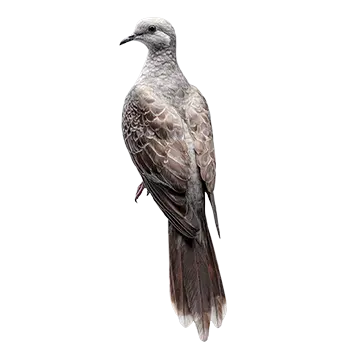

The Weaning Transition

Weaning is the defining event of the Cape Dove's juvenile period, marking the shift from complete dependence on formula or crop milk to self-sufficient seed consumption. In parent-raised Cape Doves, this transition begins naturally around days 14 to 16 and is largely complete by the time the chick is three weeks old. Hand-raised chicks may take slightly longer, particularly if they have not been given early opportunities to explore solid food textures during the newborn stage.

The weaning process should never be forced. Abrupt formula withdrawal in a chick that has not yet demonstrated consistent solid food intake leads to rapid weight loss, dehydration, and potentially fatal metabolic stress. Instead, begin by reducing the volume of each formula feeding by approximately 10 to 15 percent while simultaneously offering an abundant supply of small, easily consumed seeds. Foxtail millet, white millet, and finely cracked canary seed are excellent weaning foods for Cape Doves because their small grain size matches the chick's diminutive beak.

Observe the chick's crop after each solid meal to confirm that it is actually consuming and processing seed rather than merely playing with it. A crop that feels firm and grainy after a period of seed access indicates genuine intake. Continue offering supplemental formula feedings twice daily until the chick maintains stable weight for at least three consecutive days without formula. Some chicks wean abruptly, refusing formula one day and never looking back, while others taper gradually over the course of a week.

Water consumption becomes critically important during weaning, as the chick transitions from the high-moisture content of formula to dry seed. Provide clean, shallow water in a dish that the chick can access without risk of drowning. Cape Doves drink by submerging their beak and sipping continuously, a characteristic columbiform behavior, so the dish must be deep enough to accommodate this drinking style but stable enough to prevent tipping. Monitor water intake visually, and watch for signs of dehydration such as sunken eyes, loss of skin elasticity, or dark, concentrated urates.

Fledging & First Flight

Cape Doves are remarkably precocious fliers compared to many other dove species. Fledging typically occurs between 14 and 19 days of age, which is notably early and reflects the species' wild ecology, where rapid nest departure reduces predation risk. In captivity, the onset of flight readiness is signaled by vigorous wing-flapping exercises, short upward hops, and an increasing reluctance to remain in the nest or brooder.

Preparing the environment for first flight is essential to the chick's safety. Before the chick becomes airborne, move it to an enclosed space free of hazards. Windows and mirrors should be covered or screened, as a juvenile dove in its first flights cannot distinguish between open air and glass. Ceiling fans must be turned off. Open water containers, gaps behind furniture, and any spaces where a small bird could become trapped should be secured. A room with soft furnishings and minimal hard surfaces minimizes the risk of injury during the inevitable crash landings of early flight attempts.

The first flights are typically short, uncoordinated bursts that end with clumsy landings on whatever surface the chick reaches first. This is entirely normal. Over the course of several days, flight control improves dramatically as the chick's pectoral muscles strengthen and its neurological flight coordination matures. Encourage flight practice by placing food and perches at varying heights and distances, rewarding the chick's exploratory flights with accessible resources.

Parent-raised chicks that fledge within an aviary benefit from the modeling behavior of the adult birds. They observe the adults' flight patterns, landing techniques, and perching preferences, and incorporate these observations into their own developing abilities. If possible, maintain the juvenile in visual and auditory contact with adult Cape Doves during the fledging period, even if they are housed in adjacent rather than shared enclosures. This social learning component accelerates the development of competent flight behavior.

Diet & Nutritional Needs

A juvenile Cape Dove's diet must support the extraordinary metabolic demands of rapid growth, feather development, and the onset of flight. While adult Cape Doves are primarily granivorous, thriving on a diet dominated by small seeds, the juvenile's nutritional needs are more complex and require careful supplementation to ensure proper bone mineralization, muscle development, and immune function.

The foundation of the juvenile diet should be a high-quality small seed mix formulated for doves and finches. Foxtail millet, white proso millet, canary grass seed, and small quantities of niger seed provide the carbohydrate and fat base that fuels the juvenile's high metabolic rate. Avoid large seeds such as sunflower and safflower, which are too big for the Cape Dove's small beak and too fatty for regular consumption. Seed should be offered in a clean, shallow dish that is refreshed daily to prevent mold growth.

Supplementation is critical during the juvenile period. A calcium source, such as crushed cuttlebone, finely ground oyster shell, or a mineral block designed for small birds, should be available at all times. Calcium demand peaks during feather growth and skeletal ossification, and deficiency during this window can result in soft bones, bowed legs, and feather abnormalities that may never fully resolve. A small pinch of avian-specific vitamin and mineral powder sprinkled over damp seed two to three times per week provides additional micronutrient support.

Grit plays an important role in the Cape Dove's digestive process. Unlike parrots, which hull their seeds before swallowing, doves swallow seeds whole and rely on the muscular gizzard to grind them with the aid of ingested grit particles. Offer a fine-grade mineralized grit appropriate for small doves, kept in a separate dish from the seed so the bird can self-regulate its intake. Without adequate grit, a juvenile Cape Dove cannot efficiently extract nutrients from its seed diet, even if the seed quality and volume are otherwise appropriate.

Fresh foods should be introduced gradually during the juvenile period, though Cape Doves are generally less enthusiastic about produce than parrot species. Finely chopped dark leafy greens such as kale, dandelion greens, and romaine lettuce can be offered in small amounts. Some juveniles will nibble at these offerings while others show no interest. Do not discontinue the offerings simply because they are initially ignored; repeated exposure over weeks and months can gradually increase acceptance. Small amounts of sprouted seed provide enhanced nutritional value and a texture that many young doves find more appealing than dry raw vegetables.

Plumage Development & Sex Differentiation

The juvenile Cape Dove undergoes a dramatic transformation in appearance between fledging and sexual maturity, and this period offers the first reliable visual cues for sex determination. Hatchlings and very young chicks of both sexes appear essentially identical, with soft brownish-grey plumage and no distinguishing markings. It is during the juvenile molt, which begins at roughly four to six weeks of age, that the sexually dimorphic plumage of Oena capensis starts to emerge.

Male juvenile Cape Doves begin developing the distinctive black facial mask and breast bib that characterizes adult males. The mask appears gradually, starting as a darkening of the feathers around the lore and chin and progressively expanding to cover the face, throat, and upper breast. The long, graduated tail feathers that give the Cape Dove its characteristic silhouette also begin growing in during this period, initially shorter and less defined than in fully mature males but already noticeably longer than the tail feathers of female juveniles.

Female juveniles retain the softer, more uniformly brownish coloration seen in nestlings. Their plumage lacks the black facial markings entirely, and their tail feathers, while developing the typical graduated shape, remain shorter and less dramatically tapered than those of males. Females also tend to show more warm brown tones on the upper wing coverts, contrasting with the cooler grey tones that become increasingly prominent in juvenile males as they progress toward adult plumage.

The juvenile molt itself requires nutritional support and environmental consideration. Molting is metabolically expensive, demanding increased protein for feather keratin synthesis and elevated mineral intake for the structural components of the feather shaft. Ensure that the diet is adequately supplemented during this period, and maintain stable ambient temperatures in the enclosure to reduce additional thermoregulatory stress while feather coverage is temporarily reduced. A juvenile that stalls or arrests mid-molt, showing persistent pin feathers that fail to unfurl or bald patches that do not fill in on schedule, should be evaluated for nutritional deficiency, parasitic infection, or underlying disease.

Behavior & Social Development

The juvenile period is when a Cape Dove's personality and social behaviors crystallize. Behaviors that seem charming or inconsequential in a small, fluffy fledgling become the entrenched habits of the adult bird, so this is the window in which thoughtful management has the greatest impact on long-term temperament. Cape Doves are naturally reserved birds that prefer flight to confrontation, and the juvenile stage is when this baseline wariness is either moderated by positive experience or reinforced into full-blown flightiness.

Hand-raised juvenile Cape Doves that received consistent, gentle handling during the newborn period will typically remain relatively tame and tolerant of human interaction, though they are unlikely to become as overtly affectionate as a hand-raised parrot. The bond with a Cape Dove is expressed through calm proximity. A well-socialized juvenile will perch near its caregiver, accept treats from the hand, and remain relaxed during routine enclosure maintenance rather than erupting into panicked flight at every approach.

Social dynamics with other birds become increasingly important during adolescence. Cape Doves can be housed with other small, non-aggressive dove species and certain finch species, but introductions must be managed carefully. A juvenile that is placed directly into an established group may be bullied or denied access to food and perching sites by dominant adults. Gradual introductions using adjacent enclosures with visual contact for a period of one to two weeks allow all birds to acclimate before physical cohabitation begins.

Juvenile males may begin displaying preliminary courtship behaviors well before they reach full sexual maturity, including soft cooing vocalizations, bowing displays, and tail-fanning. These behaviors are normal developmental rehearsals and do not indicate readiness for breeding. Females at this stage typically show less overt behavioral change, though they may begin nest-site exploration, spending time in corners or secluded areas of the enclosure and manipulating nesting material if it is available.

Provide the juvenile Cape Dove with an enriched environment that encourages natural behaviors. Multiple perches at varying heights, shallow bathing dishes, foraging opportunities such as seed scattered on the enclosure floor, and safe, chewable items like small twigs or dried grasses all support healthy behavioral development. A barren enclosure with nothing but a food dish and a single perch does not provide adequate stimulation for a developing dove and can contribute to stress behaviors such as repetitive pacing or feather plucking.

Housing & Enclosure Requirements

As the Cape Dove transitions from the controlled environment of a brooder to a proper enclosure, the housing setup becomes a major determinant of the bird's physical health and psychological wellbeing. Despite their small size, Cape Doves are active, agile fliers that require more space than their diminutive stature might suggest. A juvenile Cape Dove should be housed in the enclosure it will occupy as an adult, or in one of equivalent size, to allow it to develop flight proficiency and establish familiarity with its permanent home.

The minimum recommended enclosure size for a single Cape Dove or a pair is 36 inches long by 18 inches deep by 24 inches tall, though larger is always preferable. Flight cages or small indoor aviaries that provide horizontal flight distance are ideal, as Cape Doves prefer low, fast flight patterns over vertical climbing. The bar spacing must be narrow enough to prevent the bird from squeezing through or getting its head caught, generally no wider than half an inch for a species this small.

Perch placement should accommodate the Cape Dove's preference for elevated roosting sites while leaving ample open flight space in the center of the enclosure. Natural branch perches of varying diameters promote foot health by exercising different grip muscles and preventing the pressure sores that develop from constant contact with uniform-diameter dowel perches. Position at least one perch high in the enclosure for nighttime roosting and one or two lower perches near food and water stations.

The enclosure floor requires regular attention. Cape Doves are ground foragers that spend a significant portion of their active time on the floor of their enclosure, so substrate cleanliness directly affects their health. Paper-based substrates, such as plain newsprint or butcher paper, are easy to change daily and allow visual monitoring of droppings. Avoid loose substrates like sand or wood chips for juvenile birds, as they may ingest excessive quantities before learning to distinguish food from bedding.

Placement of the enclosure within the home matters more than many keepers realize. Cape Doves feel most secure when at least one side of the enclosure is positioned against a wall, reducing the number of directions from which perceived threats can approach. Avoid locations subject to drafts, direct sunlight for extended periods, or proximity to the kitchen, where cooking fumes, particularly those from overheated nonstick cookware, can release gases that are rapidly lethal to birds. A quiet room with natural light and a consistent daily routine provides the stability that juvenile Cape Doves need to develop into calm, well-adjusted adults.

Common Juvenile Health Concerns

The juvenile Cape Dove faces a specific set of health challenges that differ from those of the newborn and the adult. The immune system is still maturing, the stress of weaning and fledging taxes the body's reserves, and exposure to new foods, environments, and potentially other birds introduces pathogenic risks that the sheltered nestling did not encounter. Vigilant health monitoring during this stage helps catch problems while they are still treatable.

Trichomoniasis, caused by the protozoan Trichomonas gallinae, is the single most significant infectious disease threat to juvenile Cape Doves. This organism is endemic in many columbiform populations and can be transmitted from parents to chicks during feeding. Clinical signs include whitish-yellow plaques or caseous lesions in the mouth, throat, and crop, difficulty swallowing, weight loss, and a reluctance to eat. Mild cases respond well to treatment with veterinarian-prescribed antiprotozoal medications, but advanced infections that obstruct the esophagus or invade deeper tissues can be fatal. Regular oral examinations, performed by gently opening the beak and visually inspecting the oral cavity, help detect trichomoniasis before it reaches a critical stage.

Respiratory infections, often bacterial or fungal in origin, are another common juvenile health concern. The stress of weaning, environmental changes, and contact with other birds can suppress the developing immune system enough to allow opportunistic pathogens to gain a foothold. Watch for tail bobbing, labored or noisy breathing, nasal discharge, and a decrease in activity level. Cape Doves are stoic birds that mask illness instinctively, so respiratory symptoms that are visible to a human observer often indicate disease that has already progressed significantly.

Gastrointestinal issues related to the dietary transition are frequent but usually manageable. A juvenile that is adapting to a seed-based diet may produce temporarily looser droppings as its digestive flora adjusts. This is normal if the chick remains active, maintains weight, and shows no other signs of distress. However, persistent diarrhea, undigested seed in the droppings, or droppings that are blood-tinged or foul-smelling indicate infection or malabsorption that requires veterinary diagnosis and treatment.

Feather abnormalities sometimes emerge during the juvenile molt. Stress bars, which appear as horizontal lines of weakness across the feather vane, indicate a period of nutritional or environmental stress during feather growth. While stress bars are cosmetic and will be replaced at the next molt, they serve as a useful retrospective indicator that conditions were suboptimal at a specific point in the chick's development. More concerning are retained feather sheaths, feathers that grow in with abnormal texture or color, or feather loss that does not correspond to a normal molt pattern, all of which warrant veterinary investigation.

Always consult a qualified professional before making any health-related decisions. This content is provided for informational reference only and should not replace professional guidance specific to your animal.