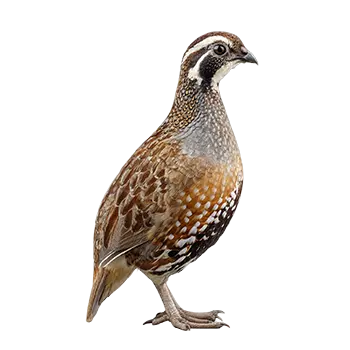

The First 24 Hours

Bobwhite Quail chicks are precocial birds, meaning they hatch in a remarkably advanced state compared to altricial species like parrots or songbirds. A newly hatched Bobwhite emerges from its egg covered in a dense coat of cryptically patterned down, with eyes fully open and legs strong enough to stand and walk within hours. The chick will weigh approximately six to seven grams at hatch and will already possess an instinctive drive to follow moving objects, a behavior known as imprinting that plays a critical role in its survival strategy. Despite this apparent readiness, the first day of life remains a vulnerable window that demands careful attention from the keeper.

In a natural setting, the hen Bobwhite remains on the nest until the entire clutch has hatched, which may take 24 to 36 hours from the first pip to the last chick emerging. This synchronous hatching is triggered by vocalizations between the developing embryos and the hen, a process that helps coordinate the timing so all chicks are ready to leave the nest together. In an incubator setting, this means you should resist the urge to remove early hatchers immediately. Allow the full clutch to complete hatching before transferring chicks to the brooder, as premature removal can disrupt the hatch timing of remaining eggs.

The yolk sac, absorbed into the abdomen just before hatching, provides the chick with enough nutrition to sustain it for the first 24 to 48 hours. This internal reserve allows the chick to focus on drying off, gaining coordination, and thermoregulating before it needs to find food. Do not attempt to force-feed a newly hatched Bobwhite chick during this period. Instead, ensure that the brooder is set up with shallow dishes of fresh water and finely ground starter feed so the chick can begin eating on its own once the yolk reserve is depleted.

Observe the chicks carefully during these first hours. A healthy Bobwhite chick will be alert, vocal, and active, moving around the brooder and responding to sounds. Chicks that remain lethargic, fail to dry properly, or show splayed legs need immediate attention. Splayed legs, a common issue in brooder-hatched quail, can often be corrected in the first 24 hours with a simple hobble made from a small bandage strip, but if left untreated the condition becomes permanent.

Brooder Setup & Temperature Management

The brooder is the artificial equivalent of the hen's body warmth and the sheltered nest site, and getting it right is essential for Bobwhite Quail chick survival. Unlike altricial species that spend weeks in a nest, precocial quail chicks are active from day one and need a brooder that accommodates both their need for warmth and their instinct to move, explore, and forage. A brooder that is too small restricts natural behavior, while one that is too large makes it difficult for tiny chicks to find the heat source.

For the first week of life, maintain the brooder temperature at 95 to 97 degrees Fahrenheit directly under the heat source, with cooler zones available at the brooder's edges so chicks can self-regulate. Bobwhite chicks are skilled at shuttling between warm and cool areas, and observing their distribution pattern is the most reliable way to assess whether the temperature is correct. Chicks that pile on top of one another directly under the lamp are too cold. Chicks that press against the brooder walls as far from the heat as possible are too hot. Evenly distributed, active chicks indicate a well-calibrated setup.

Reduce the brooder temperature by approximately five degrees per week as the chicks grow and develop their juvenile plumage. By the end of the third week, most Bobwhite chicks are feathered enough to tolerate temperatures in the low 80s, and by five to six weeks they can generally handle ambient room temperature provided it does not drop below 70 degrees. In cooler climates or seasons, supplemental heat may be needed slightly longer. Always let the chicks' behavior guide your adjustments rather than relying solely on a thermometer.

Bedding selection matters more than many keepers realize. Avoid slippery surfaces like newspaper for the first several days, as newly hatched quail chicks are prone to splayed legs on smooth footing. Paper towels with a light sprinkling of fine pine shavings or ground corncob provide traction without the risk of impaction. After the first week, a deeper layer of pine shavings works well. Never use cedar shavings, as the aromatic compounds are toxic to young birds' respiratory systems. Keep bedding dry and change it daily, as wet litter is the primary cause of brooder-related disease in quail operations.

Feeding & Nutrition

Bobwhite Quail chicks have extraordinarily high metabolic rates and begin feeding independently within hours of hatching, making proper nutrition from day one a non-negotiable element of successful rearing. Unlike parrots or pigeons that are fed by their parents, quail chicks must find and consume food on their own, guided by instinct and, in natural settings, by watching the hen. In captivity, the keeper must ensure that appropriate feed is available, accessible, and presented in a way that the chicks can actually consume it.

The foundation of a Bobwhite chick's diet should be a commercially prepared game bird starter feed with a protein content of 28 to 30 percent. This is significantly higher than the protein levels found in standard chicken starter feeds, which typically run 18 to 22 percent. The elevated protein requirement reflects the Bobwhite's rapid early growth rate and the energy demands of a species that is fully mobile from hatch. Using a lower-protein feed during the first weeks will result in stunted growth, poor feather development, and increased susceptibility to disease.

The feed should be ground to a fine crumble or near-powder consistency for the first week, as newly hatched Bobwhite chicks have very small beaks and cannot handle standard crumbles. Many experienced quail keepers pulse the feed briefly in a blender or food processor to achieve the right texture. Scatter some feed directly on the brooder floor in addition to placing it in shallow dishes, as this mimics the natural foraging behavior that quail chicks are hardwired to perform. Colored marbles or small pebbles placed in the feed dish attract the chicks' attention and encourage pecking.

Fresh, clean water must be available at all times, but drowning is a serious and common risk for Bobwhite chicks during their first two weeks. Use chick-specific waterers with narrow troughs, or place clean marbles or pebbles in a shallow dish to prevent chicks from submerging themselves. Change the water at least twice daily, as quail chicks will foul their water rapidly with feed and droppings. Adding a vitamin and electrolyte supplement to the water during the first week can help support the transition from yolk sac nutrition to independent feeding.

As the chicks grow past the first week, you can begin offering finely chopped greens, tiny mealworms, and other protein-rich supplements alongside the commercial feed. These additions not only boost nutrition but also encourage the natural foraging behaviors that are essential to the Bobwhite's identity as a ground-dwelling game bird. By the third week, the chicks should be consuming a standard-sized game bird crumble without difficulty and beginning to show the selective feeding behaviors they will carry into adulthood.

Developmental Milestones

Bobwhite Quail chicks develop at a pace that astonishes keepers accustomed to altricial bird species. Because they are precocial, Bobwhites compress what would take a parrot months into a matter of weeks. Understanding the normal developmental timeline allows keepers to identify problems early and appreciate the remarkable efficiency of this species' growth strategy.

Within the first 48 hours, chicks are fully mobile, actively foraging, and capable of brief bursts of running to evade perceived threats. Their down plumage provides camouflage that mimics the leaf litter and ground cover of their native habitat. By the end of the first week, the chicks will have roughly doubled their hatch weight, and the first hints of pin feathers will be visible along the wing margins. This rapid feather emergence is a survival adaptation, as wild Bobwhite chicks need functional wing feathers as quickly as possible to escape predators.

By ten to fourteen days of age, Bobwhite chicks can make short, fluttering flights. This is a remarkable milestone that reflects the species' evolutionary pressure from ground predators. The wing feathers develop ahead of the body contour feathers, giving the chicks an almost comically disproportionate appearance during this stage, with well-developed wings attached to a body still largely covered in down. These early flights are clumsy and brief but represent a genuine escape capability that the chick will refine over the coming weeks.

Between three and five weeks, the juvenile plumage replaces the natal down entirely, and the chicks begin to take on the general body shape of adult Bobwhites, though they remain noticeably smaller. Sexual dimorphism is not yet apparent at this stage. The chicks' social behavior becomes more complex during this period, with the formation of loose covey structures within the brooder group. They begin to roost together in the characteristic circular formation that Bobwhites use throughout their lives, tails pointed inward and heads facing outward for predator detection.

By six weeks of age, Bobwhite chicks are essentially miniature adults in terms of behavior and capability. They can fly strongly, forage efficiently, and thermoregulate without supplemental heat. The transition from newborn care to juvenile management is well underway at this point, and the chicks can be moved to larger grow-out pens or flight pens that allow them to develop the muscle tone and flight skills they will need as adults.

Disease Prevention & Early Health

Bobwhite Quail chicks are susceptible to a range of diseases that can sweep through a brooder with devastating speed if sanitation and management practices are not rigorously maintained. The warm, humid environment that chicks need for survival is also an ideal incubator for pathogenic bacteria, fungi, and parasites. Prevention through proper husbandry is far more effective and humane than attempting to treat disease after it has taken hold in a group of fragile chicks.

Coccidiosis is the single most common and destructive disease of young Bobwhite Quail. The protozoan parasites that cause this disease thrive in damp litter and are spread through fecal contamination of feed and water. Symptoms include bloody droppings, lethargy, hunched posture, and rapid weight loss. Many commercial game bird starter feeds contain a coccidiostat such as amprolium to prevent outbreaks, and using a medicated feed during the first six to eight weeks is standard practice among experienced quail producers. If you choose to use a non-medicated feed, you must be especially vigilant about litter management and prepared to administer treatment at the first sign of illness.

Ulcerative enteritis, sometimes called quail disease because of its particular affinity for Bobwhites, is a bacterial infection caused by Clostridium colinum. It produces sudden mortality in chicks, often without obvious prior symptoms. Affected birds may show watery white droppings, lethargy, and a humped posture shortly before death. The bacteria persist in the soil and litter, making thorough cleaning and disinfection between broods essential. Stress, overcrowding, and poor nutrition all increase susceptibility, reinforcing the importance of proper brooder management.

Respiratory infections, including those caused by Mycoplasma and Aspergillus fungi, are another significant concern. Dusty bedding, poor ventilation, and ammonia buildup from wet litter all predispose chicks to respiratory disease. Symptoms include open-mouth breathing, nasal discharge, swollen sinuses, and reduced activity. Ensuring adequate ventilation in the brooder area without creating drafts is a balancing act that every quail keeper must master. If you detect a strong ammonia odor when you bend down to the chicks' level, the ventilation is inadequate or the litter is overdue for replacement.

Establish a relationship with a veterinarian experienced in game bird medicine before your chicks arrive. While many rural veterinarians have at least some experience with poultry, Bobwhite Quail have species-specific health considerations that differ from chickens or ducks. A veterinarian who can perform fecal floats, necropsy examinations on any chicks that die unexpectedly, and advise on appropriate medications is an invaluable partner in raising healthy quail.

Socialization & Handling

Bobwhite Quail occupy an unusual space in aviculture. They are neither fully domesticated like chickens nor truly wild in the way that most native game birds are when raised in captivity. The degree to which Bobwhite chicks are handled and socialized during their first weeks of life will profoundly influence their temperament as adults, and the appropriate level of human interaction depends entirely on the chick's intended purpose.

For Bobwhites being raised as backyard aviary birds or pets, regular gentle handling from the first days in the brooder builds familiarity with humans and produces calmer, more approachable adults. Handle chicks with clean, warm hands, cupping them gently and allowing them to rest in your palm. Brief daily sessions of five to ten minutes are sufficient. Quail are naturally nervous birds with strong flight responses, so move slowly and speak quietly. Over time, chicks raised with consistent positive handling will approach their keeper voluntarily and tolerate routine management procedures without excessive stress.

For Bobwhites destined for release into wild or semi-wild habitats, the calculus is entirely different. These birds need to retain their natural wariness of humans and predators to survive. Minimize handling to essential management tasks only, such as health checks, banding, and transfers between enclosures. Avoid talking to the birds or allowing them to associate humans with food delivery. Some release programs use predator-training protocols that expose chicks to the silhouettes or sounds of hawks and other natural predators to reinforce innate avoidance behaviors.

Regardless of their intended purpose, all Bobwhite chicks benefit from being raised in groups. Quail are intensely social birds, and isolated chicks develop stress behaviors including excessive vocalization, feather picking, and failure to thrive. A minimum group size of six to eight chicks is recommended, though larger groups of 20 to 50 are typical in production settings. The social dynamics that develop within these groups, including the establishment of covey behavior and group alarm calling, are essential components of normal Bobwhite development.

Introduce environmental enrichment into the brooder as the chicks grow. Small branches, tufts of grass, and shallow dishes of sand for dust bathing encourage natural behaviors and provide mental stimulation. These additions help prevent the boredom-related behavioral problems that can develop in captive quail raised in barren environments. By the time the chicks transition to juvenile housing, they should have a well-developed repertoire of species-typical behaviors that will serve them throughout their lives.

When to Worry

Raising Bobwhite Quail chicks requires a calibrated sense of what is normal and what signals trouble. Because quail chicks are small, fast-growing, and naturally inclined to mask illness as a defense against predation, problems can escalate from subtle to fatal within hours. Learning to read the early warning signs is one of the most important skills a quail keeper can develop.

Pasting, where droppings adhere to the vent area and form a hardened plug, is one of the most common problems in the first few days of life. If not addressed promptly, the obstruction prevents the chick from eliminating waste and can be fatal. Check each chick's vent area at least twice daily during the first week. If pasting is detected, soften the dried material with a cotton swab dipped in warm water and gently remove it. Persistent pasting across multiple chicks often indicates a temperature problem in the brooder or an issue with the feed or water.

Sudden mortality without obvious symptoms is particularly alarming and unfortunately not uncommon in young Bobwhites. If you find one or more chicks dead without prior signs of illness, collect the bodies and have them examined by a veterinarian as quickly as possible. Necropsy findings can reveal whether the cause was infectious, nutritional, or environmental, allowing you to take corrective action before more chicks are lost. Ulcerative enteritis, in particular, is notorious for killing chicks so quickly that the keeper finds dead birds before any symptoms were apparent.

Starve-outs occur when individual chicks fail to learn to eat and drink, gradually weakening as their yolk sac reserves are depleted. A chick that is noticeably smaller than its brooder mates by day three, stands apart from the group, or shows a persistently empty crop may be a starve-out candidate. Intervention involves isolating the chick with food and water placed directly in front of it, sometimes with a companion chick that demonstrates eating behavior. Gently dipping the chick's beak in water can also help it learn to drink.

Watch for behavioral changes across the group as well. Healthy Bobwhite chicks are active, vocal, and distributed evenly across the brooder during waking hours. If the group becomes unusually quiet, clusters tightly under the heat source during warm periods, or shows a general reduction in foraging activity, something is wrong. These collective behavioral shifts often precede visible symptoms of illness by 12 to 24 hours and should prompt an immediate review of temperature, ventilation, feed quality, and water cleanliness.

Always consult a qualified professional before making any health-related decisions. This content is provided for informational reference only and should not replace professional guidance specific to your animal.