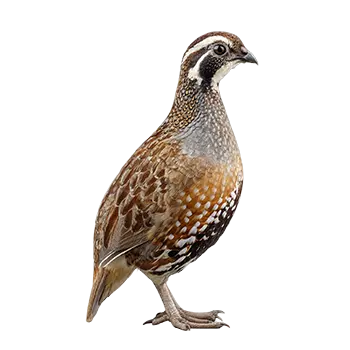

Bobwhite Quail have one of the shortest natural lifespans of any commonly kept bird species, which means the transition from prime adult to senior bird occurs faster than many keepers expect. In the wild, annual survival rates for adult Bobwhites hover between 20 and 30 percent, with most birds living only one to two years. Captive birds, protected from predation, weather extremes, and food scarcity, regularly live three to four years and can occasionally reach five or six. A Bobwhite that has passed its third year of life should be considered a senior bird, even if it still appears vigorous.
The signs of aging in Bobwhite Quail are subtle at first and easily overlooked by keepers who see their birds daily. A gradual decline in flight performance is often the earliest indicator. The explosive flush that characterizes a young, fit Bobwhite becomes slower and lower, and the bird may choose to run rather than fly when startled. Reduced foraging intensity, shorter periods of active movement, and a tendency to remain in sheltered areas rather than ranging across the pen are additional early markers of the aging process.
Physical changes accompany the behavioral shifts. Plumage quality may decline, with feathers appearing duller, thinner, or slower to regrow after the annual molt. The keel bone may become more prominent as muscle mass gradually decreases, even when feed consumption appears normal. The bird's overall posture may shift subtly, with a slightly more hunched stance replacing the alert, upright carriage of a prime adult. Scale condition on the legs and feet may deteriorate, with scales becoming thicker, rougher, and more prone to lifting or cracking.
It is important to distinguish the normal, gradual changes of aging from the acute symptoms of disease. A bird that declines suddenly over days rather than weeks is more likely ill than simply growing old. Senior Bobwhites are more susceptible to disease than younger birds, but the two phenomena present differently and require different management responses. Regular health monitoring that includes weight tracking and periodic veterinary examination provides the baseline data needed to differentiate between normal aging and pathological decline.