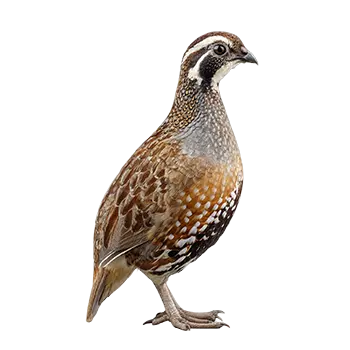

Photoperiod & Reproductive Conditioning

Reproduction in Bobwhite Quail is governed primarily by photoperiod, the ratio of light to dark hours in a 24-hour cycle. In the wild, Bobwhites begin their breeding season as spring day length extends past approximately 14 hours of light, triggering a cascade of hormonal changes that activate the reproductive system in both sexes. Captive breeders can either follow natural photoperiod by housing birds under ambient light conditions, or manipulate lighting artificially to advance, extend, or precisely control the onset of breeding. Understanding the photoperiod mechanism is fundamental to successful captive breeding.

Natural photoperiod breeding aligns the birds' reproductive cycle with the seasonal progression of their geographic location. In the southeastern United States, where Bobwhites are most abundant, the natural breeding season runs from approximately April through September. Birds managed under natural light will begin showing courtship behaviors and egg production as day length increases in spring, and will cease reproduction as the days shorten in autumn. This approach is simpler to manage and places less physiological stress on the birds, but it limits the production window to a single seasonal cycle.

Artificial photoperiod manipulation allows breeders to initiate reproduction earlier in the year, extend the laying season, or run multiple breeding cycles within a single year. The standard protocol involves gradually increasing light exposure from a baseline of 8 hours per day to 16 to 17 hours per day over a period of four to six weeks. The light increase should be incremental, adding approximately 30 minutes per week, as abrupt changes in light schedule can stress the birds and produce inconsistent results. Full-spectrum lighting that includes wavelengths in the near-ultraviolet range, which birds can perceive but humans cannot, produces better reproductive responses than standard incandescent or fluorescent lighting.

Before initiating photoperiod stimulation, the breeding flock should undergo a period of reproductive rest under short day lengths of 8 to 10 hours of light for a minimum of six to eight weeks. This rest period allows the reproductive organs to regress fully, which is necessary for them to respond robustly to the subsequent light stimulation. Attempting to push birds into a new breeding cycle without adequate rest produces reduced egg output, lower fertility, and higher rates of reproductive pathology. The temptation to skip or shorten the rest period to maximize production is counterproductive over the long term.

Breeder Selection & Pairing

The quality of the breeding stock determines the quality of the offspring, and thoughtful selection of breeder birds is the foundation of any successful Bobwhite Quail production program. Whether the goal is producing birds for release into wild habitat, supplying hunting preserves, or maintaining a genetically diverse captive population, the criteria for selecting breeders should be clearly defined and consistently applied.

Physical condition is the baseline requirement for any breeder candidate. Birds should be in robust body condition with a well-muscled keel, clean and complete plumage, bright and clear eyes, and clean nares. Any bird showing signs of chronic illness, deformity, or persistent parasitism should be excluded from the breeding program regardless of other attributes. Leg and foot health deserve particular attention, as structural problems in the legs can be heritable and limit the mobility that is essential to the species' survival strategy.

Genetic diversity is a critical consideration, especially in closed populations that have been maintained in captivity for multiple generations. Inbreeding depression in Bobwhite Quail manifests as reduced fertility, smaller clutch sizes, lower hatchability, decreased chick vigor, and increased susceptibility to disease. Maintain detailed pedigree records and avoid pairing birds that share parents or grandparents. If your breeding stock originates from a limited number of founding birds, periodically introduce unrelated birds from reputable outside sources to infuse new genetic material into the population.

Bobwhite Quail can be bred in either pair configurations or colony arrangements, and each system has advantages and trade-offs. Pair breeding, with one cock and one hen housed together, provides precise control over parentage, allows accurate tracking of each bird's reproductive performance, and eliminates male-on-male aggression. Colony breeding, with one male housed with two to four females, requires less total pen space per bird and can produce more eggs per male, but parentage is uncertain on the hen side and dominant females may suppress subordinate hens' reproduction.

Age plays a role in breeder selection. Bobwhite Quail reach sexual maturity at approximately 20 to 24 weeks of age, and first-year birds can be used as breeders successfully. However, second-year birds that have proven their reproductive capability and overall health are often preferred as the core of a breeding program, with first-year birds added to expand the flock or replace retirees. As discussed in the senior care section, reproductive performance typically declines after the second or third breeding season, and birds should be retired from breeding when their productivity drops below acceptable levels.

Egg Production & Collection

Once photoperiod stimulation takes effect and pairs or colonies are established, egg production in Bobwhite Quail follows a pattern that differs in important ways from domesticated poultry. Understanding the natural laying behavior of the species and adapting management practices accordingly is essential for maximizing egg yield while maintaining hen health.

A healthy Bobwhite hen in her prime can produce between 60 and 100 eggs per breeding season under managed conditions, though individual variation is substantial. Peak production typically occurs four to six weeks after the onset of laying and gradually declines over the remainder of the season. Hens lay one egg per day during peak production, usually in the late afternoon or early evening. This timing reflects the species' wild nesting behavior, where the hen deposits an egg in the nest scrape each day until the full clutch is assembled before she begins incubation.

Egg collection should occur at least twice daily, once in the morning and once in the late afternoon or evening shortly after the expected laying time. Frequent collection prevents hens from accumulating a clutch in the nest and going broody, which halts egg production for the duration of the brooding period. It also minimizes the time that eggs spend exposed to temperature fluctuations, contamination from droppings, and potential damage from being stepped on by the birds. Eggs that are left in the pen overnight are at particular risk of being cracked, soiled, or cooled below the threshold for embryonic viability.

Proper egg handling begins at the moment of collection. Pick up each egg gently and inspect it for cracks, shell abnormalities, and excessive soiling. Bobwhite eggs are small, approximately 25 to 28 millimeters in length, and their shells are relatively thin compared to domestic chicken eggs, making them more susceptible to handling damage. Place collected eggs in padded trays, small end down, and transport them to the storage area without jostling.

Egg storage prior to incubation is a critical step that directly affects hatchability. Store eggs at 55 to 65 degrees Fahrenheit with a relative humidity of 70 to 80 percent. Turn stored eggs at least once daily by tilting the tray from one end to the other to prevent the embryonic disc from adhering to the shell membrane. Hatchability declines progressively with storage time; eggs stored for less than seven days before setting typically achieve the best results, while eggs held beyond fourteen days show significantly reduced hatch rates.

Incubation Management

Incubation is the most technically demanding phase of Bobwhite Quail breeding, and success depends on precise control of temperature, humidity, ventilation, and turning throughout the 23 to 24 day incubation period. Whether using a small tabletop incubator for a handful of eggs or a commercial cabinet incubator processing thousands, the fundamental principles remain the same.

Set the incubator to a dry-bulb temperature of 99.5 to 100 degrees Fahrenheit for forced-air models, or 101 to 102 degrees Fahrenheit for still-air models where temperature stratifies vertically. Even a one-degree deviation sustained over several hours can reduce hatchability or cause developmental abnormalities. Use a high-quality, calibrated thermometer to verify the incubator's built-in readings, and check temperatures at least twice daily during the first week of a new incubation cycle until you are confident in the machine's stability.

Humidity management during Bobwhite Quail incubation has been the subject of considerable practical experimentation among breeders. The target wet-bulb temperature during the setting phase, days one through twenty, should be approximately 82 to 84 degrees Fahrenheit, corresponding to a relative humidity of roughly 55 to 60 percent. This moisture level allows the egg to lose approximately 12 to 14 percent of its initial weight through evaporation, creating the air cell space that the chick needs for internal pipping. Candling eggs at days seven and fourteen to assess air cell development provides a direct measure of whether humidity settings are producing the desired rate of moisture loss.

Egg turning is essential to prevent the developing embryo from adhering to the shell membrane and to ensure even heat distribution across the egg surface. Turn eggs an odd number of times per day, typically three to five, so that the egg rests on alternating sides overnight. Automatic turners simplify this task enormously and provide more consistent turning than manual rotation. Cease turning on day 20, when the eggs are transferred to the hatcher tray and positioned on their sides for the final phase of development and hatching.

The transfer to the hatcher on day 20 involves moving the eggs from the turning trays to a flat hatching tray and increasing humidity to approximately 70 to 75 percent. This elevated humidity softens the shell and membranes, facilitating the chick's ability to pip and zip through the shell. Resist the temptation to open the hatcher frequently during the hatch, as each opening drops humidity and can cause the membranes to dry and shrink-wrap around partially hatched chicks. Most healthy chicks will complete the hatching process within 24 hours of the first pip, and no assistance should be given unless a chick has made no progress for six or more hours after the initial break in the shell.

Fertility Optimization & Troubleshooting

Achieving consistently high fertility rates is one of the greatest challenges in Bobwhite Quail breeding, and when fertility drops below acceptable levels, identifying and correcting the cause requires systematic troubleshooting rather than guesswork. Fertility in captive Bobwhite programs typically ranges from 70 to 90 percent under good management, and rates consistently below 65 percent warrant investigation.

Male reproductive health is the most common factor in fertility problems. Cock birds that are overly stressed, housed at inappropriate male-to-female ratios, nutritionally deficient, or suffering from subclinical illness may produce insufficient or low-quality sperm. In colony breeding systems, a single subfertile or infertile male assigned to a group of hens will depress the entire colony's fertility rate. Periodic test-mating, where individual males are paired with known-fertile hens for a short period, can identify subfertile males before they compromise an entire breeding season.

Nutritional deficiencies are a frequently underestimated cause of poor fertility. Vitamin E and selenium deficiencies in particular have been linked to reduced sperm quality in male birds and poor egg quality in hens. A breeding diet should contain 22 to 24 percent protein with elevated levels of vitamins A, D, E, and the B-complex vitamins, along with balanced calcium and phosphorus for shell formation. The breeding diet should be introduced four to six weeks before the expected onset of laying to allow the birds' nutritional status to reach optimal levels before reproductive demands begin.

Stress from environmental factors including noise, disturbance, predator pressure, overcrowding, and unstable social dynamics suppresses reproductive function in both sexes. Bobwhites are particularly sensitive to visual predator stimuli, and breeding pens located where hawks, cats, or other predators are frequently visible often show depressed fertility even when other management factors are optimized. Position breeding enclosures in quiet, low-traffic areas with visual barriers that shield the birds from alarming sights and sounds.

When fertility problems persist despite addressing nutrition, male quality, and environmental stress, a veterinary evaluation of the breeding flock is warranted. Reproductive tract infections, particularly mycoplasmosis, can reduce fertility without producing obvious clinical symptoms. Semen evaluation, if available through a veterinary laboratory experienced with avian species, provides direct information about sperm concentration, motility, and morphology. Cloacal cultures from both sexes can identify bacterial infections that impair reproductive function. In some cases, simply replacing aging or genetically depleted breeding stock with vigorous, unrelated young birds is the most effective solution to chronic fertility issues.

Hen Health During Laying

The laying season places extraordinary physiological demands on Bobwhite Quail hens, and attentive management during this period is essential to maintaining both productivity and long-term hen health. Each egg represents a significant metabolic investment for a bird that weighs only five to eight ounces, and a hen producing at peak rates is channeling a substantial portion of her daily nutrient intake into egg formation.

Calcium metabolism is the most critical nutritional concern during laying. The eggshell is composed almost entirely of calcium carbonate, and a laying hen mobilizes calcium from both dietary sources and her own skeletal reserves to form each shell. If dietary calcium intake is insufficient, the hen will progressively deplete her bones, leading to a condition known as cage layer fatigue or osteoporosis, which manifests as leg weakness, fractures, and eventually the inability to stand. Provide free-choice oyster shell or limestone grit in addition to the calcium contained in the breeding feed, and monitor hens for signs of leg weakness, thin-shelled or shell-less eggs, and reluctance to move.

Egg binding, where an egg becomes lodged in the oviduct and cannot be laid, is a potentially fatal emergency that occurs more frequently in older hens, first-time layers, and hens that are calcium-deficient or dehydrated. A hen that is straining, tail pumping, spending excessive time in the nest, or showing a swollen abdomen may be egg-bound. Immediate first aid includes placing the hen in a warm, humid environment such as a container positioned over a shallow pan of warm water, which can help relax the oviduct musculature and facilitate passage. If the egg is not passed within two to three hours of supportive care, veterinary intervention is necessary.

Prolapse of the oviduct, where tissue protrudes from the vent after egg laying, is another reproductive emergency. Small prolapses may retract on their own, but exposed tissue that does not retract within an hour or that shows signs of drying, swelling, or pecking damage from flock mates requires immediate attention. Isolate the hen, gently clean the exposed tissue with warm saline solution, and apply a water-soluble lubricant to help it retract. Severe or recurrent prolapse generally warrants permanent retirement from the breeding program.

Monitor laying hens' body condition throughout the breeding season by palpating the keel bone at least weekly. A hen that is losing body condition despite adequate feed availability may be producing at a rate that exceeds her nutritional intake, and her diet should be supplemented or her production rate managed downward by slightly reducing photoperiod. The goal is sustained, moderate production over the length of the breeding season rather than maximum short-term output that exhausts the hen and shortens her productive life.

Genetic Management & Record Keeping

Bobwhite Quail breeding programs, whether small-scale hobbyist operations or large commercial or conservation enterprises, benefit enormously from systematic genetic management supported by thorough record keeping. The species' short generation interval and relatively high reproductive rate mean that genetic change, both intentional and unintentional, occurs rapidly, making deliberate management essential for maintaining healthy, productive stock.

Pedigree tracking begins with identifying each breeding bird individually, typically through numbered leg bands. Every pairing should be recorded, along with the dates of pairing, the first egg date, total eggs produced, fertility rate based on candling results, hatchability of fertile eggs, and any health events affecting either member of the pair. This data allows the breeder to evaluate each bird's contribution to the program and make evidence-based decisions about which pairings to repeat, which birds to replace, and which genetic lines are producing the most robust offspring.

Inbreeding avoidance requires active management in any closed population. Calculate the coefficient of inbreeding for proposed pairings before the breeding season begins, and avoid matings that would produce offspring with inbreeding coefficients above five percent. In small populations where all birds are somewhat related, minimizing the average inbreeding rate across the population, sometimes called managing effective population size, becomes the practical goal. Computer-based pedigree management software designed for animal breeding can calculate inbreeding coefficients and suggest optimal pairings automatically.

For conservation breeding programs aimed at producing birds for release into wild populations, genetic management takes on additional dimensions. The captive population must represent the genetic diversity of the wild source population as faithfully as possible, and care must be taken to avoid inadvertent selection for traits that favor captive survival at the expense of wild fitness. Domestication selection, in which birds that are calm, tame, and productive in captivity are preferentially bred while wild-type birds that are nervous and difficult to manage are culled, can rapidly shift a population toward captive-adapted genotypes that perform poorly after release.

Breeding records also serve a practical function beyond genetics. Patterns in production data, such as a decline in fertility during a specific week, a correlation between certain pen locations and poor hatchability, or a hen line that consistently produces small clutches, reveal management opportunities that would be invisible without systematic data collection. Review the breeding season's records at its conclusion, identify patterns and anomalies, and use the findings to refine the program for the following year. Over multiple seasons, this iterative process of data collection, analysis, and adjustment produces continuous improvement in breeding outcomes.

Always consult a qualified professional before making any health-related decisions. This content is provided for informational reference only and should not replace professional guidance specific to your animal.