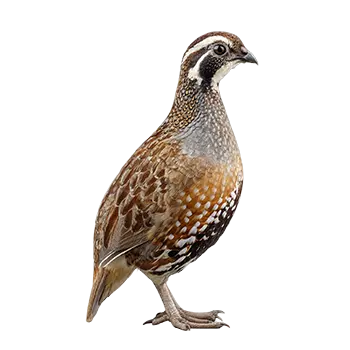

Transition from Brooder to Grow-Out Housing

The juvenile stage of a Bobwhite Quail's life begins around six weeks of age, when the birds are fully feathered, thermoregulating independently, and capable of sustained flight. Moving them from the brooder to appropriate grow-out housing is one of the most consequential management decisions a keeper makes during this period. The transition must be handled thoughtfully, as abrupt environmental changes can cause stress-related illness and behavioral disruption in young quail.

The ideal grow-out enclosure for juvenile Bobwhites provides substantially more space than the brooder while still offering protection from weather and predators. Flight pens, which are large enclosed outdoor structures with wire mesh roofing, are the gold standard for this stage. A minimum of two square feet per bird is recommended, though more space is always better. The enclosure should include areas of natural or artificial ground cover such as brush piles, grass tufts, and low shrubs that allow the birds to practice the hiding and flushing behaviors central to their species identity.

Timing the move is important. Avoid transferring juveniles during extreme weather, whether scorching heat or cold snaps. A mild day with calm conditions reduces the stress of the transition. Move the entire group together rather than splitting the covey, as Bobwhites derive significant comfort and security from their established social group. If you must combine birds from different brooders, do so during the move to grow-out housing rather than after groups have settled into their new space, as introductions into an established territory provoke more aggression.

During the first few days in the new enclosure, monitor the birds closely for signs of stress or disorientation. Juvenile Bobwhites may initially cluster in corners or along fence lines rather than exploring the available space. This is normal and typically resolves within two to three days as the birds map their new environment. Ensure that feed and water stations are conspicuous and easily accessible, and consider placing multiple stations throughout the enclosure so that subordinate birds are not excluded by more dominant individuals.

Diet & Nutritional Adjustments

As Bobwhite Quail transition from the newborn phase into the juvenile period, their nutritional requirements shift to support continued growth while also building the fat reserves and muscle mass they will carry into adulthood. The dietary transition should be gradual rather than abrupt, with changes phased in over the course of a week to avoid digestive upset.

The high-protein game bird starter feed used during the first six weeks should be gradually replaced with a grower formula containing 20 to 24 percent protein. This reduction in protein reflects the slowing of the explosive early growth rate while still supporting ongoing feather development, skeletal maturation, and muscle building. Many commercial game bird feed manufacturers produce a dedicated grower ration formulated specifically for this stage. If a specialized grower is unavailable, a blend of starter and a maintenance feed can serve as a transitional diet.

Calcium and phosphorus balance becomes increasingly important during the juvenile period as the skeletal system completes its development. A quality game bird grower feed should contain approximately 1 percent calcium and 0.5 percent available phosphorus. Deficiencies in either mineral can lead to leg weakness, bone deformities, and increased fracture risk, particularly problematic in a species that relies on explosive takeoff for predator evasion. Providing a separate dish of finely crushed oyster shell allows juveniles to self-supplement calcium according to their individual needs.

Supplemental feeding with natural food items adds nutritional variety and promotes foraging behavior. Finely chopped leafy greens, small seeds such as millet and clover, and live insects including crickets, mealworms, and small beetles all make excellent additions to the commercial feed base. For birds being raised for release, natural food supplementation is particularly important because it familiarizes the birds with the types of food they will need to find independently after release. Even for aviary-kept birds, the behavioral enrichment provided by foraging for varied food items contributes meaningfully to psychological well-being.

Water management requires continued attention during the juvenile stage, though the drowning risk that dominates newborn care diminishes as the birds grow. Juvenile Bobwhites are active and messy drinkers, and water containers become contaminated quickly. Nipple-style watering systems, while requiring a brief learning period, dramatically reduce contamination and waste compared to open troughs. If you use nipple waterers, introduce them alongside the familiar open waterers for several days so all birds learn to use them before the open water is removed.

Flight Development & Physical Conditioning

Flight is not merely a useful ability for Bobwhite Quail; it is the core survival mechanism that defines the species' relationship with its environment. The juvenile period is when flight skills transition from the clumsy fluttering of a two-week-old chick to the powerful, explosive flush that characterizes a mature Bobwhite. Providing the space and conditions for proper flight development during this stage has lasting consequences for the bird's physical fitness and, for release candidates, its survival prospects.

By six to eight weeks of age, juvenile Bobwhites can fly distances of 50 to 100 yards in a single burst, though they tire quickly and their flight paths tend to be erratic. Over the following weeks, flight muscle mass increases rapidly, and the birds develop the characteristic Bobwhite flight pattern: a sudden, near-vertical explosive launch followed by a series of rapid wingbeats and then a glide to the landing point. This flight style is metabolically expensive and relies on well-developed pectoral muscles, which constitute a larger percentage of body mass in Bobwhites than in most other gallinaceous birds.

Flight pens must be tall enough to allow genuine flight exercise. A minimum height of six to eight feet is recommended, though taller structures are preferable. Bobwhites that are housed in low-ceiling enclosures during the juvenile period develop weaker flight muscles and may injure themselves by striking the ceiling during flush attempts. Some keepers install a soft netting material across the top of the pen rather than rigid wire to reduce head injuries from upward flights.

Beyond flight, juvenile Bobwhites are developing their ground locomotion skills, predator avoidance reflexes, and the stamina needed for the mobile lifestyle of a ground-dwelling game bird. Encouraging natural movement through varied terrain within the enclosure, including sloped areas, low obstacles, and varied substrate types, helps build the leg strength and coordination that adult Bobwhites rely on daily. Birds raised on flat, featureless floors develop weaker legs and less confident movement than those raised in enriched environments.

For birds intended for sporting or release purposes, flight conditioning takes on particular importance. Some programs use recall pens with Johnny houses, which are specialized training enclosures that teach the birds to return to a central structure after being flushed. This conditioning begins during the juvenile stage and continues through the birds' first flight season, building the association between the covey home base and the security of the group.

Covey Formation & Social Development

The juvenile period is when Bobwhite Quail develop the sophisticated social structures that define their species. In the wild, young Bobwhites transition from family groups led by their parents into larger, reorganized coveys that form in late summer and persist through the winter. In captivity, the social dynamics that develop among juvenile birds mirror this natural process and play a critical role in the birds' behavioral health and stress management.

Covey behavior in juvenile Bobwhites becomes increasingly structured between eight and fourteen weeks of age. The birds begin to roost in the iconic circular formation, with individuals positioned shoulder to shoulder in a tight ring, tails inward and heads facing outward. This arrangement serves multiple functions: it conserves body heat during cold nights, provides 360-degree predator surveillance, and allows the entire covey to flush simultaneously in different directions when a threat is detected. Juvenile birds that are denied the opportunity to practice this behavior in a group setting often fail to integrate into coveys later in life.

The vocalizations of juvenile Bobwhites diversify dramatically during this period. The simple peeping calls of the chick phase give way to a range of assembly calls, contact calls, and alarm notes that form the acoustic foundation of covey communication. The iconic two-note whistle that gives the species its common name typically begins to emerge in juvenile males around ten to twelve weeks of age, though it will not reach its full, clear tone until the bird matures. Hens develop their own repertoire of calls, distinct from the males' but equally important for covey coordination.

Aggression among juvenile Bobwhites is generally mild compared to many other game bird species, but it does occur, particularly when groups are overcrowded or when unfamiliar birds are introduced into an established group. Dominance hierarchies form through brief chasing and pecking exchanges that rarely cause injury under proper management conditions. If one or more birds show signs of persistent bullying, feather damage from pecking, or exclusion from the roosting group, the stocking density should be reevaluated and the affected individuals may need to be moved to a different group.

For keepers managing multiple covey groups, it is worth noting that Bobwhites form strong group bonds during the juvenile period. Birds raised together from the brooder through the juvenile stage tend to maintain cohesive covey structure with lower stress levels than groups assembled from strangers. When possible, keep natural brooder groups intact through the grow-out phase, as this continuity produces the most socially stable and behaviorally healthy adult birds.

Plumage Development & Sex Identification

The transformation of a Bobwhite Quail's plumage from the camouflaged natal down of the chick through the juvenile molt into pre-adult feathering is one of the most visible markers of the bird's progression through its early life. Understanding the normal feathering timeline helps keepers assess health, estimate age, and eventually determine the sex of their growing birds.

Juvenile plumage in Bobwhites is a transitional coat that begins replacing the natal down at around two weeks and is largely complete by six to seven weeks of age. This first true plumage is duller and more mottled than the adult feathering that will eventually replace it. Both sexes look essentially identical in juvenile plumage, with buffy brown feathers marked by dark barring and streaking that provides excellent camouflage in grassland habitats. The absence of clear sexual dimorphism at this stage makes sex identification challenging without physical examination techniques.

The pre-basic molt, during which juvenile feathering is replaced by the first adult plumage, begins around twelve to fourteen weeks of age and continues over several weeks. It is during this molt that sexual dimorphism becomes apparent. Males develop the striking white throat patch and white superciliary stripe that are the hallmark features of the adult male Bobwhite. Females develop the same facial pattern but in buff or tan tones rather than white. The contrast between the sexes becomes progressively more distinct as the molt progresses.

Before the adult plumage emerges, sex can be determined through vent sexing, a technique that requires experience and gentle handling to perform correctly. The cloaca of juvenile males contains a small, rounded protrusion that is absent in females. This method is most reliable after about eight weeks of age and should be performed by someone trained in the technique to avoid injuring the bird. Some large-scale producers also use feather sexing based on subtle differences in wing feather development, though this method is less reliable in Bobwhites than in some other gallinaceous species.

During the molt itself, birds are under physiological stress as they divert protein and energy into feather production. Feed consumption typically increases, and the protein content of the diet should be maintained at the higher end of the grower range during this period. Molting birds may appear scruffy, and their flight performance temporarily declines as old feathers are shed and new ones grow in. This is normal, but it creates a period of increased vulnerability, so predator protection should be especially robust during the molting weeks.

Health Monitoring & Parasite Management

Juvenile Bobwhite Quail face a somewhat different disease landscape than newborn chicks, though many of the same principles of prevention through good husbandry apply. As the birds move into larger enclosures and potentially contact with soil, the risk of parasitic infections increases substantially, and the keeper's focus must expand to include external as well as internal parasites.

Internal parasites, particularly cecal worms and capillary worms, become a significant concern once juvenile Bobwhites have access to the ground. Wild birds and insects serve as intermediate hosts and vectors for many parasitic species, and even well-managed flight pens cannot be entirely isolated from these sources. Regular fecal examinations, performed every four to six weeks during the juvenile stage, allow early detection of parasite loads before they cause clinical disease. A veterinarian can assess the fecal float results and recommend appropriate deworming protocols based on the specific parasites identified and the severity of the infection.

External parasites, including feather lice, mites, and ticks, are another concern as juveniles move to outdoor housing. Northern fowl mites and feather lice are the most commonly encountered external parasites on captive Bobwhites. Infested birds may show excessive preening, feather damage, restlessness, and in severe cases, anemia from blood-feeding mite populations. Inspect birds regularly by parting the feathers around the vent, under the wings, and on the head and neck, where external parasites tend to concentrate. Providing access to a dust bath filled with fine sand or diatomaceous earth helps the birds manage mild ectoparasite loads through their own grooming behavior.

Coccidiosis remains a threat during the juvenile stage, particularly in the weeks immediately following the transition from brooder to ground-level housing. If the birds were raised on medicated starter feed, the transition to a non-medicated grower formula removes the coccidiostat at the same time the birds are encountering higher levels of coccidia in the environment. Some keepers maintain medicated feed through the first two weeks in grow-out housing to bridge this vulnerable period. Others rely on strict sanitation and rotate juvenile groups through different pen areas to prevent the buildup of infective oocyst levels in the soil.

Establish a consistent health monitoring routine that includes weekly visual inspections of each bird, monitoring of feed and water consumption rates for the group, and daily observation of droppings character. Juvenile Bobwhites that are thriving will be alert, active, growing at a consistent rate, and producing well-formed droppings with a capped white urate. Any bird that is falling behind its cohort in size, isolating from the group, or showing changes in droppings should be caught up and examined more closely.

Preparing for Adulthood

The final weeks of the juvenile stage represent a transitional period during which Bobwhite Quail are physically approaching adult size but have not yet reached full physiological and behavioral maturity. Management decisions made during this window shape the birds' readiness for the demands of adult life, whether that means entering a breeding program, joining a hunting preserve, living as an aviary bird, or being released into wild habitat.

For birds being prepared for release, the juvenile-to-adult transition period is when conditioning intensifies. Wild survival demands that Bobwhites be flight-fit, predator-aware, and capable of finding natural food sources independently. Gradually increasing the proportion of natural food items relative to commercial feed helps build foraging independence. Some release programs introduce live insects and scatter wild seed mixes across the pen floor, forcing the birds to search and compete for food as they would in the wild. Reducing the frequency of human presence and minimizing non-essential handling during this period helps maintain the wariness that is essential for wild survival.

For aviary and breeding stock, the goals during late juvenile development are different. These birds benefit from continued positive human interaction, a stable and predictable environment, and nutritional management aimed at bringing them into the adult phase in optimal body condition without excess fat. Obesity in young Bobwhites, while less common than in some domestic poultry species, can occur when high-energy diets are maintained beyond the growth phase and physical activity is limited by enclosure size.

Banding or marking juvenile Bobwhites for individual identification should be completed before the birds reach adult size, as the leg scales harden and the birds become more difficult to handle with age. Aluminum leg bands sized specifically for Bobwhite Quail are the standard identification method. Each band should be recorded against any relevant information about the bird's hatch date, parentage, pen assignment, and health history. For breeding programs, this individual identification system becomes the foundation of pedigree tracking and genetic management.

As juveniles approach 16 weeks of age, the keeper should begin planning for the housing and management structure of the adult phase. Birds destined for breeding will need to be separated into appropriate pair or colony configurations. Aviary birds may be integrated into established adult coveys, a process that requires careful introduction to avoid aggression. Release candidates should be moved to release-site conditioning pens, where they can acclimate to the specific habitat and environmental conditions they will face upon liberation. Regardless of the bird's future, the juvenile period ends with a Bobwhite that is fully feathered, flight-capable, socially integrated, and physiologically prepared for the demands of adult life.

Always consult a qualified professional before making any health-related decisions. This content is provided for informational reference only and should not replace professional guidance specific to your animal.