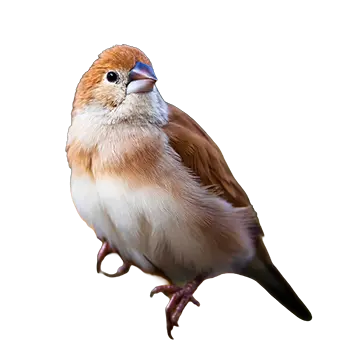

African Silverbills typically enter their senior years around age five, though individual variation means some birds show signs of aging earlier or later. With a captive lifespan of roughly six to eight years, the senior phase represents a meaningful portion of the bird's life and requires adjusted expectations and care strategies. Recognizing the gradual signs of aging, as distinct from the sudden onset of illness, allows keepers to make timely modifications that support comfort and quality of life.
The earliest signs of aging in a silverbill are often subtle and easy to dismiss. A bird that was once among the most active in the flock may begin spending more time sitting quietly on a favored perch rather than flying and foraging throughout the enclosure. Flight patterns may become shorter and less dynamic, with the bird preferring to hop between closely spaced perches rather than making long flights across the cage. These changes reflect a natural decline in muscle mass, cardiovascular capacity, and joint flexibility that accompanies aging in all bird species.
Feather quality often changes in senior silverbills. The plumage may lose some of its sleek, tight appearance, becoming slightly looser or duller than it was during the prime adult years. Molts may take longer to complete, and the new feathers that emerge may not be as uniformly colored or as well-structured as those from previous cycles. The beak and nails may grow slightly faster or develop a rougher texture as keratinization patterns shift with age. Some senior birds develop a faint thickening or scaling on the feet and legs that, while not necessarily pathological, represents an age-related change in skin condition.
Behavioral changes are equally telling. A senior silverbill may vocalize less frequently, show reduced interest in bathing, or become less socially assertive within the flock hierarchy. In cock birds, singing may diminish in frequency and complexity. These behavioral shifts are normal aspects of aging and do not in themselves indicate illness, but they should be monitored because a sudden or dramatic behavioral change, even in an older bird, can signal a new health problem superimposed on the natural aging process.