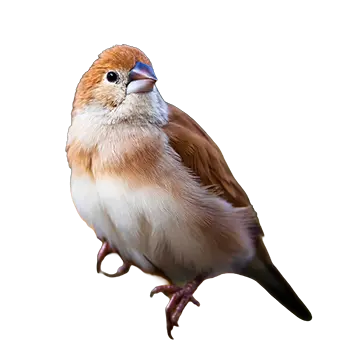

Fledging & the First Days Out of the Nest

African Silverbill chicks typically fledge between 21 and 25 days of age, leaving the nest with a full but somewhat fluffy coat of juvenile plumage. The transition from nestling to fledgling is one of the most precarious periods in a young silverbill's life. Newly fledged birds are weak fliers, prone to crash landings, and still entirely dependent on their parents for food even though they have physically left the nest. Keepers must prepare the enclosure to minimize hazards during this clumsy early phase.

In the hours after fledging, juvenile silverbills tend to perch motionless on whatever surface they first land on, whether that is a low perch, a food dish, or the cage floor. This stillness is normal and reflects the chick's instinct to remain inconspicuous while it orients itself. The parents will continue to locate and feed the fledglings, often responding to soft begging calls that the young birds produce while fluttering their wings. Multiple fledglings from the same clutch often cluster together, which provides mutual warmth and makes it easier for the parents to feed them efficiently.

Prepare the cage or aviary before fledging occurs. Remove any open water containers deeper than half an inch and replace them with shallow dishes or tube-style drinkers that prevent a young bird from falling in and drowning. Position several low perches at varied heights so that fledglings can move upward gradually as their flight skills improve. Cover the cage floor with clean paper towels rather than loose substrate to make it easier to monitor droppings and to prevent fledglings from ingesting bedding material.

Do not handle juvenile silverbills during the first few days after fledging unless there is a clear safety concern. Chasing a newly fledged finch around the enclosure causes extreme stress and can result in injury. If a fledgling needs to be moved, dim the lights and approach slowly, cupping the bird gently without squeezing. The goal during this stage is to allow the young bird to build flight strength and spatial awareness within the safety of the enclosure while maintaining the parental feeding bond that will sustain it until weaning is complete.

Weaning & Diet Transition

Weaning in African Silverbills is a gradual process that typically spans from about three to five weeks of age. Unlike some parrot species where weaning can be drawn out and emotionally complex, finch weaning is largely driven by the parents' declining willingness to feed and the juvenile's growing ability to crack and consume seed independently. The keeper's role during this transition is to ensure that appropriate foods are readily accessible and that the young bird is actually eating on its own before any separation from the parents occurs.

Juvenile silverbills begin experimenting with solid food within days of fledging. They observe the adults eating and mimic the behavior, picking up and dropping seeds repeatedly before learning to hull them. Providing a shallow dish of the standard seed mix at perch level, where fledglings naturally spend their time, encourages this exploration. Millet spray is an excellent transitional food because the small seeds are easy for a juvenile's developing beak to manipulate, and the spray format allows the bird to brace against the stem while it practices cracking technique.

Continue offering the enriched chick-rearing diet, including egg food, sprouted seed, and leafy greens, throughout the weaning period. These softer foods bridge the gap between parental feeding and full seed independence. A juvenile that has access only to dry seed may struggle to consume enough calories during the days when it is still learning to hull efficiently. Sprouted seed in particular provides a semi-soft texture that is easier for young beaks to process while delivering concentrated nutrition.

Watch for signs that weaning is progressing normally. A juvenile that is eating independently will have a visibly full crop after spending time at the food station, will produce well-formed droppings, and will beg from the parents less frequently over time. If a juvenile appears thin, lethargic, or is begging constantly without being fed, it may not be ready for separation and should remain with the parents for an additional week. Premature removal from the parents before a juvenile is fully self-feeding is a common cause of juvenile mortality in finch breeding.

Once the juveniles are consistently self-feeding for at least five to seven consecutive days, they can be separated from the parents if needed. This is especially important if the adult pair shows signs of wanting to begin another breeding cycle, as the cock bird may become aggressive toward older juveniles that linger in the breeding enclosure. Move weaned juveniles into a separate flight cage or a communal aviary with other peaceful finch species where they can continue developing their flight skills and social behaviors.

The Juvenile Molt

African Silverbills undergo their first molt at approximately eight to twelve weeks of age, replacing the softer, somewhat duller juvenile plumage with the sleeker adult feathers that they will carry for the rest of their lives. This first molt is a physiologically demanding event that draws heavily on the young bird's nutritional reserves. Supporting the bird through this process with proper diet and environmental stability is essential for producing a healthy, well-feathered adult.

The juvenile molt in silverbills is typically a gradual affair rather than a dramatic, all-at-once feather replacement. Body feathers are replaced first, starting along the flanks and breast before progressing to the back and head. Flight feathers and tail feathers follow, usually molting symmetrically so that the bird retains enough feather coverage to fly throughout the process. Keepers will notice an increase in small, downy feathers on the cage floor and may see pin feathers emerging on the head and neck where new growth is most visible.

Nutritional support during the molt is critical. The protein demands of feather production are substantial, and a juvenile that is simultaneously growing, learning to forage, and replacing its plumage needs a diet richer than the standard maintenance ration. Continue or reintroduce egg food, and ensure that a cuttlebone or mineral block is available for calcium. Some breeders add a small amount of a specialized molt supplement to the drinking water, though a well-rounded diet should provide most of the necessary nutrients without supplementation.

Environmental stress during the molt can cause feather abnormalities including stress bars, which appear as visible lines of weakness across the feather vane. These bars indicate a temporary interruption in feather growth caused by a stressor such as a temperature fluctuation, a fright, or a dietary deficiency. While stress bars do not cause immediate harm, feathers with severe barring are structurally weaker and more prone to breakage. Keeping the environment calm, warm, and consistent during the molt reduces the incidence of these defects.

The completion of the juvenile molt marks the transition from juvenile to subadult. The bird's plumage will now closely resemble that of a full adult, with the warm sandy-brown upperparts, pale underside, and the distinctive silvery-blue beak fully developed. Behavioral maturation continues beyond the molt, but physically the bird is now in its near-final form. This is a good time to assess the bird's overall condition and confirm that it has come through the developmental period in good health.

Socialization & Flock Integration

African Silverbills are profoundly social birds that naturally live in flocks ranging from small family groups to gatherings of dozens or even hundreds of individuals in the wild. The juvenile period is when the foundations of social behavior are laid, and proper socialization during this window has lasting effects on the bird's ability to coexist peacefully with conspecifics and, in captivity, with other compatible finch species.

Juvenile silverbills learn social cues primarily by observing and interacting with their parents and clutch mates. Allopreening, where two birds preen each other's head and neck feathers, typically begins during the juvenile stage and serves as a bonding mechanism that reduces tension within the group. Young silverbills that are raised in isolation or removed from their parents too early often develop poor social skills, leading to difficulties when they are later introduced to a flock.

When moving weaned juveniles into a communal setting, introduce them during a calm period and monitor interactions closely for the first several days. African Silverbills are among the most peaceful of all finch species, and aggression during introductions is rare, but displacement from food stations or preferred perching spots can occur if the existing birds are territorial. Providing multiple feeding stations and an abundance of perching options reduces competition and allows newcomers to settle in without conflict.

If housing juvenile silverbills with other species, select companions carefully. Silverbills coexist well with other small, non-aggressive estrildid finches such as owl finches, star finches, and society finches. Avoid housing them with larger, more assertive species like Java sparrows or weavers, which can dominate food resources and perching space. Same-species groups are ideal for developing natural social behaviors, and a small flock of four to six silverbills will exhibit a rich repertoire of communal behaviors including synchronized roosting, mutual preening, and soft contact calling.

The juvenile period is also when the cock birds begin developing their song. Male African Silverbills produce a quiet, warbling song that they refine throughout adolescence by listening to and imitating adult males. Exposure to accomplished adult singers during this formative period results in more complex and complete songs. Juveniles raised without adult male role models may develop truncated or atypical song patterns that, while not harmful, diminish one of the species' most charming behavioral traits.

Health Monitoring & Common Juvenile Issues

The juvenile period presents specific health challenges that differ from those of the nestling and adult stages. A young African Silverbill that has successfully fledged and weaned has already overcome the most dangerous phase of its life, but the combined stresses of growth, molting, and social adjustment can leave juveniles vulnerable to conditions that a robust adult would shrug off.

Air sac mites are one of the most common health concerns in juvenile finches. These microscopic parasites colonize the respiratory tract and can cause progressive breathing difficulty if left untreated. Symptoms include audible clicking or wheezing sounds, especially at night, open-mouth breathing, and tail bobbing. In a quiet room, holding the bird near your ear may reveal faint respiratory noises that are not apparent at a distance. Treatment with ivermectin, administered as a topical drop on the skin at the back of the neck, is highly effective when caught early. Consult an avian veterinarian for proper dosing, as the margin between a therapeutic and toxic dose is narrow in a bird weighing under 15 grams.

Coccidiosis, a parasitic infection of the intestinal tract, occasionally affects juvenile finches housed in aviaries where ground contact occurs. Symptoms include watery or bloody droppings, fluffed plumage, lethargy, and weight loss. Diagnosis requires a fecal float test performed by a veterinarian, and treatment involves a course of antiprotozoal medication. Maintaining clean substrate, removing droppings regularly, and preventing fecal contamination of food and water sources are the most effective preventive measures.

Scaly face mite, caused by Knemidokoptes species, can appear in juvenile silverbills as crusty, proliferative lesions around the beak, cere, and occasionally the legs and feet. The condition progresses slowly and may initially be mistaken for a minor skin irregularity. Left untreated, the lesions can deform the beak and impair the bird's ability to eat. Treatment with ivermectin is straightforward and effective, but early identification is key to preventing permanent damage.

Regular visual health assessments should become part of the daily routine for anyone keeping juvenile silverbills. Observe each bird during its active feeding period. A healthy juvenile is alert, active, and moves fluidly between perches. Its plumage should be smooth and well-groomed, its eyes bright and fully open, and its vent area clean and free of pasting. Any bird that sits fluffed with its head tucked, remains on the cage floor during active hours, or shows discharge from the eyes or nares should be isolated in a warm hospital cage and evaluated by a veterinarian as soon as possible. The small body mass of finches means that illness progresses rapidly, and a delay of even a day can mean the difference between recovery and loss.

Always consult a qualified professional before making any health-related decisions. This content is provided for informational reference only and should not replace professional guidance specific to your animal.