
Guppy Care Guide - Furry Critter Network

Guppy

Quick Facts

🔬 Scientific Name
Poecilia reticulata
⭐ Care Level
Beginner
😊 Temperament
Peaceful
📏 Adult Size
1.5-2.5 inches
⏱️ Lifespan
2-3 years
🐟 Tank Size Minimum
10 gallons
🌡️ Temperature Range
72-82°F
⚗️ Ph Range
6.8-7.8
🍽️ Diet Type
Omnivore
🌍 Origin
South America, Caribbean

Guppy - Names & Recognition

The Guppy carries the scientific name Poecilia reticulata, derived from the Latin "reticulata" meaning net-like, referring to the network pattern visible on wild-type specimens. This species belongs to the family Poeciliidae, sharing close relationships with mollies, platies, and swordtails. The family name comes from the Greek "poikilos" meaning varied, aptly describing the incredible diversity found within these fish.

Common names for this species include Fancy Guppy when referring to selectively bred varieties, Million Fish due to their prolific breeding, and Rainbow Fish in some regions acknowledging their diverse coloration. The name "Guppy" honors Robert John Lechmere Guppy, a British naturalist who collected specimens in Trinidad during the 1860s and sent them to the British Museum where they were formally described.

The trade recognizes numerous guppy varieties based on tail shape including Fantail, Delta, Veiltail, Lyretail, Swordtail, Spade, and Round Tail types. Color varieties number in the hundreds with names like Cobra, Tuxedo, Snakeskin, Moscow, and Albino describing specific genetic traits. This vast diversity results from over a century of selective breeding for the ornamental fish trade.

Wild guppies display far more subdued coloration than their fancy counterparts, with males showing basic spotting patterns and modest orange or blue highlights. The scientific community continues debating subspecies classifications, but the aquarium trade treats all fancy guppies as Poecilia reticulata regardless of their original wild population source or subsequent selective breeding history.

Guppy Physical Description

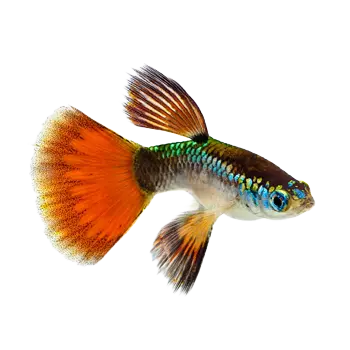
Guppies display remarkable sexual dimorphism, with males reaching 1.5 inches in body length while females grow larger at 2 to 2.5 inches. This size difference becomes even more pronounced when considering the elaborate finnage of fancy male varieties, which can double their apparent length. The dramatic difference between sexes makes guppies easily distinguishable even to casual observers.

Male guppies showcase an extraordinary range of colors and patterns produced through decades of selective breeding. Wild-type males display modest spotting and iridescence, but fancy varieties exhibit solid colors, multicolor patterns, metallic sheens, and complex markings across their bodies and fins. Colors span the entire spectrum including red, blue, green, yellow, orange, purple, black, and white in endless combinations.

The body shape follows the typical livebearer profile with a slightly compressed form and upturned mouth adapted for surface feeding. Males possess the distinctive gonopodium, a modified anal fin used for internal fertilization, which develops from the normal fan-shaped fin during maturation. This specialized structure represents the defining characteristic of male livebearers.

Fin varieties in males range dramatically, with tail shapes categorized into distinct types. Delta and triangle tails spread broadly, veiltails flow gracefully, lyretails extend in twin points, and swordtails project single or double extensions. The dorsal fin often matches tail development, with some varieties displaying elaborate sail-like dorsals adding to their ornamental appeal.

Females present a more uniform appearance with silver, gray, or golden body coloration and relatively small transparent fins. A dark gravid spot near the vent indicates pregnancy and darkens as birth approaches. Some fancy female lines show enhanced coloration, but females never approach the brilliance of males. The visual contrast between sexes adds interest to mixed-gender displays.

Temperament
Guppies are remarkably peaceful fish that coexist harmoniously with virtually any non-predatory tank mate. Males display constantly but never aggressively. Their gentle disposition makes them ideal community aquarium residents for tanks of all sizes.
Care Level
Renowned as the perfect beginner fish, guppies tolerate a wide range of water conditions and bounce back from husbandry mistakes. Their forgiving nature and adaptability make them ideal for learning aquarium keeping fundamentals.
Diet
Guppies eagerly consume any aquarium food offered including flakes, pellets, frozen, and live foods. They graze continuously on algae and biofilm, require no specialized nutrition, and thrive on readily available commercial foods.
Water Conditions
Exceptionally adaptable to various water chemistries, guppies thrive in soft to hard water and tolerate pH variations well. They prefer clean water but forgive occasional lapses, making them suitable for aquarists with challenging tap water.
Tank Size
Guppies flourish in tanks as small as 10 gallons, though their prolific breeding often necessitates larger accommodations. Their modest size and adaptable nature suit them to various tank configurations from nano setups to community displays.
Compatibility
Perfect community fish that ignore other species entirely while adding constant color and movement. Compatible with nearly any peaceful fish, shrimp, and snails. Their only incompatibility lies with fin-nipping species that target their flowing tails.
Activity Level
Guppies remain active throughout daylight hours, constantly swimming, displaying, and foraging. Males particularly energetic in courtship pursuits. They utilize all tank levels but favor mid to upper water columns where they're most visible.
Hardiness
Among the hardiest aquarium fish available, guppies resist common diseases and recover quickly from stress. Their robust constitution forgives beginner mistakes and adapts to imperfect conditions that would challenge more sensitive species.

Natural Habitat & Range

Guppies originate from the warm freshwater habitats of northeastern South America and the Caribbean islands, with native range spanning Venezuela, Trinidad, Barbados, and surrounding regions. Their natural distribution has expanded dramatically through intentional introductions for mosquito control, establishing wild populations across tropical regions worldwide from Florida to Singapore.

Natural habitats include slow-moving streams, ditches, ponds, and brackish coastal waters. Guppies demonstrate remarkable ecological flexibility, thriving in everything from pristine jungle streams to polluted urban waterways. This adaptability in the wild directly translates to their success in aquarium conditions, where they tolerate a similarly broad range of environments.

Wild guppy habitats typically feature warm temperatures between 75 and 85 degrees Fahrenheit with seasonal variations. Water chemistry varies considerably across their range, from soft acidic waters in jungle streams to harder alkaline conditions in limestone areas and slightly brackish environments near coastal zones. This natural variation explains their exceptional tolerance for different aquarium water parameters.

Vegetation plays an important role in wild guppy habitats, providing cover from predators and surfaces for algae and biofilm growth. Aquatic plants, overhanging terrestrial vegetation, and accumulated leaf litter create the complex environments where guppies evolved. Predation pressure from larger fish and birds has shaped their behavior, producing the wariness and quick reflexes observable in aquarium populations.

The shallow, well-lit nature of many guppy habitats promotes algae growth that forms a significant portion of their wild diet. Guppies occupy an important ecological niche as both algae grazers and mosquito larvae predators, which led to their worldwide introduction for biological pest control throughout the twentieth century.

Guppy Temperament & Behavior

Guppies rank among the most peaceful aquarium fish, displaying virtually no aggression toward tank mates regardless of species. Their gentle disposition makes them universally recommended for community aquariums, and they coexist harmoniously with nearly any fish that won't view them as food. Even in crowded conditions, guppies rarely show fin nipping or territorial behavior.

Male guppies dedicate significant energy to courtship displays, performing characteristic sigmoid curves and fin spreading to attract female attention. These displays occur constantly throughout the day and represent normal social behavior rather than aggression. Multiple males displaying simultaneously creates an active, colorful spectacle that draws many hobbyists to the species.

Social dynamics within guppy groups remain fluid and non-hierarchical. Males compete for female attention through display intensity rather than physical confrontation. Females exercise mate choice by accepting or rejecting male advances, often preferring males with more elaborate coloration or finnage. This mate selection pressure drives the evolution of increasingly ornate male characteristics.

Activity patterns follow a diurnal schedule with peak activity during daylight hours. Guppies spend their days swimming, foraging, displaying, and socializing, utilizing primarily the mid to upper water column. Surface orientation reflects their wild feeding behavior, where they consume mosquito larvae and floating organic matter at the water's surface.

Guppies demonstrate curiosity about their environment, investigating new objects and immediately appearing at feeding time. They recognize their keepers and often gather at the front of the aquarium in anticipation of feeding. This interactive behavior and apparent awareness contribute to their appeal beyond their visual attractiveness.

Stress responses in guppies include clamped fins, hiding behavior, and color fading. Healthy guppies in appropriate conditions display bold colors, erect finnage, and confident swimming behavior. Observing these behavioral indicators helps aquarists assess the wellbeing of their fish and identify potential problems before they become serious.

Tank Setup & Requirements

Guppies thrive in aquariums of 10 gallons or larger, with this minimum providing adequate space for a small group while allowing proper filtration and parameter stability. Larger tanks suit their prolific breeding nature, as populations can expand rapidly without management. Tank length matters more than height, as guppies prefer horizontal swimming space over vertical depth.

Filtration should provide gentle to moderate water movement, as guppies evolved in slow-moving waters and struggle against strong currents. Sponge filters offer ideal biological filtration with minimal flow, while hang-on-back filters work well when flow is diffused or baffled. Strong powerheads and wavemakers should be avoided or positioned to create calm zones.

Substrate choice depends largely on aesthetic preference and plant requirements, as guppies adapt to any bottom covering. Dark substrates showcase their colors effectively, while planted tank substrates support live plants that complement guppy keeping. Sand allows natural foraging behavior, though gravel works equally well for these adaptable fish.

Live plants greatly enhance guppy aquariums both visually and functionally. Dense plantings provide fry hiding spots, contribute to water quality through nutrient uptake, and create naturalistic environments. Java Moss, Guppy Grass, Hornwort, and Water Sprite offer excellent options that tolerate the same conditions as guppies while providing ample cover.

Decoration choices remain flexible, with guppies adapting to minimalist or heavily decorated setups equally well. Driftwood, rocks, and commercial decorations all work provided they lack sharp edges that might damage flowing fins. Creating some shaded areas with plants or decorations allows fish to retreat from bright lighting when desired.

Lighting serves primarily aesthetic and plant-growing purposes, as guppies adapt to various light levels. Moderate lighting that showcases fish colors while supporting plant growth represents the ideal balance. A consistent photoperiod of 8 to 10 hours maintains natural behavior patterns and prevents excessive algae growth.

A secure lid or cover prevents jumping, which guppies occasionally do when startled or during particularly active courtship displays. Even small gaps around equipment should be covered, as guppies can escape through surprisingly narrow openings. Mesh covers work well for planted tanks requiring open tops for emergent growth.

Water Parameters

Guppies demonstrate exceptional tolerance for varied water conditions, making them suitable for almost any aquarium setup. The optimal temperature range spans 72 to 82 degrees Fahrenheit, with guppies tolerating extremes from 64 to 90 degrees for brief periods. Maintaining stable temperatures within the preferred range promotes optimal health, coloration, and breeding activity.

The acceptable pH range extends from 6.8 to 7.8, with neutral to slightly alkaline conditions around 7.0 to 7.5 being optimal. Guppies adapt to local water chemistry remarkably well, prioritizing stability over specific values. Dramatic pH swings cause more problems than steady values slightly outside the optimal range.

Water hardness tolerance spans soft to very hard conditions, with general hardness from 8 to 20 dGH being optimal. Guppies often perform best in moderately hard water that provides minerals supporting their metabolism and reproduction. This preference makes them well-suited to many municipal water supplies without modification.

Ammonia and nitrite must remain at zero through adequate biological filtration and regular maintenance. Nitrate should stay below 40 ppm through water changes, with lower levels promoting better health and coloration. Despite their hardiness, guppies benefit from clean water and should not be subjected to deliberately poor conditions.

Regular water changes of 20 to 30 percent weekly maintain water quality and replenish trace minerals. Smaller, more frequent changes often work better than large periodic changes by maintaining consistent parameters. The relatively light bioload of guppies means they don't demand intensive maintenance, but regular care promotes optimal results.

Acclimation of new guppies should follow standard drip acclimation procedures over 30 to 60 minutes to prevent stress from sudden parameter changes. Despite their reputation for hardiness, taking time for proper acclimation reduces mortality and helps new fish adapt more quickly to their new environment.

Guppy Health & Lifespan

Guppies are exceptionally hardy fish that rarely experience serious health problems when provided basic care. Their disease resistance and ability to recover from stress make them ideal for beginners who might make occasional mistakes. Under optimal conditions, guppies typically live 2 to 3 years, with exceptional individuals reaching 4 to 5 years. Inbred fancy varieties sometimes show reduced vigor compared to wild-type or mixed populations, but proper selection and care produces healthy, long-lived fish regardless of variety.

Guppies remain healthy with minimal intervention when basic husbandry practices are followed consistently. Their hardy reputation is well-deserved, but this shouldn't encourage neglect of proper care practices. Observing fish daily during feeding allows early detection of problems, and maintaining stable conditions prevents most issues from developing. When health problems occur, they typically respond well to improved water quality and appropriate treatment.

Common Health Issues

  • Ich (white spot disease) affects stressed guppies - Appearing as small white spots covering the body and fins, spreading rapidly through tanks and requiring prompt treatment with heat and medication to prevent colony-wide infection.
  • Fin rot targets the elaborate fins of fancy males - Causing progressive deterioration of fin tissue due to bacterial infection, typically resulting from poor water quality or injury and requiring clean water and antibacterial treatment.
  • Columnaris presents as white cottony patches on the body or mouth - Progressing rapidly and potentially killing affected fish within days if untreated with appropriate antibacterial medications and improved water quality.
  • Internal parasites including wasting disease cause progressive weight loss despite normal feeding - Particularly common in mass-produced fish and requiring treatment with medicated foods or antiparasitic medications.
  • Swim bladder disorder causes difficulty maintaining normal buoyancy - Often resulting from overfeeding, constipation, or bacterial infection, usually responding to fasting and treatment of any underlying infection.
  • Genetic disorders including curved spine - Shortened bodies, and tumor susceptibility appear in heavily inbred lines, emphasizing the importance of obtaining fish from reputable sources that maintain genetic diversity.

Preventive Care & Health Monitoring

  • Quarantine all new guppies for 2 to 4 weeks before adding them to established tanks - Preventing introduction of diseases that could devastate existing populations.
  • Maintain excellent water quality through regular testing and consistent water change schedules - As most guppy health problems trace directly to poor water conditions.
  • Feed high-quality varied diet in appropriate amounts - Avoiding overfeeding while ensuring complete nutrition that supports immune function and disease resistance.
  • Source guppies from reputable breeders or stores that maintain healthy - Genetically diverse populations rather than mass-produced fish with potential inbreeding problems.

Guppy Feeding & Diet

Guppies are enthusiastic omnivores that eagerly consume virtually any aquarium food offered to them. Their wild diet consists of algae, small invertebrates, mosquito larvae, and organic detritus, giving them diverse nutritional needs easily met through varied captive feeding. Their surface-oriented feeding behavior makes them efficient consumers of floating foods.

High-quality flake food or micro pellets should form the dietary foundation for guppies. Foods formulated specifically for tropical fish or livebearers provide appropriate nutrition, with color-enhancing varieties helping maintain vibrant hues. Crushing flakes into smaller pieces benefits young fish and ensures all individuals can feed effectively.

Frozen foods including brine shrimp, daphnia, bloodworms, and mosquito larvae provide excellent supplementation and help condition fish for breeding. These protein-rich foods promote growth, enhance coloration, and support reproductive health. Thaw frozen foods in tank water before feeding and offer only what fish will consume quickly.

Live foods represent the ultimate dietary supplement, eagerly pursued by guppies and providing unmatched nutritional value. Baby brine shrimp, microworms, daphnia, and vinegar eels are all readily accepted. Culturing live foods at home ensures a clean, parasite-free supply that benefits fish health and breeding success.

Vegetable matter deserves inclusion in the guppy diet to support their omnivorous nature. High-quality foods containing spirulina satisfy herbivorous requirements, while blanched vegetables like zucchini, spinach, or cucumber provide variety when offered occasionally. Algae growth within the tank supplies additional grazing opportunities.

Feeding frequency should match the fast metabolism of these small fish, with two to three small feedings daily being optimal for adults. Each feeding should provide only what fish consume within two to three minutes. Fry and juveniles benefit from more frequent feedings of four to five times daily to support rapid growth.

Overfeeding represents the most common feeding mistake with guppies, as their constant begging behavior often prompts excessive food offerings. Excess food degrades water quality and causes obesity that shortens lifespan and reduces breeding success. Weekly fasting days help prevent overfeeding problems while mimicking natural food availability variations.

Tank Mates & Breeding

Guppies make outstanding community fish, compatible with nearly any peaceful species of appropriate size. Their gentle disposition and surface-oriented behavior mean they rarely compete directly with mid-water or bottom-dwelling species, allowing diverse community compositions. Selecting tank mates requires primarily ensuring nothing will prey upon or harass the guppies themselves.

Ideal companions include other peaceful livebearers like platies, mollies, and swordtails, though these may interbreed with guppies in some cases. Small tetras including Neon Tetras, Cardinal Tetras, and Ember Tetras make excellent choices with similar size and temperament. Peaceful rasboras and small barbs that lack fin-nipping tendencies also work well.

Bottom-dwelling species add activity to lower tank levels without competing with surface-oriented guppies. Corydoras catfish in their various species make perfect companions, as do small loaches like Kuhli Loaches. Bristlenose and other small plecos contribute algae control while ignoring guppies entirely.

Invertebrates coexist peacefully with guppies in most situations. Cherry Shrimp, Amano Shrimp, and other dwarf shrimp varieties face no threat from guppies, though very small shrimplets might occasionally be eaten opportunistically. Mystery Snails, Nerite Snails, and Ramshorn Snails all work perfectly in guppy communities.

Species to avoid include any fish large enough to eat guppies, which eliminates most cichlids and larger predatory species. Fin-nipping fish like Tiger Barbs, Serpae Tetras, and some Danios species target flowing guppy tails relentlessly. Bettas, despite similar care requirements, should not be housed with male guppies whose colorful fins trigger aggressive responses.

Breeding occurs constantly in mixed-sex groups with no special intervention required. Females give birth to live young every 25 to 35 days, producing 20 to 50 fry per brood depending on size and condition. Fry survival in community tanks depends on available cover, with dense plantings of fine-leaved plants providing necessary hiding spots.

Managing guppy populations often becomes necessary as their prolific breeding can quickly overcrowd tanks. Maintaining male-only groups eliminates breeding while preserving colorful displays. Alternatively, including natural predators like larger tetras or small cichlids can control fry survival without eliminating breeding entirely.