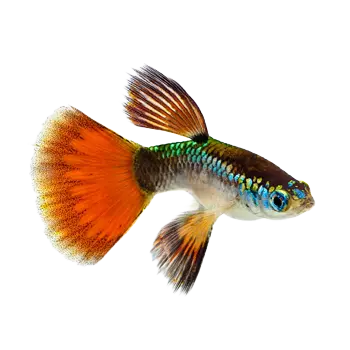

Tank Size & Space Requirements

The most common mistake new guppy keepers make is underestimating how much space these small fish actually need. While guppies are often marketed alongside tiny desktop tanks and decorative bowls, a minimum of ten gallons is strongly recommended for a small group. This volume provides enough water to buffer against rapid changes in temperature and chemistry, which are the primary killers of guppies in undersized setups.

The general stocking guideline of one inch of fish per gallon of water is a useful starting point, but it oversimplifies the reality of guppy keeping. Guppies are prolific breeders, and a tank that starts with a comfortable population of six can easily double or triple within a few months if both sexes are present. Planning for population growth from the beginning saves you from emergency tank upgrades later.

Tank shape matters as much as volume. Guppies are active swimmers that prefer horizontal swimming space over vertical depth. A long, shallow tank with a large surface area promotes better gas exchange and gives guppies more room to display their natural schooling and courting behaviors. Tall, narrow tanks may hold the same number of gallons but provide a less suitable environment for these surface-oriented fish.

If you plan to keep a breeding colony or a community tank with multiple species, stepping up to a twenty-gallon or larger aquarium is well worth the investment. The additional volume makes water quality management significantly easier, provides more room for plants and hiding spots, and reduces aggression by giving fish room to establish territories and retreat from one another.

Aquarium Types & Materials

Glass aquariums remain the industry standard for guppy housing and offer several practical advantages. Glass does not scratch easily, maintains optical clarity over years of use, and does not warp or discolor with age. Standard glass tanks are available in a wide range of sizes and are generally the most affordable option per gallon. Rimmed glass tanks with a plastic frame along the top and bottom edges provide structural support that allows for slightly thinner glass, reducing weight and cost.

Rimless glass tanks have become popular among aquascapers and hobbyists who prefer a cleaner aesthetic. These tanks use thicker glass with polished edges and rely on silicone seams alone for structural integrity. The visual effect is striking, as the lack of a frame gives an unobstructed view of the aquarium from every angle. However, rimless tanks tend to be more expensive and require more careful handling during setup.

Acrylic tanks are significantly lighter than glass equivalents, making them a practical choice for larger setups or situations where the tank will be placed on furniture that may not support the weight of a heavy glass aquarium filled with water. Acrylic also offers better insulation, which can help maintain stable water temperatures. The main drawback is that acrylic scratches more easily, and over time these scratches can accumulate and reduce viewing clarity.

All-in-one aquarium kits that bundle the tank with a built-in filter, heater, and lighting system can be convenient for beginners, but the included equipment is often basic. Evaluate each component individually before purchasing a kit. A ten-gallon starter kit with an adequate filter and heater may be a good value, but a kit with an undersized filter or a non-adjustable heater could create problems that outweigh the convenience.

Filtration & Water Quality

Filtration is the most critical piece of equipment in any guppy aquarium. A good filter performs three essential functions: mechanical filtration to remove particulate debris, biological filtration to convert toxic ammonia and nitrite into less harmful nitrate, and chemical filtration to remove dissolved organic compounds and discoloration. Of these three, biological filtration is by far the most important for long-term fish health.

Hang-on-back filters are the most common choice for guppy tanks in the ten to thirty-gallon range. They are affordable, easy to maintain, and provide good water circulation. When selecting a hang-on-back filter for guppies, look for models with adjustable flow rates. Guppies are not strong swimmers, and the elaborate finnage of fancy males creates significant drag. A filter with an excessively strong output current can exhaust guppies and cause chronic stress.

Sponge filters are an excellent alternative, particularly in breeding tanks or tanks housing fry. They provide gentle water movement, outstanding biological filtration surface area, and pose no risk of trapping small fish or fry in an intake tube. Sponge filters are powered by an air pump and operate almost silently. Many dedicated guppy breeders use sponge filters exclusively across their entire fishroom because of their reliability and low maintenance requirements.

Canister filters are generally overkill for a standard guppy tank but make sense for larger community setups of forty gallons or more. They offer the highest filtration capacity and can be loaded with custom media combinations. The main consideration with canister filters in a guppy context is ensuring the return flow is diffused enough to avoid creating strong currents that stress the fish. Spray bars and lily pipe outlets help distribute the flow more gently across the tank.

Heating & Lighting

Guppies are tropical fish that require stable water temperatures in the range of 72 to 82 degrees Fahrenheit, with 76 to 78 degrees being the sweet spot for general keeping. A reliable aquarium heater is essential unless you live in a climate where room temperature consistently stays within this range year-round. Submersible heaters with adjustable thermostats are the most common and practical option for most guppy tanks.

Heater sizing follows a general rule of approximately five watts per gallon of aquarium water. A fifty-watt heater suits a ten-gallon tank, while a one-hundred-watt heater is appropriate for a twenty-gallon setup. In larger tanks or in rooms with significant temperature fluctuations, using two smaller heaters instead of one large one provides redundancy. If one heater fails, the other continues to provide partial heating, which can prevent a catastrophic temperature crash.

Lighting serves both aesthetic and biological purposes in a guppy aquarium. Guppies themselves do not have demanding light requirements, but if you are growing live plants, the lighting becomes a more important consideration. Full-spectrum LED fixtures designed for planted aquariums provide the right wavelengths for photosynthesis while also enhancing the colors of your fish. A consistent photoperiod of eight to ten hours of light per day, controlled by a timer, helps establish a natural day-night cycle.

Avoid placing the aquarium in direct sunlight, as this can cause rapid temperature swings and promote excessive algae growth. Even in a well-lit room, ambient light alone is not sufficient or consistent enough to replace dedicated aquarium lighting. Position the tank away from windows and heating vents to maintain the most stable environment possible.

Substrate & Aquascaping

The substrate you choose for a guppy tank affects water chemistry, plant growth, and the overall aesthetic of the aquarium. Fine gravel in the one to three millimeter range is a popular all-purpose choice that is easy to clean, supports beneficial bacteria colonization, and comes in a variety of natural colors. Avoid very coarse gravel with sharp edges, as uneaten food can become trapped in the gaps and decompose, and guppies that forage along the bottom can injure their mouths on rough substrates.

Planted tank substrates enriched with nutrients are ideal if you plan to keep rooted live plants alongside your guppies. These substrates provide iron, potassium, and other essential elements directly to plant roots, promoting healthy growth without requiring heavy liquid fertilizer dosing. Many planted substrates also buffer pH slightly downward, which is generally compatible with guppy keeping though you should monitor water parameters during the initial cycling period.

Sand substrates create a clean, natural look and are gentle on bottom-dwelling tankmates. However, sand can compact over time and develop anaerobic pockets that produce hydrogen sulfide gas. If you choose sand, stir it gently during water changes or keep a few bottom-dwelling snails that will aerate the substrate naturally as they move through it.

Live plants are highly recommended in guppy aquariums. Dense plantings of species like java moss, hornwort, and water sprite provide cover for fry, reduce stress by breaking up sight lines, absorb nitrate, and contribute to overall water quality. Floating plants are especially valuable in guppy tanks because they diffuse overhead light and create shaded areas that guppies seem to prefer. Even simple, low-maintenance plants make a meaningful difference in the health and behavior of your fish.

Multi-Fish Households & Community Tanks

Guppies are among the most compatible community tank residents available, but thoughtful planning is still required when combining them with other species. Ideal tankmates share the guppy's preference for warm, slightly hard water and have peaceful temperaments. Small tetras, rasboras, corydoras catfish, and peaceful dwarf shrimp are all well-established companions for guppies. Avoid housing guppies with fin-nipping species like tiger barbs or serpae tetras, as the flowing tails of male guppies are irresistible targets.

Sex ratios deserve careful attention in any guppy community. Males constantly pursue females for mating, and a single female harassed by multiple males will become chronically stressed. A ratio of at least two to three females per male distributes this attention and gives individual females time to rest and feed without constant pursuit. In all-male tanks kept purely for display, aggression is typically minimal as long as the group is large enough that no single fish is singled out.

Fry survival in a community tank depends almost entirely on the availability of dense cover. Without thick plant growth or other hiding spots, adult fish including the guppy parents themselves will eat newborn fry within hours. If you want some fry to survive naturally without using a separate breeding tank, plant the aquarium heavily with fine-leaved species and floating plants that give fry places to hide during their most vulnerable first days.

When adding new fish to an established guppy tank, quarantine them in a separate container for at least two weeks before introduction. This precaution helps prevent the introduction of diseases, parasites, and pathogens that could devastate a healthy population. Acclimate new arrivals slowly by floating their bag in the tank and gradually mixing small amounts of tank water into the bag over thirty minutes to equalize temperature and chemistry before release.

Always consult a qualified professional before making any health-related decisions. This content is provided for informational reference only and should not replace professional guidance specific to your animal.