
Angelfish Care Guide - Furry Critter Network

Angelfish

Quick Facts

🔬 Scientific Name
Pterophyllum scalare
⭐ Care Level
Intermediate
😊 Temperament
Semi-Aggressive
📏 Adult Size
6-8 inches tall, 6 inches long
⏱️ Lifespan
10-12 years
🐟 Tank Size Minimum
30 gallons
🌡️ Temperature Range
76-84°F
⚗️ Ph Range
6.0-7.5
🍽️ Diet Type
Omnivore
🌍 Origin
Amazon River Basin, South America

Angelfish - Names & Recognition

The Angelfish, scientifically known as Pterophyllum scalare, stands as one of the most beloved and instantly recognizable species in the freshwater aquarium hobby. The genus name Pterophyllum derives from Greek words meaning "winged leaf," perfectly describing their distinctive laterally compressed body shape and flowing finnage that creates the impression of a delicate aquatic leaf drifting through the water.

Commonly referred to as the Freshwater Angelfish to distinguish them from their marine namesakes, these cichlids are also known by several other names throughout the hobby and trade. Dealers and hobbyists sometimes refer to them simply as "Angels" while specific color varieties carry descriptive names such as Silver Angelfish, Marble Angelfish, Koi Angelfish, Black Angelfish, and Platinum Angelfish among many others.

Pterophyllum scalare belongs to the family Cichlidae, the diverse cichlid family containing over 1,600 species. Within the genus Pterophyllum, three species are recognized: P. scalare (the most common in aquaria), P. altum (the Altum Angelfish), and P. leopoldi (Leopold's Angelfish). The species name scalare means "like a flight of stairs" in Latin, referencing the stepped appearance of their dorsal fin rays.

Through decades of selective breeding, countless color morphs and fin variations have been developed. These captive-bred varieties include veil-tail, half-black, zebra, gold, blushing, and ghost phenotypes. Wild-caught specimens remain available but captive-bred fish dominate the market due to their availability, lower cost, and generally improved adaptability to aquarium conditions.

Angelfish Physical Description

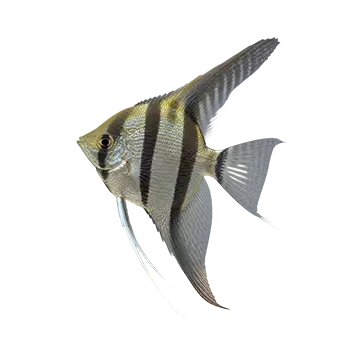
The Angelfish possesses one of the most distinctive and elegant body shapes found in freshwater aquariums. Their laterally compressed, disc-shaped body creates the characteristic triangular silhouette when viewed from the front, with dramatically extended dorsal and anal fins that give them their impressive height. Adults typically reach 6 inches in body length but can measure up to 8 inches from the tip of the dorsal fin to the bottom of the anal fin.

The wild-type coloration features a silvery body overlaid with bold black vertical bars that help camouflage these fish among vegetation and dappled light in their natural habitat. These bars can intensify or fade depending on mood, health, and environmental conditions. The body displays a subtle iridescence that catches light beautifully, particularly noticeable in well-lit planted aquariums.

Selective breeding has produced an astounding variety of color morphs that bear little resemblance to wild specimens. Popular varieties include the Marble pattern with irregular black and white patches, the Koi type displaying orange and white coloration reminiscent of ornamental carp, the striking all-black variety, and the elegant Platinum showing pristine white-silver coloration. Veil-tail varieties feature dramatically extended finnage that flows gracefully with every movement.

The fins of angelfish deserve special attention as defining characteristics of the species. The tall, triangular dorsal fin and corresponding anal fin create their iconic profile. Thread-like pelvic fins extend downward, serving as sensory organs that the fish use to explore their environment. The caudal fin is fan-shaped, providing efficient propulsion for their deliberate swimming style.

Sexual dimorphism is subtle and generally unreliable until fish reach breeding condition. Males may develop a slightly more prominent nuchal hump (forehead bump) and often appear more angular in the head region. The most reliable sexing method involves observing the breeding tubes during spawning—females display a blunt, wider ovipositor while males show a narrower, more pointed tube. Juveniles appear nearly identical regardless of sex.

Temperament
Angelfish are generally peaceful but become territorial during breeding and may prey on very small fish. Adults establish hierarchies and can show aggression toward conspecifics in cramped spaces. Best kept in appropriately sized groups or mated pairs.
Care Level
Angelfish require stable water parameters and clean conditions to thrive. While not beginner fish, they adapt well to captive life with proper maintenance. Sensitivity to ammonia and nitrite spikes demands consistent aquarium care and established biological filtration.
Diet
These omnivores readily accept a wide variety of foods including quality flakes, pellets, frozen bloodworms, and brine shrimp. A varied diet enhances coloration and overall health. They eagerly approach feeding time and rarely refuse offered foods.
Water Conditions
Angelfish prefer soft, slightly acidic water mimicking their Amazon origins but adapt to moderate hardness. Stable temperature between 76-84°F is essential. They tolerate a reasonable pH range but struggle with sudden parameter changes or poor water quality.
Tank Size
Minimum 30 gallons for a pair, with 55+ gallons recommended for groups. Their tall body shape requires tanks with adequate height—at least 18 inches. Larger aquariums reduce territorial disputes and provide necessary swimming space for these graceful fish.
Compatibility
Angelfish coexist well with medium-sized peaceful community fish but will eat very small species like neon tetras. Avoid fin nippers and overly aggressive tank mates. Best companions include larger tetras, corydoras, peaceful gouramis, and similarly-sized community fish.
Activity Level
Angelfish display moderate activity, gracefully patrolling their territory throughout the day. They alternate between active swimming and peaceful hovering among plants or decorations. Most active during feeding times, they maintain an elegant, unhurried swimming style.
Hardiness
Captive-bred angelfish are reasonably hardy when provided stable conditions. They resist common diseases in well-maintained tanks but can succumb to ich and bacterial infections during stress. Line-bred varieties may show reduced hardiness compared to wild-type specimens.

Natural Habitat & Range

Angelfish originate from the vast Amazon River Basin in South America, with their range extending through Peru, Colombia, Brazil, and reaching into the Guianas. They inhabit the slow-moving tributaries, floodplain lakes, and swampy areas throughout this enormous watershed, preferring areas with dense vegetation, submerged roots, and fallen branches that provide cover and hunting opportunities.

In their natural environment, angelfish thrive in warm, soft, acidic water conditions that characterize many Amazonian waterways. Wild habitats typically feature temperatures between 78-84°F, with pH values ranging from 5.5-7.0 depending on the specific location and seasonal flooding patterns. The water in these regions is often stained brown with tannins released from decomposing leaves and wood, creating the characteristic blackwater conditions.

The physical structure of angelfish habitat includes abundant aquatic vegetation, emergent plants along shorelines, and complex root systems from flooded forest areas. Dense growths of Amazon sword plants, Vallisneria, and various floating plants provide essential cover. Submerged wood and leaf litter create additional hiding spots and contribute to the soft, acidic water chemistry.

Seasonal flooding dramatically influences angelfish ecology. During the wet season, rivers overflow into surrounding forests, vastly expanding available habitat and food resources. Fish follow these floods to access new feeding grounds rich in insects, crustaceans, and plant matter. As waters recede, populations concentrate in remaining pools and river channels until the next flood cycle.

Wild angelfish face various predators including larger fish, caimans, and fishing birds. Their vertical barring pattern provides camouflage among vegetation and shadows, breaking up their outline and making them harder for predators to detect. This same pattern helps them ambush small prey items including mosquito larvae, small crustaceans, and worms.

Habitat destruction through deforestation and pollution threatens wild angelfish populations, though the species maintains stable numbers across its extensive range. The aquarium trade relies almost exclusively on captive-bred specimens, reducing collection pressure on wild populations.

Angelfish Temperament & Behavior

Angelfish display a complex behavioral repertoire that reflects their cichlid heritage. While often marketed as peaceful community fish, their temperament requires nuanced understanding to successfully keep them with other species. Under normal circumstances, angelfish are relatively calm and peaceful, spending their time gracefully patrolling their territory and investigating their environment with characteristic cichlid curiosity.

Social dynamics among angelfish involve establishing hierarchies, particularly when multiple individuals share an aquarium. In groups, a dominant pair typically emerges and may claim the best territory, occasionally chasing subordinate individuals away from preferred areas. This behavior intensifies in smaller tanks where space limitations prevent subordinate fish from escaping dominant attention. Keeping angelfish in groups of six or more can help distribute aggression and reduce bullying of single individuals.

Territorial behavior becomes most pronounced during breeding. Mated pairs stake out spawning sites—typically a vertical surface such as a broad leaf, piece of slate, or aquarium glass—and aggressively defend the area from all intruders. During this period, even previously peaceful angelfish may attack tank mates that venture too close to their chosen spawning location. This protective behavior intensifies after eggs are laid and continues through fry development.

A critical behavioral consideration involves prey drive. Despite their elegant appearance, angelfish are opportunistic predators that will consume any fish small enough to fit in their mouths. Adult angelfish readily eat neon tetras, small rasboras, and newborn livebearers. This predatory behavior is instinctive and cannot be trained away—tank mate selection must account for adult angelfish size.

Activity patterns follow a diurnal rhythm, with angelfish most active during daylight hours. They exhibit fascinating awareness of their keepers, often approaching the front glass in anticipation of feeding and learning to recognize the person who provides their meals. This intelligence and interactivity contribute to their enduring popularity among aquarists.

Stress significantly affects angelfish behavior. Symptoms include color fading, hiding, refusal to eat, and unusual aggression or passivity. Common stressors include inadequate tank size, aggressive tank mates, poor water quality, and insufficient cover. Providing appropriate environmental conditions allows their natural, confident behavior to emerge.

Tank Setup & Requirements

Successful angelfish keeping begins with providing an appropriately sized and configured aquarium. The minimum recommended tank size is 30 gallons for a single pair, though 55 gallons or larger is strongly preferred for groups. Tank height deserves special consideration—angelfish require at least 18 inches of water depth to accommodate their tall body shape and extended finnage. Standard 29-gallon tanks, while meeting volume requirements, are often too short for adult angelfish comfort.

Filtration should provide gentle to moderate water movement, as angelfish naturally inhabit slow-moving waters. Hang-on-back filters, sponge filters, and canister filters all work well when flow is appropriately directed or dispersed. Avoid strong currents that force angelfish to constantly swim against the flow, which causes stress and fin damage over time. Position filter outputs against glass or use spray bars to diffuse flow.

Substrate choice affects both aesthetics and function. Fine gravel or sand works well, with darker colors showing off angelfish coloration beautifully. Sand substrates benefit bottom-dwelling tank mates like corydoras catfish. A layer of fallen leaves can be added to create more natural conditions and release beneficial tannins, though this requires regular replacement as leaves decompose.

Live plants significantly enhance angelfish aquariums, providing cover, water quality improvement, and natural spawning surfaces. Tall background plants like Amazon swords, Vallisneria, and stem plants create structure and hiding places. Broad-leafed plants such as Anubias and Echinodorus species offer potential spawning sites that pairs may prefer over artificial surfaces. Floating plants help diffuse lighting and provide additional security.

Decorations should include vertical elements that complement angelfish body shape. Tall driftwood pieces, stacked rocks, and slate leaned against the tank wall provide territory markers and spawning surfaces. Avoid sharp decorations that could damage delicate fins. Create distinct zones with different decor groupings to reduce territorial conflicts in community setups.

Lighting should be moderate—enough to support plant growth without being harsh. Angelfish appreciate some shaded areas created by floating plants or tall decor. A consistent photoperiod of 8-10 hours daily using a timer helps establish natural behavioral rhythms. Secure lids are essential as angelfish can jump, particularly when startled or during territorial disputes.

Water Parameters

Maintaining appropriate water parameters is essential for angelfish health and longevity. Temperature ranks among the most critical factors, with angelfish requiring tropical warmth between 76-84°F. The optimal range of 78-82°F promotes active behavior, healthy immune function, and successful breeding. Temperatures below 74°F stress angelfish and leave them vulnerable to disease, while prolonged exposure above 86°F accelerates metabolism unsustainably.

Water chemistry preferences reflect angelfish origins in soft, acidic Amazonian waters. The ideal pH range spans 6.0-7.5, with slightly acidic conditions around 6.5-6.8 considered optimal. Most captive-bred angelfish have adapted to tolerate moderate hardness and neutral pH, making them more flexible than wild specimens. However, extremes in either direction cause stress and should be avoided.

General hardness (GH) should ideally remain between 3-8 dGH, though captive-bred fish tolerate up to 12 dGH. Carbonate hardness (KH) between 3-8 dKH provides adequate buffering to prevent dangerous pH swings. For those seeking optimal conditions, mixing RO water with tap water allows precise control over these parameters.

Water quality maintenance requires consistent effort. Ammonia and nitrite must remain at zero—angelfish show sensitivity to these compounds, and any detectable levels indicate inadequate filtration or cycling issues. Nitrate levels should stay below 20 ppm through regular water changes, with many successful keepers maintaining levels under 10 ppm for optimal health.

Weekly water changes of 25-30% help maintain pristine conditions and replenish essential minerals. When performing water changes, match new water temperature within 2°F of tank temperature to prevent thermal shock. Dechlorinate all tap water and consider aging water overnight to allow gas equilibration. Larger water changes may be necessary in densely stocked tanks.

Acclimation deserves careful attention when introducing new angelfish. The drip acclimation method, slowly mixing tank water into the transport bag over 1-2 hours, allows gradual adjustment to local water parameters. This patient approach significantly reduces stress and improves survival rates, particularly for fish transitioning between substantially different water conditions.

Angelfish Health & Lifespan

Angelfish are reasonably hardy when provided proper care, with captive-bred specimens showing good adaptability to aquarium conditions. Their expected lifespan of 10-12 years is achievable with excellent husbandry, though many aquarium angelfish live shorter lives due to inadequate care or poor genetic stock from mass production. Wild-caught and some line-bred varieties may be more delicate than standard captive-bred fish. Like all aquarium fish, angelfish remain susceptible to various diseases, particularly when stressed by poor water quality, inadequate nutrition, or inappropriate tank mates.

With attentive care, angelfish can provide over a decade of enjoyment in the home aquarium. Early recognition of health issues dramatically improves treatment outcomes—watch for behavior changes, loss of appetite, color fading, or visible physical abnormalities. Many conditions respond well to treatment when caught early, but advanced infections prove difficult to resolve. Prevention through excellent husbandry always surpasses treatment in effectiveness and outcome.

Common Health Issues

  • Ich (white spot disease) appears as white spots covering the body and fins - Caused by the Ichthyophthirius parasite that thrives when fish are stressed by temperature fluctuations or poor water quality, treatable with elevated temperature and medication.
  • Freshwater angelfish virus - Or angelfish plague, causes high mortality in angelfish specifically, presenting with excess slime production, respiratory distress, and rapid death, with no effective treatment making quarantine and prevention essential.
  • Fin rot manifests as ragged - Discolored, or eroding fins caused by bacterial infection following damage or poor water conditions, requiring improved water quality and antibiotic treatment to prevent progression.
  • Hexamita (hole-in-head disease) creates pitted lesions around the head and lateral line - Often linked to poor nutrition, vitamin deficiency, or flagellate parasites, requiring metronidazole treatment and dietary improvement.
  • Gill flukes and other parasites cause respiratory distress - Flashing, and excess mucus production, typically introduced with new fish and requiring antiparasitic medication for treatment.
  • Swim bladder disorders result in buoyancy problems causing fish to float - Sink, or swim abnormally, often related to overfeeding, constipation, or bacterial infection requiring fasting and possible medication.

Preventive Care & Health Monitoring

  • Quarantine all new angelfish for 4-6 weeks in a separate tank before introducing to an established aquarium - Monitoring carefully for signs of disease and treating any issues before exposure to other fish.
  • Maintain excellent water quality through regular testing - Appropriate filtration, and consistent 25-30% weekly water changes, keeping ammonia and nitrite at zero while limiting nitrate accumulation.
  • Provide a varied - Nutritious diet including quality pellets, frozen foods, and occasional live foods to support immune function and prevent nutritional deficiencies that increase disease susceptibility.
  • Reduce stress by maintaining stable parameters - Providing adequate space, choosing compatible tank mates, and ensuring sufficient cover and territory to prevent constant conflict between fish.

Angelfish Feeding & Diet

Angelfish are opportunistic omnivores that readily accept a wide variety of foods in captivity, making them relatively easy to feed compared to more specialized species. Their natural diet includes small invertebrates, insect larvae, crustaceans, and some plant matter foraged from their Amazon habitat. Replicating this dietary diversity in captivity promotes optimal health, coloration, and breeding condition.

A quality staple diet forms the foundation of angelfish nutrition. High-protein cichlid pellets or flakes formulated for omnivorous species provide balanced nutrition for daily feeding. Select foods listing whole fish or shrimp as primary ingredients rather than grain-based fillers. Slow-sinking pellets suit angelfish feeding behavior well, allowing them to consume food as it drifts through the water column.

Frozen foods add essential variety and protein to the angelfish diet. Bloodworms, brine shrimp, mysis shrimp, and daphnia are eagerly consumed and provide nutritional benefits difficult to replicate with dry foods alone. Offer frozen foods 2-3 times weekly, thawing a small portion in tank water before feeding to prevent digestive issues from consuming ice-cold food.

Live foods represent the pinnacle of angelfish nutrition, triggering strong feeding responses and providing unmatched nutritional value. Brine shrimp, blackworms, daphnia, and wingless fruit flies are excellent choices. Live foods prove particularly valuable when conditioning breeding pairs or recovering fish from illness. However, source live foods from reputable suppliers to avoid introducing parasites or disease.

Feeding frequency depends on fish age and size. Juveniles benefit from multiple small feedings daily—three to four times—to support rapid growth. Adults thrive on twice-daily feeding of amounts they can consume within 2-3 minutes. Overfeeding causes water quality deterioration and contributes to health problems including obesity and swim bladder issues.

Fasting one day weekly benefits adult angelfish, allowing complete digestion and mimicking natural feeding patterns where food availability varies. This practice helps prevent constipation and swim bladder problems. Resume normal feeding the following day without compensating with larger portions.

Feeding time offers excellent opportunities to observe angelfish health and behavior. Healthy fish approach food eagerly and consume their portions actively. Loss of appetite often signals illness or stress and warrants investigation. Competition during feeding should be monitored to ensure all tank inhabitants receive adequate nutrition—feeding at multiple locations can help subordinate fish access food.

Tank Mates & Breeding

Selecting appropriate tank mates for angelfish requires careful consideration of size, temperament, and environmental needs. The ideal community includes peaceful to semi-aggressive species large enough to avoid predation but not so aggressive as to damage angelfish fins or harass these relatively slow-moving fish. Successful communities balance activity levels and occupy different tank zones.

Excellent tank mate choices include larger tetra species that reach sufficient size to avoid becoming prey. Bleeding heart tetras, diamond tetras, Congo tetras, and lemon tetras make colorful additions that occupy different swimming levels. Other successful companions include peaceful gouramis such as pearl and honey varieties, rainbowfish species, and larger peaceful barbs including cherry barbs kept in schools.

Bottom-dwelling species complement angelfish beautifully without competing for swimming space. Corydoras catfish of all varieties make ideal tank mates, being peaceful, hardy, and useful for consuming fallen food. Bristlenose plecos and other smaller plecostomus species help control algae while remaining peaceful. Kuhli loaches and other docile bottom dwellers also work well.

Species to avoid fall into several categories. Very small fish including neon tetras, cardinal tetras, and guppies will eventually become prey for adult angelfish. Aggressive or fin-nipping species such as tiger barbs, serpae tetras, and most barb species in small groups cause stress and fin damage. Large aggressive cichlids outcompete angelfish and may injure them. Fast, hyperactive fish can stress angelfish with constant rapid movement.

Conspecific keeping requires attention to numbers and space. Single angelfish can become lonely while pairs may fight if not bonded. Groups of six or more distribute hierarchy-related aggression effectively. Breeding pairs become highly territorial and may require separation during spawning and fry-rearing periods to protect other tank inhabitants from aggressive defense.

Breeding angelfish is achievable in community tanks though raising fry requires separate facilities. Pairs bond strongly and select vertical spawning surfaces including broad leaves, slate, and aquarium glass. Both parents guard eggs and fan them to provide oxygenation. Eggs hatch in approximately 60 hours, with fry becoming free-swimming about five days later. Most hobbyists remove eggs or fry to dedicated rearing tanks to prevent predation by other fish and even the parents in some cases.