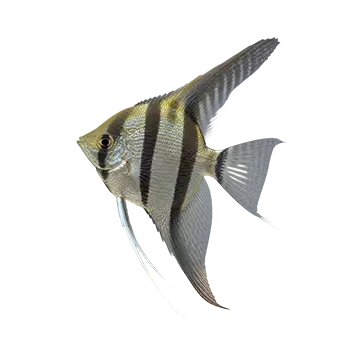

A reliable heater is non-negotiable for angelfish keeping in most climates. Angelfish require water temperatures between 76 and 84 degrees Fahrenheit, and few homes maintain ambient temperatures high enough to keep an aquarium consistently within this range year-round. Submersible heaters with built-in thermostats are the most common and practical option, available in wattages that correspond to tank size. The general guideline is three to five watts per gallon, so a 55-gallon angelfish tank would pair well with a 200- to 275-watt heater.
For larger tanks, using two smaller heaters instead of one large unit is a strategy that experienced keepers widely endorse. Dual heaters placed at opposite ends of the tank provide more even heat distribution and offer a critical safety advantage — if one heater fails, the other continues to maintain at least partial temperature stability while you arrange a replacement. This redundancy is especially valuable during winter months when a heater failure can cause rapid temperature drops in an unheated room.
Thermometers are an inexpensive but essential accessory that should be present in every angelfish tank. Digital thermometers with external probes provide the most accurate and easiest-to-read measurements. Adhesive strip thermometers that attach to the outside glass are a popular backup option, though they measure glass temperature rather than water temperature and can be less precise. Position your thermometer away from the heater to get a true reading of ambient water temperature rather than the localized warm zone near the heating element.
Heater guards or protective cages are worth considering, particularly in tanks where angelfish may rest against the heater tube. While most modern heaters have automatic shut-off features, direct contact with a hot element can cause burns on the fish's delicate skin and fins. A simple plastic or stainless steel guard that fits over the heater body eliminates this risk entirely and costs very little relative to the protection it provides.