
Growth & Physical Development

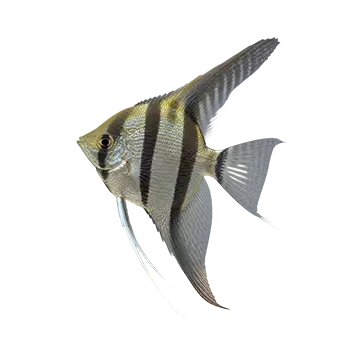
The juvenile stage for angelfish generally begins around six to eight weeks of age and continues until they reach sexual maturity at roughly eight to twelve months. During this period, angelfish undergo dramatic physical changes. They transition from small, rounded fry into the tall, laterally compressed shape that defines the species. Fin growth accelerates noticeably, with the dorsal, anal, and ventral fins elongating to give the fish their signature silhouette.

Growth rate during the juvenile phase is heavily influenced by diet quality, water conditions, and tank space. Under optimal conditions, juvenile angelfish can grow from roughly the size of a dime to near-adult body dimensions within four to six months. Fish that are kept in cramped or overcrowded tanks often experience stunted growth, which can have permanent effects on their adult size and overall health.

Color and pattern development is one of the most exciting aspects of the juvenile stage. Many angelfish varieties do not show their full coloring until they are several months old. Silver angelfish will develop their characteristic vertical black bars more distinctly, while specialty varieties like koi, marble, and black lace angels reveal their unique patterns gradually. Some color changes continue well into young adulthood, so the fish you see at three months may look quite different at nine months.

Keep a close eye on body proportions during this stage. Healthy juvenile angelfish should appear well-filled without being bloated, with clear eyes, intact fins, and smooth scales. Fish that appear pinched behind the head or have a concave belly line may be underfed or suffering from internal parasites, both of which should be addressed promptly to avoid long-term developmental problems.

Nutrition & Diet Transition

As angelfish move out of the fry stage, their dietary needs shift significantly. While newly free-swimming fry require live foods like brine shrimp nauplii, juveniles can and should be transitioned to a more varied diet that includes high-quality prepared foods. Begin by mixing finely crushed flake food or small pellets with the live foods they are already eating. Over the course of a week or two, gradually increase the proportion of prepared food until it makes up the majority of their diet.

A varied diet produces the healthiest and most colorful juvenile angelfish. Rotate between a staple flake or pellet formulated for cichlids, frozen foods such as bloodworms and daphnia, and occasional live treats like brine shrimp or blackworms. Frozen foods are especially valuable because they provide excellent nutrition without the disease risk sometimes associated with live foods harvested from natural water sources.

Feeding frequency should be reduced from the five-times-daily schedule used for fry to two to three times daily for juveniles. Each feeding should offer only as much food as the fish can consume within two to three minutes. Overfeeding is a common mistake during this stage because keepers want to maximize growth, but excess food degrades water quality rapidly and can lead to bloating or digestive issues in the fish themselves.

Pay attention to how different foods affect your angelfish. Some fish may be reluctant to accept certain prepared foods at first, and individual preferences can vary. If a particular food is consistently ignored, try a different formulation or size. Soaking dry foods briefly in tank water before adding them can make them more palatable and easier for smaller juveniles to consume.

Behavioral Changes

Juvenile angelfish begin to display the complex social behaviors that make cichlids such fascinating fish to keep. As they grow, you will notice increasing interactions between individuals in the group. Lip-locking, fin flaring, and brief chases are all normal behaviors as young angelfish work out their social hierarchy. These interactions are usually harmless at this stage, though they can seem alarming to new keepers unfamiliar with cichlid behavior.

Aggression tends to increase as juveniles approach sexual maturity. Angelfish are not schooling fish in the traditional sense, but they are social and do best in groups during the juvenile period. A group of six or more juveniles typically distributes aggression so that no single fish bears the brunt of it. Keeping only two or three juveniles together often results in one dominant fish constantly harassing the others.

You may begin to see early pair-bonding behavior as juveniles approach the six-to-eight-month mark. Two fish may begin swimming together, defending a section of the tank, and displaying to each other. These proto-pairs are not necessarily permanent, but they indicate that sexual maturity is approaching. If pair formation becomes disruptive to the rest of the group, having a plan for separating breeding pairs will be important.

Juvenile angelfish are also more prone to startle responses than adults. Sudden movements near the tank, loud noises, or abrupt changes in lighting can cause them to dash into decorations or the glass, potentially injuring themselves. Positioning the tank in a relatively calm area of your home and using a timer for lights to create gradual transitions between light and dark can help minimize stress-related behaviors.

Tank Requirements & Setup

As juvenile angelfish grow, their space requirements increase substantially. While fry can be raised in smaller tanks, juveniles need a minimum of twenty gallons for a small group, with larger tanks strongly preferred. A standard tall tank of twenty-nine gallons or more is ideal because angelfish grow taller than they do long, and they need vertical swimming space to accommodate their extended fins. A tank that is too shallow will restrict fin growth and stress the fish.

Decorate the juvenile tank with a mix of tall plants, driftwood, and open swimming areas. Live plants such as Amazon swords, vallisneria, and Java fern provide cover, improve water quality, and create natural territory boundaries that help reduce aggression. Angelfish appreciate having sight-line breaks in the tank so that subordinate fish can retreat from dominant individuals without being constantly visible.

Filtration should be robust enough to handle the increased bioload of growing fish but should not create excessively strong currents. Angelfish come from slow-moving river tributaries and backwater areas in the wild, and they are not strong swimmers in fast-flowing water. A canister filter or hang-on-back filter with an adjustable flow rate works well. Position the outflow so that it is diffused by plants or decorations rather than creating a direct jet across the tank.

Maintain the water temperature between 78 and 82 degrees Fahrenheit for juveniles. Keep the pH between 6.5 and 7.5, and ensure water hardness is soft to moderately hard. Weekly water changes of twenty to thirty percent are essential during this high-growth phase, as the combination of frequent feeding and rapid metabolism generates significant waste. Test water parameters at least weekly and adjust your water change schedule if ammonia or nitrite readings are anything above zero.

Exercise & Activity

While fish do not exercise in the same way terrestrial animals do, activity levels and swimming behavior are important indicators of juvenile angelfish health. Healthy juveniles should be active, alert, and curious about their surroundings. They should swim throughout all levels of the tank rather than hovering in one spot or resting on the bottom for extended periods. A fish that consistently hides or remains motionless when its tankmates are active may be stressed, ill, or being bullied.

Providing an environment that encourages natural foraging behavior is one of the best ways to keep juvenile angelfish active and engaged. Scattering food across the water surface rather than dropping it in one spot encourages the fish to move around the tank while feeding. Frozen foods that slowly sink through the water column stimulate mid-water hunting behavior and provide physical activity as the fish chase individual morsels.

Tank enrichment plays a role in keeping juveniles stimulated. Rearranging decorations occasionally gives the fish new territory to explore, which can also help reset aggressive dynamics in the group. Adding new plants or a different piece of driftwood introduces novel stimuli. Even something as simple as changing the position of the filter outflow slightly can alter current patterns and create new areas for the fish to investigate.

Avoid keeping juvenile angelfish in bare or sparsely decorated tanks for extended periods. While bare tanks are useful for fry rearing because they make feeding and cleaning easier, juveniles benefit from a more naturalistic environment. The complexity of a planted tank provides physical and mental stimulation, helps the fish develop natural behaviors, and reduces stress-related health problems that can arise from barren, exposed environments.

Sexing & Early Pairing

Determining the sex of juvenile angelfish is notoriously difficult, and even experienced breeders often cannot reliably sex young fish by appearance alone. Male and female juveniles look virtually identical until they approach breeding age. Some keepers claim that males develop a slightly more pronounced forehead bump, called a nuchal hump, or that males have a more angular body profile, but these traits are unreliable in juveniles and vary between individual fish and genetic lines.

The most reliable way to end up with a breeding pair is to raise a group of six or more juveniles together and allow them to pair off naturally. As the fish mature, compatible pairs will form on their own, and their pair-bonding behavior becomes unmistakable. A bonded pair will swim together, claim and defend a territory, and begin cleaning a flat surface in preparation for spawning, even before they are old enough to breed successfully.

Once pairs begin to form, you may need to rehome the remaining unpaired fish, as the dominant pair can become quite aggressive toward their former groupmates. Having a plan for surplus fish before pairs form saves stress for both you and the fish. Local aquarium clubs, online forums, and independent fish stores are good avenues for finding new homes for healthy young angelfish.

If breeding is not your goal, maintaining a group of juveniles together in a sufficiently large tank remains the best approach. In a tank of fifty-five gallons or more with plenty of cover and territory boundaries, a group of angelfish can coexist even as they mature, though some level of hierarchical behavior and occasional squabbling is inevitable. Watching the social dynamics of a group of angelfish as they grow is one of the most rewarding aspects of keeping this species.

Socialization & Tankmates

The juvenile stage is the ideal time to establish angelfish in a community aquarium if that is your long-term plan. Introducing juvenile angelfish to a community tank while they are still relatively small allows them to grow up alongside their tankmates, which generally results in less aggression than adding a full-grown angelfish to an established community. Choose tankmates carefully, as angelfish have specific compatibility requirements.

Good community partners for juvenile angelfish include similarly sized, peaceful species that occupy different areas of the tank. Corydoras catfish, bristlenose plecos, and other bottom-dwelling species make excellent companions because they rarely compete with angelfish for space or food. Mid-water schooling fish like larger tetras, rasboras, and peaceful barbs can also work well, provided they are not small enough to be eaten as the angelfish grow.

Avoid housing juvenile angelfish with known fin nippers such as tiger barbs or serpae tetras, as the angelfish's long flowing fins are irresistible targets. Similarly, avoid very small fish like neon tetras if the angelfish are already approaching adult size, as angelfish are opportunistic predators and will eat any fish small enough to fit in their mouths. This natural predatory behavior is not a sign of aggression but simply instinct, so choosing appropriately sized tankmates is the keeper's responsibility.

Monitor the community dynamic closely during the first few weeks after introduction. Watch for signs of excessive chasing, torn fins, or any fish being denied access to food. A well-planned community tank with juvenile angelfish can be a stunning display, but it requires attention to the changing dynamics as the angelfish grow and their territorial instincts become stronger. Be prepared to make adjustments if certain combinations prove incompatible.

Always consult a qualified professional before making any health-related decisions. This content is provided for informational reference only and should not replace professional guidance specific to your animal.