
Origins & Development

The Tiffanie emerged in the United Kingdom during the 1980s as a semi-longhaired variant within the Asian cat group. The breed traces its roots to an accidental mating between a Chinchilla Persian and a Burmese, a pairing that also gave rise to the Burmilla. As breeders continued developing the Asian group, kittens with longer, silkier coats began appearing in litters, and these cats eventually became the foundation of the Tiffanie breeding program.

Early Tiffanie breeders recognized the appeal of a cat that combined the elegant, flowing coat of a Persian-type with the muscular, compact body and lively personality of the Burmese. Selective breeding focused on refining the coat texture, ensuring it remained silky and manageable rather than dense and prone to matting. The goal was a cat that looked luxurious but required far less grooming than a true longhaired breed.

The name Tiffanie was chosen to evoke a sense of refinement and glamour, setting the breed apart from the shorthaired members of the Asian group. It is important to note that the Tiffanie is distinct from the American Tiffany, also sometimes called the Chantilly-Tiffany, which has an entirely separate lineage. Confusion between the two breeds has persisted for decades, but the British Tiffanie is firmly rooted in the Asian group and recognized primarily by UK-based registries.

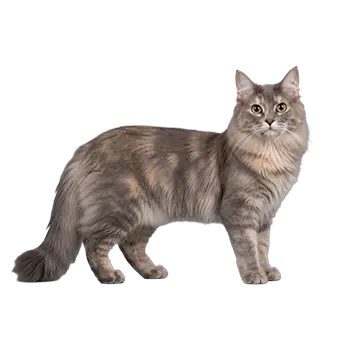
Development of the breed progressed steadily through the late 1980s and 1990s, with breeders working to establish consistent type and temperament. The Tiffanie inherited the broad, gently rounded head and expressive eyes of its Burmese ancestors, paired with a graceful plumed tail and a coat that comes in the full range of Asian group colors and patterns.

Historical Roles

Unlike many older cat breeds that served working roles in agriculture or seafaring, the Tiffanie was developed entirely as a companion animal. Its creation during the latter part of the twentieth century placed it firmly within the era of purpose-bred pedigree cats, where breeders sought specific aesthetic and temperamental qualities rather than utilitarian function.

The Tiffanie's primary historical role has been that of a devoted household companion. Breeders selected for a calm, sociable disposition that made these cats well-suited to family life. Their gentle nature and moderate activity level meant they adapted easily to indoor living, a trait that became increasingly valued as more cat owners chose to keep their pets exclusively indoors for safety reasons.

Within the broader context of the Asian cat group, the Tiffanie also played an important role in expanding the diversity and appeal of the group as a whole. The presence of a semi-longhaired variety demonstrated that the Asian group could encompass a range of coat types while maintaining consistent body type and temperament, strengthening the group's standing within UK cat fancy circles.

The breed has also contributed to conversations about responsible breeding practices. Because the Tiffanie arose from a well-documented crossbreeding program, its history offers a transparent example of how new breeds can be developed with careful attention to health and genetic diversity, serving as a reference point for breeders working on newer programs.

Cultural Symbolism

The Tiffanie occupies a distinctive niche in cat culture as a symbol of understated elegance. While breeds like the Persian and Maine Coon dominate the public imagination when it comes to longhaired cats, the Tiffanie represents a more refined, less exaggerated aesthetic. Its silky coat and moderate proportions suggest a kind of effortless grace that appeals to fanciers who prefer subtlety over spectacle.

In the United Kingdom, where the breed was developed and remains most popular, the Tiffanie carries associations with the broader British tradition of meticulous, standards-driven cat breeding. The Asian group as a whole reflects a philosophy of creating cats that are beautiful, healthy, and temperamentally sound, and the Tiffanie embodies these values in semi-longhaired form.

The breed's name itself carries cultural weight. The word Tiffanie conjures associations with luxury and sophistication, linking the breed to a world of fine craftsmanship and attention to detail. This naming choice was deliberate, intended to position the breed as something special within the already diverse Asian group.

For many Tiffanie enthusiasts, the breed also symbolizes the rewards of patience and careful stewardship. Because the Tiffanie remains relatively rare, owning one often represents a commitment to preserving a breed that might otherwise fade from the registry. This sense of custodianship is a meaningful part of the Tiffanie community's identity.

Breed Clubs & Standards

The Tiffanie is recognized primarily within the United Kingdom by the Governing Council of the Cat Fancy, which registers the breed as part of the Asian group. The GCCF standard describes the Tiffanie as a semi-longhaired cat of foreign type, with a muscular body, rounded chest, and a coat that is fine and silky with a noticeable plumed tail. The standard permits the full range of Asian group colors, including solid, shaded, smoke, tabby, and tortoiseshell patterns.

Breed clubs dedicated to the Asian group, such as the Asian Cat Association, have been instrumental in promoting the Tiffanie and supporting breeders. These organizations provide guidance on breeding practices, organize shows and events, and maintain records that help preserve the breed's genetic health. Their work has been essential in keeping the Tiffanie visible within a competitive pedigree cat landscape.

International recognition of the Tiffanie remains limited. The breed is not currently recognized by the Cat Fanciers' Association in the United States or by the Fédération Internationale Féline on the European continent, which contributes to its relative obscurity outside the UK. Some international registries may accept Tiffanies on an experimental or preliminary basis, but full championship status has been slow to develop.

The breed standard places particular emphasis on coat quality. Unlike the Persian, whose coat is dense, long, and requires daily grooming, the Tiffanie's coat should lie smoothly against the body and resist matting. Judges evaluate texture, sheen, and the presence of a well-developed ruff and tail plume. This distinction in coat type is central to the Tiffanie's identity and separates it clearly from other semi-longhaired breeds.

The Breed Today

The Tiffanie remains a rare breed even within the United Kingdom, and finding a Tiffanie kitten from a reputable breeder can require patience and advance planning. The small number of active breeding programs means that litters are infrequent, and prospective owners may need to join waiting lists. This scarcity, while challenging for those seeking the breed, has also helped maintain high breeding standards and genetic diversity within the existing population.

In recent years, interest in the Tiffanie has shown modest growth, fueled in part by online communities and social media, where owners share photographs and stories that highlight the breed's beauty and charming personality. These digital spaces have helped connect Tiffanie enthusiasts across geographic boundaries and have introduced the breed to audiences who might never encounter one at a local cat show.

Health-wise, the Tiffanie benefits from the genetic diversity inherent in its Asian group heritage. While no breed is entirely free of health concerns, the Tiffanie is generally considered a robust and healthy cat. Responsible breeders screen for conditions common to the ancestral breeds, including kidney issues associated with Persian lines and certain conditions seen in Burmese, ensuring that breeding cats are healthy before producing litters.

The breed's future depends on the continued dedication of a small but passionate community of breeders and owners. Efforts to gain wider international recognition could help expand the breeding population and secure the Tiffanie's place in the global cat fancy. For now, the Tiffanie remains a hidden gem, cherished by those who know it and quietly awaiting broader appreciation.

Notable Individuals

Because the Tiffanie is a relatively rare and recently developed breed, it does not have the long roster of famous individual cats associated with older, more widely known breeds. However, within the dedicated Tiffanie breeding community, certain cats have earned recognition for their contributions to the breed's development and their success in the show ring.

Early foundation cats from the 1980s and 1990s played an outsized role in establishing the breed's type and temperament. These pioneering Tiffanies, bred by a small group of committed UK breeders, set the standard for what the breed should look and act like. Their influence can be traced through multiple generations of pedigrees, and they are remembered with respect by longtime breed enthusiasts.

In the show world, Tiffanies that have achieved top honors at GCCF shows have helped raise the breed's profile and demonstrate its quality to judges and spectators who may be unfamiliar with the Asian group. These show successes, while modest in number compared to those of more popular breeds, carry significant weight within the Tiffanie community and serve as validation of the breeders' careful work.

Social media has also produced its own Tiffanie celebrities, with individual cats gaining followings for their photogenic coats and expressive faces. While these online-famous cats may not hold formal titles, they serve as ambassadors for the breed, introducing the Tiffanie to thousands of potential admirers and helping to ensure that interest in the breed continues to grow.

Always consult a qualified professional before making any health-related decisions. This content is provided for informational reference only and should not replace professional guidance specific to your animal.