
Origins & Natural Habitat

The Western Rosella (Platycercus icterotis) is the smallest member of the Platycercus genus, a group of broad-tailed parrots found exclusively on the Australian continent and its surrounding islands. Its range is confined to the southwestern corner of Western Australia, roughly from Geraldton in the north through the Darling Range and the Stirling Range to Esperance along the southern coast. This geographic restriction makes it one of the more localized rosellas, occupying a region defined by Mediterranean-type climates with wet winters and warm, dry summers.

The species thrives in a variety of wooded habitats within this range, including open eucalypt forests, jarrah and marri woodland, farmland with scattered trees, orchards, and well-vegetated suburban parks and gardens. It shows a particular affinity for areas where mature trees offer hollows suitable for nesting, and where ground-level grasses and shrubs provide a diverse seed supply. Unlike some of its rosella relatives that favor dense coastal scrub or arid interior landscapes, the Western Rosella is closely tied to the mosaic of woodland and cleared agricultural land that characterizes much of the southwest.

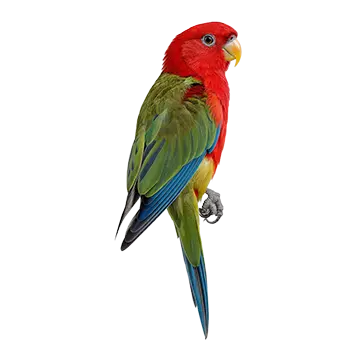
Two subspecies are generally recognized. The nominate form, Platycercus icterotis icterotis, inhabits the more humid southwestern forests and is distinguished by vivid red plumage on the head and underparts contrasted with green-and-black scalloped upperparts and bright yellow cheek patches. The inland subspecies, Platycercus icterotis xanthogenys, occupies the drier wheatbelt region to the east and tends to display paler, more washed-out coloring with reduced red tones on the breast. Both forms share the characteristic yellow cheek patches that give the species its scientific name, derived from the Greek ikteros, meaning jaundice, and ous, meaning ear.

Ecologically, the Western Rosella fills a niche as a ground-feeding granivore and frugivore. It forages predominantly on the ground or in low vegetation, feeding on native grass seeds, eucalypt seeds, fruit, berries, and insects. Pairs and small family groups are the typical social unit, though loose aggregations may form at abundant food sources during autumn and winter. The species' relatively sedentary habits and dependence on tree hollows for breeding link its long-term population health directly to the condition of the mature eucalypt woodlands that define its home range.

Early History with Humans

Long before European settlement, the Aboriginal peoples of southwestern Australia possessed intimate knowledge of the Western Rosella and its habits. The Noongar people, whose traditional lands overlap almost entirely with the species' range, recognized the bird as part of the broader web of seasonal indicators that guided food gathering, land management, and ceremonial timing. The appearance, calls, and breeding behavior of various parrot species served as cues within the Noongar six-season calendar, signaling shifts in weather and the availability of particular plant and animal resources.

European awareness of the Western Rosella began during the early decades of British colonization in Western Australia, following the establishment of the Swan River Colony in 1829. Naturalists accompanying or following the first settlers collected specimens and dispatched them to museums and private collections in Britain and continental Europe. The species was formally described by the German-born naturalist Johann Georg Wagler in 1832, who named it Psittacus icterotis. Later taxonomic revision transferred it into Platycercus alongside other broad-tailed rosellas, where it has remained.

Throughout the 19th century, settlers in the southwest encountered the Western Rosella frequently in orchards and farmland, where the birds fed on fruit crops, cereal grains, and garden produce. This brought the species into a conflicted relationship with agriculture. While many colonists admired the rosella's striking plumage and cheerful calls, others regarded it as a pest and actively trapped or shot it to protect harvests. This dual perception, the bird as both beautiful ornament and agricultural nuisance, became a recurring theme in the species' history that persists in modified form to the present day.

By the late 1800s, live Western Rosellas were being exported to aviculturists in England and Europe, contributing to a broader trade in Australian parrots that flourished until export restrictions were imposed in the 20th century. The species adapted well to captive conditions and bred reliably, which helped establish founding populations in overseas collections that would sustain aviculture interest long after Australia closed its doors to bird exports.

Cultural Symbolism & Folklore

Within Noongar cultural traditions, parrots and parakeets occupy a respected place in the oral histories and Dreaming narratives that encode knowledge of country, kinship, and ecological relationships. While specific Dreaming stories are the intellectual property of Noongar communities and are not recounted here in detail, it is widely acknowledged that birds in general serve as totemic figures for certain family groups and carry spiritual significance connected to particular places and seasons. The Western Rosella, as a conspicuous and familiar resident of Noongar country, is woven into this broader cultural fabric.

For European settlers and their descendants, the Western Rosella became an emblem of the distinctive natural beauty of the southwest. Its red, yellow, green, and black plumage was adopted as a decorative motif on regional crafts, postcards, and promotional materials from the early 20th century onward. The bird appeared on the insignia of local organizations, school emblems, and tourism brochures, serving as a visual shorthand for the unique biodiversity of the region. In a state whose official bird emblem is the Black Swan, the Western Rosella has occupied a quieter but persistent role as an informal symbol of the southwest's eucalypt woodlands.

The species also features in the personal narratives and memoirs of rural Western Australians, where encounters with rosellas in the garden, orchard, or bushland form part of the texture of everyday life. Farmers and landholders frequently describe a complex emotional relationship with the bird: admiring its beauty while managing its occasional depredations on fruit and grain. This ambivalence has shaped community attitudes toward wildlife management in the region and influenced debates about balancing agricultural productivity with biodiversity conservation.

In the broader Australian imagination, the rosella genus as a whole carries strong cultural associations with the bush, the outdoors, and a characteristically Australian relationship with the natural world. The Western Rosella shares in this collective symbolism while retaining its own regional identity, distinguished from its more widespread relatives by its restricted range and its deep connection to the landscapes and communities of the southwest.

Scientific Study & Taxonomic History

The taxonomic history of the Western Rosella reflects the broader challenges that 19th-century ornithologists faced in classifying Australia's remarkably diverse parrot fauna. Following Wagler's original 1832 description, the species was variously placed, renamed, and reassigned as successive authorities reorganized the Psittacidae. The genus Platycercus, meaning broad tail, was eventually stabilized to include the rosellas as a coherent group, and the Western Rosella's position within it has been largely uncontested since the mid-20th century. Molecular phylogenetic studies conducted in the early 2000s confirmed that Platycercus icterotis is most closely related to the Green Rosella of Tasmania and the Crimson Rosella complex, sharing a common ancestor that diversified as Australia's landscapes fragmented and dried over millions of years.

Field research on the Western Rosella has historically been modest compared to the extensive studies devoted to larger or more widespread Australian parrots. Much of what is known about the species' breeding biology, diet, and habitat preferences derives from surveys and observational studies conducted by ornithologists at institutions such as the Western Australian Museum and various universities in Perth. Breeding studies have documented the species' reliance on deep tree hollows, typically in mature eucalypts, with clutch sizes generally ranging from three to seven eggs and incubation lasting approximately 20 days.

The recognition of two subspecies, the nominate icterotis and the inland xanthogenys, has been supported by morphological analysis but has received less attention from molecular systematists. The degree of genetic differentiation between the two forms remains incompletely resolved, and some researchers have suggested that the subspecific boundary may be more of a clinal gradient than a sharp division. This question has practical implications for conservation management, particularly in areas where habitat clearing has fragmented populations and potentially altered patterns of gene flow.

The Western Rosella has also contributed to broader comparative studies of rosella ecology and behavior. Research examining color variation, plumage signaling, and mate choice across the Platycercus genus has drawn on Western Rosella data to test hypotheses about the role of sexual selection and ecological adaptation in driving the vivid and variable coloration that characterizes rosellas as a group. These studies have reinforced the view that plumage differences among rosella species and subspecies are shaped by a complex interplay of genetic drift, natural selection, and geographic isolation.

The Breed in Aviculture Today

The Western Rosella holds a well-established but somewhat specialized position in modern aviculture. Within Australia, it is bred by a dedicated community of parrot enthusiasts, particularly in Western Australia where wild-caught founding stock was historically accessible. Breeders value the species for its manageable size, attractive plumage, and relatively calm temperament compared to some of the more assertive rosella species. It is a regular feature at bird shows and avicultural society meetings across the country, where color mutations and the quality of plumage markings are judged against breed standards.

Outside Australia, the Western Rosella is maintained in aviculture collections across Europe, particularly in the United Kingdom, the Netherlands, Belgium, and Germany, where the descendants of birds exported before Australia's 1960 wildlife export ban continue to form the genetic basis of captive populations. These overseas populations are generally smaller and less genetically diverse than their Australian counterparts, prompting some breeders and avicultural societies to maintain studbook-style records aimed at managing inbreeding and preserving the integrity of both subspecies and established color mutations.

Several color mutations have been developed in captive Western Rosellas, including blue, cinnamon, lutino, and pied forms. These mutations have increased the species' appeal among hobbyist breeders who enjoy working with color genetics, though purists within the avicultural community emphasize the importance of maintaining strong populations of normal-colored birds as a genetic reserve. The debate over the relative merits of mutation breeding versus the preservation of wild-type plumage is a recurring theme in rosella aviculture more broadly and applies with particular force to a species with a relatively small captive gene pool.

Keeping Western Rosellas successfully requires attention to their need for spacious, planted aviaries that allow flight and foraging behavior. They are not well suited to small cages or indoor-only environments, and experienced keepers emphasize the importance of a varied diet that mirrors the species' natural intake of seeds, greens, fruits, and insects. Social compatibility can be a consideration during breeding season, when pairs may become territorial and aggressive toward neighboring birds. Despite these requirements, the Western Rosella is widely regarded as a rewarding avicultural subject whose beauty and engaging personality repay the effort invested in its care.

The species' future in aviculture depends in part on ongoing efforts to maintain genetic diversity within closed captive populations. Without access to new bloodlines from the wild, breeders must rely on careful pairing strategies, record keeping, and cooperation between collections to avoid the loss of vigor and fertility that can accompany prolonged inbreeding. International avicultural networks and species-specific breeding programs play an increasingly important role in coordinating these efforts.

Conservation History & Outlook

The Western Rosella's conservation story is shaped by the dramatic transformation of the southwestern Australian landscape over the past two centuries. The clearing of native woodland for agriculture, which accelerated through the early and mid-20th century, removed vast areas of the mature eucalypt forest on which the species depends for nesting hollows and food resources. The wheatbelt region, home to the inland subspecies xanthogenys, was particularly affected, with land-clearing rates among the highest in the world during certain periods. Despite these losses, the Western Rosella has shown a degree of adaptability, persisting in fragmented woodland remnants, along road verges, and in peri-urban parks and gardens where mature trees remain.

The species is currently classified as Least Concern by the International Union for Conservation of Nature, reflecting a population that, while reduced from historical levels, remains stable across much of its range. Within Western Australia, it is protected under state wildlife legislation, and unauthorized taking or keeping of wild birds is prohibited. The broader framework of Australian environmental law, including the federal Environment Protection and Biodiversity Conservation Act 1999, provides additional protections that apply to the species' habitat.

Localized threats continue to affect the Western Rosella's long-term prospects. Competition for nesting hollows from introduced species, particularly the European Honeybee and the Rainbow Lorikeet, which has expanded its range into southwestern Australia, places pressure on breeding success. Ongoing habitat fragmentation isolates populations and reduces gene flow, while climate change models predict shifts in rainfall and temperature patterns that could alter the composition and extent of the species' preferred woodland habitats.

Conservation efforts targeting the Western Rosella are generally embedded within broader programs aimed at protecting the biodiversity of the southwest Australian biodiversity hotspot, one of the most ecologically significant regions on Earth. Revegetation projects, the installation of artificial nest boxes, and landscape-scale conservation planning all contribute to maintaining the habitat conditions that support the species. Community engagement programs, including citizen science initiatives such as the annual Great Cocky Count and various BirdLife Australia surveys, involve local residents in monitoring parrot populations and raising awareness of the ecological values of remnant woodland.

The Western Rosella's future will be influenced by the success of these broader conservation strategies and by the continued willingness of landholders, governments, and communities to invest in the protection of the southwestern Australian landscape. As a species whose entire range falls within a single globally recognized biodiversity hotspot, the Western Rosella serves as both a beneficiary and a barometer of conservation effort in one of Australia's most biologically distinctive regions.

Always consult a qualified professional before making any health-related decisions. This content is provided for informational reference only and should not replace professional guidance specific to your animal.