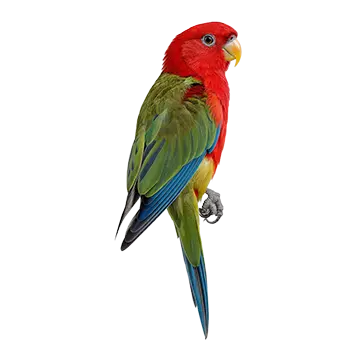

The Western Rosella entered the visual record of European science through the tradition of natural history illustration that flourished in the 18th and 19th centuries. As specimens reached museums and private collections in Britain and continental Europe, skilled artists were commissioned to produce detailed plates that served as both scientific documentation and aesthetic objects. The rosella genus, with its vivid plumage and elegant proportions, was particularly well suited to this tradition, and Western Rosella specimens featured in several notable ornithological works of the period.
John Gould's monumental Birds of Australia, published in seven volumes between 1840 and 1848, included a plate depicting the Western Rosella that became one of the most widely reproduced images of the species. Gould's wife, Elizabeth, and later the artist Henry Constantine Richter, produced hand-colored lithographs of Australian parrots that combined scientific accuracy with a painterly sensitivity to color and form. These illustrations introduced the Western Rosella to audiences who would never visit Australia, helping to cement the broader rosella group's reputation as among the most beautiful parrots in the world.
Beyond the major published works, watercolor studies and pencil sketches of the Western Rosella survive in the archival collections of institutions such as the Natural History Museum in London and the Western Australian Museum in Perth. These less formal depictions, often produced by colonial-era naturalists and amateur artists working in the field, capture the bird in poses and settings that formal plates rarely attempted, offering glimpses of the species in its native woodland context.
The tradition of painting Australian parrots has continued into the modern era, with contemporary wildlife artists producing works that draw on both direct observation and the legacy of 19th-century illustration. The Western Rosella's combination of bold red, deep green, and bright yellow makes it a compelling subject for artists working in watercolor, gouache, and oil, and original paintings and limited-edition prints featuring the species are regularly exhibited and sold through galleries and art fairs in Western Australia and beyond.
These artistic representations have played an important role in shaping public perception of the Western Rosella. For many people outside Australia, illustrated field guides and art prints remain the primary visual encounter with the species, and the quality and accuracy of these depictions directly influence how the bird is understood and valued by international audiences.