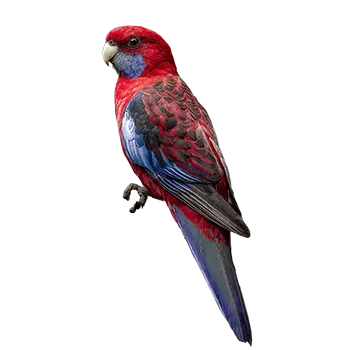
Crimson Rosellas possess considerable intelligence and demonstrate good training potential when approached with patience, consistency, and positive reinforcement methods. These birds respond well to training sessions that are kept short, fun, and rewarding, with most individuals capable of learning basic commands, simple tricks, and whistled tunes. The key to successful training lies in understanding that rosellas are independent-minded birds who participate willingly when motivated but resist coercion or force, making positive experiences essential for progress.
Basic training should begin with target training, where the bird learns to touch a stick or pointer with its beak for a reward. This foundational skill builds focus and establishes the concept that desired behaviors earn treats. From target training, step-up training follows naturally, teaching the bird to step onto a hand or perch on command. Consistent use of the command word "step up" paired with the action and immediate rewards creates reliable understanding. Patience is critical as some rosellas take weeks to become comfortable with this basic skill depending on previous socialization.
Trick training possibilities with Crimson Rosellas include waving, turning around in circles, retrieving small objects, basketball-style toy dunking, pulling strings to raise objects, and navigating simple obstacle courses. Break complex tricks into small steps, rewarding each incremental success before adding difficulty. Training sessions should last only 5-10 minutes to maintain attention and enthusiasm, with multiple short sessions throughout the day more effective than extended periods. Always end on a successful note with a favored reward, building positive associations with training time.
Talking ability in Crimson Rosellas is generally limited compared to famous talking species like African Greys or Amazons. Most individuals pick up only a few simple words or short phrases with practice, and even these may be produced with unclear articulation. Some rosellas never attempt human speech at all, showing no interest in mimicking words despite exposure. Males typically show slightly more inclination toward vocal mimicry than females, though individual variation exceeds sex-based differences. Owners seeking a bird primarily for talking ability should consider other species with stronger language learning capacity.
Where Crimson Rosellas truly excel is in whistling and musical sound mimicry. These birds are natural whistlers with clear, pleasant tones capable of accurately reproducing melodies. Many rosellas learn to whistle entire songs after repeated exposure, playing them back with impressive fidelity. To encourage whistling, play recordings of whistled tunes, whistle directly to the bird, and reward any attempts at vocalization. Popular choices include simple melodies like "Twinkle Twinkle Little Star" or recognizable tune fragments. Some rosellas become so proficient that they whistle on cue or initiate favorite songs spontaneously throughout the day.
Noise levels throughout the day follow natural patterns tied to the bird's circadian rhythms. Crimson Rosellas are notably vocal during dawn and dusk hours, periods of peak activity in the wild when flocks gather and communicate. Expect loud contact calling, chattering, and general noisiness during early morning and evening periods that can last 30-60 minutes or more. Daytime vocalizations typically occur at moderate levels with periodic louder calls, while nighttime should be quiet once the bird settles on a perch for sleep provided adequate darkness and rest conditions exist.
The characteristic contact call is a distinctive two-syllabled "cussik-cussik" sound used to maintain flock cohesion and communicate location. This call rings out frequently in captive birds, particularly when separated from their human flock or seeking attention. Additional vocalizations include harsh screeches when alarmed or startled, softer chattering during contentment or foraging, and metallic whistles in various contexts. Understanding these vocal cues helps owners interpret their bird's emotional state and respond appropriately to needs.
Socialization importance cannot be overstated for developing well-adjusted, friendly Crimson Rosellas. Hand-raised chicks exposed to varied positive experiences, different people, novel environments, and gentle handling develop into confident, adaptable adults. Continued socialization through adolescence and adulthood maintains this temperament. Under-socialized birds or those with negative early experiences often develop fear, aggression, or excessive screaming requiring patient rehabilitation. Families considering a rosella should prioritize purchasing from breeders who handle and socialize chicks extensively rather than parent-raised aviary birds intended for breeding programs.
Bonding techniques that work well with Crimson Rosellas respect their independent nature while building trust and affection. Spend time near the cage talking softly and offering treats through bars before attempting handling. Once comfortable with proximity, begin hand-feeding preferred foods, gradually requiring the bird to come closer for rewards. Short, positive out-of-cage sessions in a safe space build confidence and strengthen bonds. Many rosellas enjoy perching on shoulders during household activities, feeling included without demanding constant interaction. Regular routines help birds feel secure - feeding at consistent times, maintaining predictable sleep schedules, and establishing training or play sessions at set times creates stability.
Behavioral challenges in Crimson Rosellas typically stem from inadequate housing, insufficient stimulation, poor diet, or lack of socialization rather than inherent temperament problems. Biting may occur due to fear, territorial aggression during breeding condition, or learned behavior where nipping successfully achieves desired outcomes like avoiding handling. Address biting through positive reinforcement of gentle behavior, avoiding punishment that increases fear, and analyzing triggers to prevent situations prompting bites. Never yell at or hit a bird as this damages trust and worsens behavior.
Excessive screaming beyond normal dawn and dusk calling indicates unmet needs. Common causes include boredom from inadequate enrichment, loneliness when social needs aren't met, seeking attention learned through owner response to screaming, fear or stress from environment, or hunger and thirst. Address the root cause rather than punishing the symptom. Ensure adequate out-of-cage time, varied toys, proper nutrition, and consistent positive attention. Ignore attention-seeking screams while heavily rewarding quiet behavior and appropriate vocalizations.
Positive reinforcement methods form the foundation of all effective training. Identify high-value treats your bird loves - specific nuts, seeds, or fruits work well. Immediately reward desired behaviors with treats, praise, and attention, establishing clear cause-and-effect understanding. Consistency from all family members prevents confusion about expectations. Never use punishment, yelling, water spraying, or cage confinement as these damage trust, increase fear, and often worsen problem behaviors. Patient, consistent positive methods achieve lasting results while strengthening the human-bird bond.
Screaming prevention and management requires proactive environmental design and daily routine. Provide extensive enrichment through rotating toys, foraging opportunities, and environmental complexity preventing boredom. Maintain consistent sleep schedules with 10-12 hours of uninterrupted darkness supporting hormonal balance and reducing irritability. Ensure adequate out-of-cage time for flight and social interaction. Feed varied, nutritious diet supporting overall health and stable moods. Accept normal morning and evening vocalizations as natural behavior not requiring modification. For excessive screaming, identify and address underlying causes - loneliness, fear, attention-seeking, or inadequate environment - rather than treating symptoms. With proper care meeting physical and psychological needs, most Crimson Rosellas maintain reasonable noise levels outside normal calling periods.