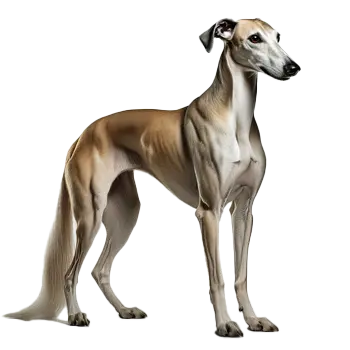

Standard flat collars are not appropriate for Sloughis and should never be used as a primary walking collar. The breed's neck is wider than its head, which means a flat collar can slip off easily if the dog backs up or pulls away — a dangerous scenario for a sighthound with strong prey drive. Martingale collars, which tighten gently when the dog pulls but cannot close tight enough to choke, are the standard and strongly recommended collar type for all sighthound breeds including the Sloughi.
The width of the collar matters significantly for Sloughis. Their long, slender necks are vulnerable to pressure injuries from narrow collars, so look for martingale collars that are at least one and a half to two inches wide. Wider collars distribute force across a larger area of the neck, reducing the risk of tracheal damage during unexpected lunges. Padded or lined collars add another layer of protection for the breed's thin, sensitive skin.
Harnesses offer an alternative to collars for daily walking and are particularly useful for Sloughis that have not been fully leash trained or that tend to lunge at small animals during walks. Front-clip harnesses discourage pulling by redirecting the dog's momentum to the side, while back-clip harnesses are more comfortable for dogs that walk politely. Ensure any harness is properly fitted to the Sloughi's deep chest and narrow waist, as generic sizing often does not accommodate the sighthound body shape well.
Leash selection should prioritize reliability and comfort. A standard six-foot leash made from leather, biothane, or quality nylon provides adequate control while allowing enough slack for comfortable walking. Retractable leashes are strongly discouraged for Sloughis — the thin cord can cause burns or cuts if the dog sprints to the end of the line, and the brake mechanism cannot reliably stop a sighthound at full acceleration. For off-leash training in enclosed areas, a long line of 20 to 30 feet provides controlled freedom.