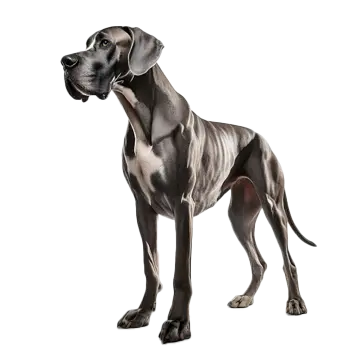

Choosing the right collar and leash combination for a Great Dane is as much about safety as it is about comfort. A standard flat collar works for carrying identification tags and for well-trained adults on casual walks, but it should be wide enough — at least 1.5 to 2 inches — to distribute pressure across the neck without cutting into the skin. Narrow collars concentrate force on a small area and can cause tracheal damage if the dog pulls, which is a serious concern when the dog weighs 150 pounds.
For walking and training, a front-clip harness is generally the best option for Great Danes. Front-clip designs redirect the dog's forward momentum toward the handler, making it mechanically easier to manage pulling without relying on leash corrections that strain the neck. The harness should fit snugly without restricting shoulder movement — many harnesses designed for large breeds still run too small for a Great Dane's deep chest and broad shoulders, so measure carefully and consult sizing charts before purchasing.
Head halters are another management tool that some Great Dane owners find effective, particularly during the adolescent phase when the dog has the size of an adult but the impulse control of a puppy. These devices loop around the muzzle and behind the ears, giving the handler steering control similar to a horse halter. Proper fit and gradual conditioning are essential, as an ill-fitting head halter can rub the skin raw or cause the dog to resist wearing it.
Leashes should be sturdy and no longer than six feet for everyday walking. Retractable leashes are a poor choice for Great Danes — the thin cord or tape can snap under the force of a sudden lunge, the locking mechanism can fail, and the extra length gives the dog too much room to build momentum before hitting the end of the line. A six-foot leather or heavy-duty nylon leash with a secure bolt-snap clip provides reliable control and comfortable handling.