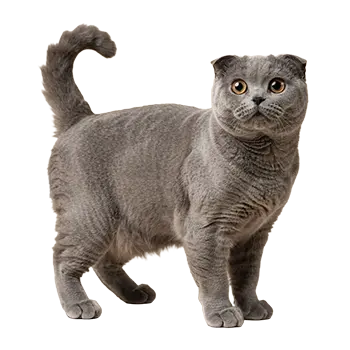

Play Style & Enrichment Needs

Understanding the Foldex's play style begins with recognizing that this breed sits at the intersection of two temperaments. The Scottish Fold parent contributes a calm, observant disposition, while the Exotic Shorthair side adds a gentle playfulness that emerges in short, focused bursts rather than prolonged athletic sessions. The result is a cat that enjoys play but approaches it at a measured pace — more ambush predator than marathon runner. Toy selection should honor this rhythm rather than attempting to force a level of sustained intensity that does not match the breed's natural inclination.

Enrichment for the Foldex extends well beyond physical exercise. This breed is quietly intelligent and responds strongly to novelty. A new object placed in a familiar environment — a crinkled paper bag, a cardboard box, a rearranged shelf — will reliably capture a Foldex's attention and spark investigative behavior. The cat may not tear into new objects with the explosive energy of a Bengal, but it will methodically explore, sniff, paw, and eventually claim the item as part of its territory. Rotating toys and environmental features on a weekly basis keeps the Foldex mentally engaged without requiring a large investment in new products.

Joint considerations should inform every play decision. Activities that involve repeated high jumps, sudden directional changes at speed, or hard landings on the floor are best avoided or minimized. The fold gene's effect on cartilage development means that impact-heavy play can accelerate wear on joints that may already be structurally compromised. This does not mean the Foldex should be treated as fragile — moderate play is both healthy and necessary — but it does mean that the style of play matters as much as the duration.

Social play is especially valuable for this breed. The Foldex bonds closely with its owners and often prefers interactive play sessions over solo engagement with stationary toys. A ten-minute session with a wand toy or a feather teaser, conducted at a pace the cat dictates, provides both physical exercise and the social connection this breed craves. Owners who invest time in daily interactive play typically see a calmer, more contented cat with fewer behavioral issues.

Interactive & Wand Toys

Wand toys and fishing-pole-style teasers are the single most effective toy category for the Foldex. These toys allow the owner to control the speed, trajectory, and intensity of the prey stimulus, making it possible to tailor each session to the cat's current energy level and physical condition. A Foldex kitten may chase a fast-moving feather with enthusiasm, while an older cat with mild joint stiffness may prefer a slower, ground-level dragging motion that triggers the stalking instinct without requiring acrobatic leaps.

Feather attachments are perennial favorites, but the attachment should be varied periodically to maintain interest. Feathers, mylar strips, fabric mice, and small plush lures each trigger slightly different predatory responses. The Foldex's hunting style tends toward the stalk-and-pounce pattern rather than aerial interception, so dragging the lure along the floor, around furniture legs, and under the edges of rugs often produces more engagement than dangling it high in the air where the cat must jump to catch it.

The length and flexibility of the wand itself matters. A wand that is too short forces the owner into an awkward position and places their hand close to the cat's claws during the grab phase. A wand of approximately 30 to 36 inches with a flexible tip allows for fluid, realistic prey movement while keeping the owner's fingers safely out of range. Carbon fiber and fiberglass wands tend to be more durable and responsive than wooden dowel versions.

Safety requires that all wand toys be stored out of reach when not in active use. The strings, cords, and elastic attachments that make these toys effective during supervised play become strangulation and ingestion hazards when left unattended. A Foldex that swallows a length of string can develop a linear foreign body obstruction in the intestine, which is a surgical emergency. Establishing a habit of putting wand toys away in a closed drawer or cabinet immediately after each session eliminates this risk entirely.

Puzzle Feeders & Mental Stimulation

Puzzle feeders are among the most underutilized enrichment tools in the average cat household, and they are exceptionally well suited to the Foldex's temperament. This breed's calm intelligence and food motivation make it a natural candidate for feeding puzzles that require the cat to manipulate objects, open compartments, or navigate mazes to access kibble or treats. Puzzle feeders transform a passive activity — eating from a bowl — into an engaging problem-solving exercise that occupies the cat mentally and slows down food consumption.

The difficulty level of a puzzle feeder should be calibrated to the individual cat's experience and frustration tolerance. A Foldex that has never used a puzzle feeder before should start with a simple design — a ball with adjustable openings or a shallow tray with sliding covers — where the reward is easy to obtain. As the cat masters each level, the difficulty can be increased incrementally. Jumping straight to a complex multi-step puzzle is more likely to produce frustration and abandonment than sustained engagement.

Stationary puzzle boards offer an alternative that may suit the Foldex better than rolling or tumbling puzzle balls. Because the Foldex's play style leans toward deliberate manipulation rather than vigorous batting, a board that rewards careful pawing and nose work aligns well with the breed's natural behavior. Multi-compartment boards with cups, tubes, and pegs of varying depth require the cat to use different strategies for each compartment, providing cognitive variety within a single device.

DIY puzzle feeders are a cost-effective way to introduce variety without purchasing multiple commercial products. A muffin tin with kibble placed in selected cups and covered with tennis balls creates a simple excavation puzzle. An egg carton with treats tucked into individual cells encourages careful paw work. Even a loosely crumpled sheet of packing paper with treats scattered inside it becomes a rustling, crinkling enrichment activity that most Foldex cats find irresistible. The key principle is novelty — the specific device matters less than the fact that it presents a new problem to solve.

Solo Play & Automated Toys

While the Foldex prefers interactive play with its owner, there are inevitably periods during the day when the cat must entertain itself. Solo play options should be chosen with an understanding that unsupervised toys need to be both engaging enough to hold the cat's interest and safe enough to use without human oversight. Not every toy that works well during interactive play is appropriate for unattended use.

Track toys — enclosed circular or figure-eight tracks with a ball that the cat bats around the channel — are a reliable solo option for the Foldex. The ball's predictable but responsive movement triggers the hunting instinct without requiring the cat to chase across the room. Because the ball stays contained within the track, it cannot roll under furniture and become inaccessible, which is a common frustration with loose ball toys. Some track designs incorporate a scratch pad in the center, combining two enrichment functions in a single footprint.

Automated laser toys and robotic mice have gained popularity as hands-free entertainment. These devices can be effective for short periods, but they require some caution with the Foldex. Automated laser dots should only be used in conjunction with a physical catch opportunity — a treat or toy placed where the dot pauses — to prevent the frustration of perpetually chasing an uncatchable target. Robotic mice that move in randomized patterns across the floor can be engaging, but the movement speed should be moderate rather than frenetic to avoid triggering high-impact chasing and sudden stops that stress the joints.

Catnip and silvervine toys provide chemical enrichment that many Foldex cats enjoy. Approximately 50 to 70 percent of cats carry the gene that produces a response to nepetalactone, the active compound in catnip. Silvervine affects an even broader percentage of the cat population and can be used as an alternative or complement. Stuffed toys infused with dried catnip or silvervine powder encourage rubbing, rolling, and bunny-kicking behavior that provides exercise in a self-directed, low-impact manner. Refreshing dried catnip toys by placing them in a sealed bag with fresh catnip overnight can revive toys that have lost their potency.

Scratching & Climbing Toys

Scratching is not a behavioral problem to be managed but a biological necessity that serves multiple functions: claw maintenance, muscle stretching, territorial marking, and stress relief. For the Foldex, providing adequate scratching surfaces is essential to prevent the cat from using furniture, carpet, or doorframes as substitutes. The key variables in scratching product selection are material, orientation, and placement.

Sisal rope and sisal fabric are the most universally preferred scratching materials among cats. Sisal provides the resistance and texture that satisfies the scratching instinct more effectively than carpet, cardboard, or bare wood. Vertical sisal posts should be tall enough for the Foldex to stretch its full body length — at least 28 to 32 inches — and stable enough not to tip when the cat leans its full weight against them. A post that wobbles or falls is not only a safety hazard but will be permanently avoided by most cats.

Horizontal and angled scratching surfaces are equally important and often overlooked. Many cats, including Foldex individuals, prefer to scratch on a flat or inclined surface rather than a vertical post. Corrugated cardboard scratchers placed on the floor or angled ramps covered with sisal offer an alternative that accommodates this preference. Having both vertical and horizontal options available allows the cat to choose based on its current mood and the specific stretching or marking behavior it is performing.

Placement of scratching surfaces should be strategic rather than hidden away in a corner. Cats scratch most frequently after waking, near resting areas, and beside doorways or transition points between rooms. Positioning a scratcher near the cat's favorite sleeping spot captures the post-nap stretch that often accompanies scratching. Placing another near the entrance to a frequently used room addresses the territorial marking component. A scratching surface that is convenient and well-positioned will see far more use than one tucked behind a piece of furniture where the cat rarely visits.

Sensory & Environmental Enrichment

Enrichment for the Foldex should engage all of the cat's senses, not just the predatory drive that most toys target. Visual, auditory, and olfactory stimulation contributes to a richer daily experience and helps prevent the boredom-related behavioral issues — overgrooming, excessive vocalization, lethargy — that can develop in under-stimulated indoor cats.

Visual enrichment is one of the simplest and most effective forms to provide. A window perch positioned where the cat can watch outdoor activity — birds, squirrels, pedestrians, passing vehicles — functions as a form of passive entertainment that most Foldex cats will use for hours. Adding a bird feeder outside the window amplifies the effect dramatically. For homes without suitable window access, cat-specific video content featuring birds, fish, or small rodents can serve as a substitute, though most cats engage with screens less consistently than with real-world stimuli.

Auditory enrichment is an area that receives less attention than it deserves. Cats have a hearing range that extends well beyond human perception, and they are attuned to high-frequency sounds associated with small prey animals. Toys that incorporate crinkle material, bells, or squeakers provide auditory interest during play. Ambient sound recordings of nature — birdsong, running water, rustling leaves — played at low volume can create a calming background environment, particularly for Foldex cats that are left alone during work hours.

Olfactory enrichment leverages the cat's powerful sense of smell, which contains roughly 200 million scent receptors compared to a human's approximately 5 million. Beyond catnip and silvervine, safe scent enrichment options include valerian root, honeysuckle wood, and small amounts of dried chamomile. Introducing novel scents on a rotating basis — a pinch of dried herb inside a fabric pouch, a safe plant placed on a high shelf, or even a lightly scented cloth brought in from outside — stimulates investigative behavior and cognitive processing. Any plant or herb introduced into the cat's environment must first be verified as non-toxic to felines, as many common household plants are dangerous if ingested.

Toy Safety & Maintenance

Toy safety is a topic that warrants dedicated attention because the consequences of unsafe toys can be severe. The most common toy-related emergencies in cats involve ingestion of small parts, entanglement in strings or elastic, and allergic reactions to chemical treatments or adhesives. A systematic approach to toy selection and maintenance reduces these risks to near zero.

Size is the first safety criterion. Any toy or toy component small enough to fit entirely inside the cat's mouth is a potential choking hazard or intestinal obstruction risk. This applies to detachable eyes on plush toys, small bells, pom-poms, and the end caps on wand toy attachments. Before giving any new toy to your Foldex, inspect it for parts that could be detached through biting, clawing, or vigorous play. Removing or securing any questionable components before the cat has access to the toy is far simpler than managing the aftermath of an ingestion event.

Regular inspection of existing toys is equally important. Fabric toys develop tears that expose stuffing material, which cats may pull out and swallow. Feather attachments on wand toys shed components that can cause gastrointestinal irritation if eaten. Plastic toys can crack and develop sharp edges. A quick weekly check of all toys in the rotation — combined with immediate removal of any toy showing significant wear — keeps the play environment safe without requiring constant vigilance during every play session.

Cleaning practices contribute to both toy longevity and the cat's health. Fabric and plush toys can be machine washed in a mesh laundry bag on a gentle cycle and air dried. Rubber and plastic toys can be wiped down with a mild soap and water solution — avoid chemical cleaners, disinfectant sprays, or essential oils, which can leave toxic residues. Puzzle feeders and food-dispensing toys should be cleaned after every use to prevent bacterial growth in food residue. Establishing a simple cleaning rotation alongside the toy rotation ensures that every toy your Foldex encounters is both novel and hygienic.

Always consult a qualified professional before making any health-related decisions. This content is provided for informational reference only and should not replace professional guidance specific to your animal.