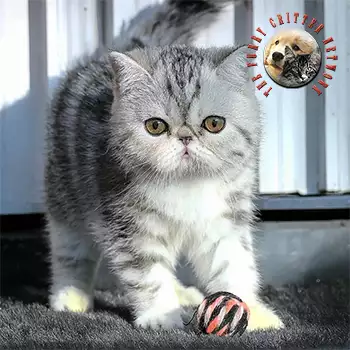

The Exotic Shorthair name reflects the breed's development as a short-coated version of the exotic-looking Persian cat. "Exotic" emphasizes the breed's Persian heritage and distinctive appearance, while "Shorthair" distinguishes it from its longhaired relatives. The name was established when the breed gained recognition in the 1960s and has remained consistent across all major cat registries including The International Cat Association (TICA), the Cat Fanciers' Association (CFA), and other international organizations.
The breed is affectionately nicknamed "the lazy man's Persian" or "Persian in pajamas" by enthusiasts and breeders. These informal names highlight the Exotic Shorthair's primary appeal—offering the Persian's distinctive appearance and gentle temperament without the extensive daily grooming required by longhaired Persians. The "pajamas" reference playfully suggests the short coat is more casual and comfortable, like loungewear compared to the Persian's formal, long "gown."
Some people simply call them "Exotics," a shortened, casual version of the full breed name commonly used in breeding circles and among owners. This abbreviation is widely understood in the cat fancy to refer specifically to Exotic Shorthairs rather than any exotic-looking cat. The term appears frequently in breeding discussions, cat show results, and casual conversation among enthusiasts.
Occasionally, the breed is informally referred to as the "teddy bear cat" due to its round face, large eyes, and plush, dense coat that resembles a stuffed toy. This nickname emphasizes the breed's cuddly appearance and gentle nature. However, "teddy bear cat" is less specific and sometimes applied to other round-faced breeds, so it's not an official alternate name.
The Exotic Shorthair is officially recognized by all major cat registries worldwide. The Cat Fanciers' Association (CFA) granted championship status in 1967, relatively quickly after the breed's initial development. TICA and other international registries followed suit, establishing consistent breed standards that align closely with Persian standards except for coat length. This recognition helped establish the breed as a distinct variety worthy of preservation and development.
Within the breed, there are no separate varieties or sub-types, though longhaired kittens occasionally appear in Exotic Shorthair litters due to the recessive longhair gene inherited from Persian ancestry. These longhaired Exotics are typically registered as Persians or, in some registries, shown in a separate longhaired Exotic division. The breed standard for Exotic Shorthairs emphasizes that aside from coat length, they should be identical to Persians in type, structure, and temperament.