
Grooming Tools

The Foldex's dense, plush coat requires consistent grooming to remain healthy and free of mats. Whether the individual cat carries the shorter coat of its Exotic Shorthair heritage or the slightly longer coat that some Foldex lines produce, the undercoat is typically thick and prone to trapping loose hair during shedding cycles. A stainless steel greyhound comb with both fine and coarse teeth is the foundational grooming tool for this breed, capable of working through the undercoat without damaging the topcoat or irritating the skin beneath.

A slicker brush serves as the primary tool for routine daily or every-other-day grooming. Choose a slicker with fine, flexible pins and a cushioned base that yields slightly under pressure — rigid pins set in a hard pad can scratch the skin and make the grooming experience unpleasant enough that the cat learns to resist it. For Foldex cats with longer coat varieties, a detangling spray applied lightly before brushing can reduce static and make the comb pass more smoothly through dense areas around the ruff, belly, and hindquarters.

Deshedding tools designed to remove loose undercoat without cutting the guard hairs can be useful during seasonal shedding peaks, typically in spring and autumn. However, these tools must be used with restraint on the Foldex. Aggressive or overly frequent deshedding can thin the coat unevenly and irritate the skin. Limiting deshedding tool use to once per week during heavy shedding periods, and relying on the slicker brush and comb for routine sessions, strikes the right balance between coat management and coat preservation.

Nail trimming is an essential grooming task that many owners neglect until the nails become problematic. Foldex cats that do not wear their claws down naturally through scratching and outdoor activity need their nails trimmed approximately every two to three weeks. A sharp, scissor-style or guillotine-style cat nail clipper provides the cleanest cut with the least pressure. Cutting only the transparent tip of the nail, well clear of the pink quick visible inside, prevents pain and bleeding. Establishing a calm nail-trimming routine early in the cat's life — ideally during kittenhood — makes the process far easier for both the cat and the owner long term.

Ear Care Accessories

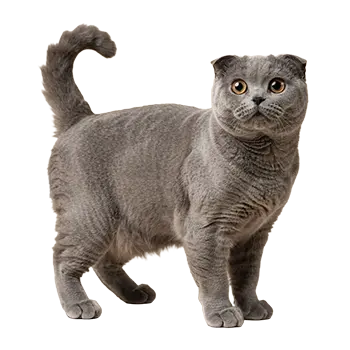
The Foldex's folded ears are the breed's most distinctive feature and also its most demanding grooming requirement. The fold creates a warm, enclosed environment inside the ear canal that traps moisture and reduces airflow compared to an upright ear. This environment can promote the accumulation of wax, debris, and in some cases, bacterial or yeast overgrowth. Regular ear inspection and cleaning are not optional for this breed — they are a core component of responsible ownership.

A veterinary-approved ear cleaning solution formulated specifically for cats is the safest product for routine ear maintenance. Avoid solutions containing alcohol, hydrogen peroxide, or harsh antiseptics, which can dry out or irritate the delicate skin inside the ear canal. Apply the solution by gently lifting the ear flap, squeezing a few drops into the canal, and massaging the base of the ear for several seconds to break up wax and debris. The cat will shake its head after release, bringing dissolved material to the outer ear where it can be wiped away with a cotton ball or gauze pad.

Cotton swabs should never be inserted into the ear canal. Their small diameter makes it easy to push debris deeper rather than removing it, and an unexpected head movement during cleaning can cause injury to the ear drum. Cotton balls, gauze squares, or soft cotton pads are the appropriate tools for wiping the visible folds and crevices of the outer ear. For Foldex cats with particularly tight ear folds, a hemostatic forcep with cotton wrapped around the tip can reach into narrow crevices that fingers cannot access, but this technique requires care and confidence to execute without causing discomfort.

The frequency of ear cleaning depends on the individual cat's wax production and ear fold tightness. Some Foldex cats require weekly cleaning, while others need attention only every two to three weeks. Establishing a regular inspection schedule — briefly lifting and examining each ear flap under good light — allows the owner to gauge when cleaning is needed rather than following a rigid calendar. Any signs of redness, swelling, unusual odor, dark discharge, or the cat persistently scratching or shaking its head warrant a veterinary examination rather than continued home cleaning.

Carriers & Travel Gear

A well-chosen carrier is one of the most important accessories a Foldex owner will purchase, yet it is often selected as an afterthought when the first veterinary visit approaches. The carrier should be large enough for the cat to stand, turn around, and lie down comfortably. For an adult Foldex that may weigh between ten and fourteen pounds, this typically means a carrier with interior dimensions of at least 19 inches long, 12 inches wide, and 12 inches tall. Cramped carriers increase stress and can cause the cat to resist entry, making every trip a battle.

Hard-shell carriers with top-loading access are generally the best option for cats that resist being pushed through a front door. The ability to lower the cat into the carrier from above is less confrontational and allows the handler to maintain control throughout the process. Many veterinarians also prefer top-loading designs because they allow the cat to be examined while still in the bottom half of the carrier, reducing stress for both the cat and the clinical staff. Models with both top and front openings provide maximum versatility.

Soft-sided carriers offer weight savings and easier storage when not in use, making them attractive for owners who travel frequently. However, they must be constructed with a rigid internal frame or stiffened panels to prevent the sides from collapsing inward and reducing the cat's space. The fabric should be durable enough to withstand clawing from the inside without developing holes that the cat could push through. Mesh ventilation panels should be double-layered or reinforced to prevent a determined cat from tearing through them.

Carrier training — the process of conditioning the cat to view the carrier as a neutral or positive space rather than a predictor of stressful events — is one of the highest-value investments a Foldex owner can make. Leaving the carrier open in the home with a familiar blanket and occasional treats inside allows the cat to explore it on its own terms. Over time, many Foldex cats will begin using the carrier as a voluntary resting spot. When the carrier is associated with comfort rather than exclusively with veterinary visits or travel, the stress response on loading day diminishes significantly.

Harnesses & Leash Walking

Harness walking is an increasingly popular form of enrichment for indoor cats, and the Foldex's calm, adaptable temperament makes it a reasonable candidate for leash training. The breed is neither so bold that it will lunge toward perceived threats nor so timid that outdoor stimuli will cause panic — most Foldex cats fall into a middle ground of cautious curiosity that responds well to gradual outdoor exposure under controlled conditions.

Harness selection for the Foldex should prioritize an escape-proof fit that distributes pressure across the chest and shoulders rather than the neck. An H-style harness or a vest-style harness with adjustable straps at the neck and girth provides the most secure fit for a cat with the Foldex's compact, rounded torso. Avoid harnesses designed for small dogs, which typically do not account for the feline shoulder structure and can shift or rotate during movement. The harness should be snug enough that the cat cannot back out of it — a common escape method — while leaving enough room to fit two fingers between the harness and the cat's body.

The leash itself should be lightweight and between four and six feet in length. Retractable leashes are not recommended for cats because the sudden tension changes and locking mechanisms can startle the animal and create unpredictable slack-then-resistance patterns. A simple flat nylon or cotton leash provides consistent, predictable feedback. Some owners prefer an elastic bungee-style leash that absorbs sudden movements without jerking, which can be gentler on the cat's frame — a meaningful consideration for a breed with potential joint sensitivities.

Leash training should begin indoors, with the cat wearing the harness for progressively longer periods before any leash is attached. Once the cat moves naturally in the harness without freezing, flopping, or attempting to remove it, the leash can be added for supervised indoor walks. Outdoor sessions should start in a quiet, enclosed area — a fenced yard or a low-traffic patio — and be kept short, gradually extending duration as the cat gains confidence. The Foldex's pace during leash walks tends to be slow and exploratory, with frequent pauses to investigate scents and textures. Owners who expect brisk walks will be disappointed; those who view it as a shared sensory experience will find it deeply rewarding.

Food & Water Bowls

Bowl selection has a direct impact on the Foldex's eating comfort and hydration habits. The breed's rounded face and relatively flat facial profile — inherited from the Exotic Shorthair lineage — can make eating from deep, narrow bowls uncomfortable. Shallow, wide bowls with a diameter of at least five inches allow the cat to access food without pressing its whiskers against the sides, a sensation known as whisker fatigue that can cause some cats to eat less or paw food out of the bowl onto the floor.

Material matters for both hygiene and durability. Stainless steel and ceramic are the preferred materials for cat bowls. Stainless steel is non-porous, does not harbor bacteria in scratches or cracks, and is dishwasher safe. Ceramic bowls offer similar hygienic advantages and tend to be heavier, which prevents the bowl from sliding across the floor during enthusiastic eating. Plastic bowls should be avoided — they scratch easily, creating grooves where bacteria accumulate, and some cats develop feline acne from prolonged contact with plastic surfaces.

Elevated bowl stands position the food and water at a height that reduces the degree of neck flexion required to eat or drink. For a Foldex with any degree of joint stiffness in the neck, shoulders, or forelimbs, this small ergonomic adjustment can meaningfully improve comfort during meals. A stand that raises the bowl two to four inches off the ground is typically appropriate for a medium-sized cat. Adjustable-height stands allow the owner to modify the elevation as the cat ages or if joint conditions change.

Water fountains represent a significant upgrade over static water bowls for most cats, including the Foldex. Cats have an instinctive preference for moving water, which in the wild signals freshness and safety. A circulating fountain encourages the cat to drink more frequently and in greater volume, which supports kidney function and urinary tract health. Stainless steel or ceramic fountain models are preferred over plastic for the same reasons that apply to bowls. Filters should be replaced according to the manufacturer's schedule, and the fountain should be disassembled and thoroughly cleaned at least weekly to prevent biofilm formation on internal surfaces.

Collars & Identification

Every Foldex cat should carry some form of identification, even if it is an exclusively indoor cat. Doors are left open accidentally, screens fail, and cats can slip outside during moves, renovations, or visits by repair workers. A microchip is the most reliable form of permanent identification — it cannot be lost, removed, or damaged, and it remains functional for the life of the cat. Microchipping is a quick, minimally invasive procedure performed by a veterinarian, and the chip should be registered with a national pet recovery database with current contact information.

A collar with an identification tag provides visible identification that does not require a scanner to read. For outdoor-access Foldex cats or those at higher risk of escape, a collar carrying the owner's phone number and the cat's name allows anyone who finds the cat to make immediate contact. Breakaway collars are the only safe collar type for cats — they are designed with a clasp that releases under pressure if the collar catches on a branch, fence, or furniture, preventing strangulation. Non-breakaway collars, including buckle and snap closures, should never be used on cats.

Collar fit must be checked regularly, especially during the growth period for kittens and young cats. The collar should be snug enough that it cannot be pulled over the cat's head but loose enough to fit two fingers comfortably between the collar and the neck. Foldex cats with particularly dense neck ruffs may need a slightly looser adjustment to prevent the collar from compressing the coat and causing discomfort or skin irritation underneath. Elastic-insert collars offer some flexibility but should still be fitted carefully.

Reflective or LED collars add a layer of safety for cats that have any outdoor access, particularly during twilight hours when the Foldex is most likely to be active. A reflective strip increases the cat's visibility to drivers and pedestrians, while an LED collar provides active illumination that makes the cat visible at greater distances. GPS-enabled collar attachments, while heavier and more expensive, allow real-time location tracking that can be invaluable for recovering an escaped indoor cat that is unfamiliar with its outdoor surroundings.

Seasonal & Specialty Accessories

Seasonal changes create specific accessory needs that are easy to overlook until the situation demands a solution. During summer months, cooling mats filled with pressure-activated gel provide a temperature-regulated resting surface that helps the Foldex manage heat without requiring electricity or refrigeration. These mats activate when the cat lies on them and slowly absorb body heat, offering a surface several degrees cooler than ambient temperature. They are particularly useful for Foldex cats with dense, thick coats that retain heat efficiently.

Winter accessories for the Foldex are less about clothing — the breed's plush coat provides adequate insulation in most indoor environments — and more about thermal comfort in sleeping and resting areas. Self-warming beds that use reflective thermal layers to redirect the cat's own body heat are a low-maintenance option that does not require electricity. For homes that experience significant temperature drops at night or in rooms away from the central heating system, a pet-safe heated pad with an automatic shut-off and chew-resistant cord provides consistent warmth without fire risk.

Travel-specific accessories beyond the carrier include portable litter boxes, collapsible bowls, and familiar-scent items such as a small blanket or toy from home. For Foldex cats that must travel by car regularly, a carrier secured with a seatbelt strap provides both safety and stability that reduces motion-induced anxiety. Anti-nausea treatments prescribed by a veterinarian can help cats that experience motion sickness, though many cats acclimate to car travel with gradual, positive-association exposure over time.

Cat-proofing accessories protect both the cat and the home environment. Cord covers prevent electrical cord chewing, which poses a shock and burn hazard. Cabinet locks keep the Foldex out of spaces containing cleaning chemicals, medications, or fragile items. Window screens should be secured with reinforced frames or screen guards that prevent a curious Foldex from pushing through mesh that has weakened with age. These products are not exciting purchases, but they represent a practical layer of environmental safety that prevents the kind of emergency room visits no owner wants to experience.

Always consult a qualified professional before making any health-related decisions. This content is provided for informational reference only and should not replace professional guidance specific to your animal.