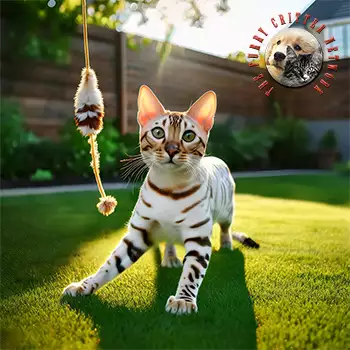

The Bengal cat derives its name from the taxonomic name of the Asian leopard cat (Prionailurus bengalensis), the wild species used in its original breeding program. While "Bengal" is the universally recognized name for this breed, it is sometimes informally referred to as the "Leopard cat" due to its striking spotted or marbled coat pattern that resembles wild leopards. However, this informal nickname can cause confusion with the actual wild Asian leopard cat species.
The breed is officially recognized by major cat registries including The International Cat Association (TICA), which granted championship status in 1991, and the Cat Fanciers' Association (CFA), which accepted the breed for registration in 2016. Some breed enthusiasts also use descriptive terms like "miniature leopard" or "domestic leopard cat" when describing Bengals to emphasize their wild appearance, though these are not official names.
In breeding circles, Bengals are sometimes classified by their generation from the Asian leopard cat ancestor. Early generation Bengals (F1-F3) are closer to their wild ancestry and may have different temperaments and requirements than later generation Bengals (F4 and beyond), which are fully domesticated and recognized for show. The "F" designation stands for "filial generation," with F1 being a first-generation cross between an Asian leopard cat and a domestic cat.
The breed standard recognizes several coat pattern variations including spotted (either random or rosetted patterns) and marbled (flowing horizontal patterns). These pattern variations have led to informal descriptive names used by breeders and enthusiasts, such as "rosetted Bengal" or "marbled Bengal," though these describe coat variations rather than separate breeds or varieties. The Bengal's official recognition and standardization has helped establish it as one of the most popular and sought-after pedigreed cat breeds worldwide.