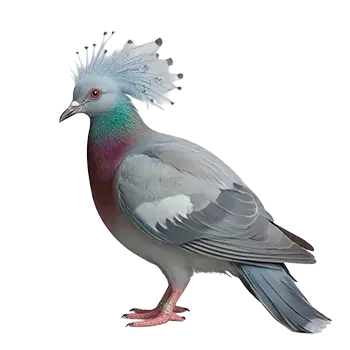

Enrichment for Victoria Crowned Pigeons must be understood through the lens of how this species actually interacts with its world, which is fundamentally different from the way parrots, finches, and most other commonly kept birds engage with toys and stimuli. Crowned pigeons are terrestrial foragers that spend their waking hours walking, exploring, and probing the forest floor for food. They do not climb, they do not chew wood or manipulate objects with their feet, and they rarely interact with hanging or suspended items. Any enrichment strategy that borrows heavily from parrot toy design will fail to engage this species and may actually create obstacles in their walking space.
The most effective enrichment for crowned pigeons centers on three behavioral needs: foraging, exploration, and sensory stimulation. Foraging enrichment encourages the bird to work for its food by searching through substrate, investigating new objects, and spending time and energy on feeding activities that would otherwise take seconds from a dish. Exploration enrichment involves regularly changing the physical environment of the aviary so the bird encounters novel layouts, textures, and visual elements. Sensory enrichment targets the bird's keen vision and hearing with stimuli that hold its attention without causing stress.
A common mistake in crowned pigeon enrichment is underestimating the bird's intelligence. Victoria Crowned Pigeons are observant, curious animals that notice and investigate changes in their environment with deliberate attention. They form preferences, learn routines, and can become genuinely bored if their surroundings remain static for weeks at a time. However, their expression of boredom is subtle compared to the destructive behavior of an under-stimulated parrot. A bored crowned pigeon may become sedentary, develop repetitive pacing patterns, or lose interest in food variety. These quiet signs of psychological stagnation are easy to overlook but indicate a genuine welfare concern that enrichment addresses.
The enrichment program should be varied and rotational. Introducing the same set of items day after day diminishes their novelty rapidly. A rotating schedule where different enrichment activities are offered on different days, with periodic introduction of entirely new items, sustains the bird's interest and keeps exploration behavior active. Many zoological institutions that house crowned pigeons follow structured enrichment calendars that ensure variety across foraging, sensory, and environmental categories throughout the week.