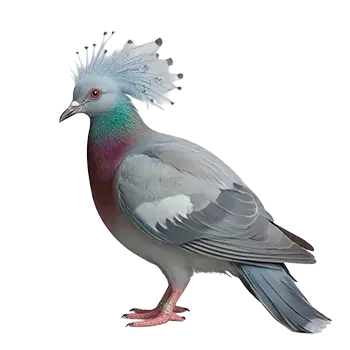

Aviary Cameras and Visual Monitoring

Visual monitoring technology has become an indispensable tool for Victoria Crowned Pigeon keepers who want to observe their birds without physically entering the aviary and disrupting natural behavior. Cameras reveal behaviors that the bird suppresses or alters when a human is present, including resting postures, nesting activity, feeding patterns, and interactions with conspecifics or enrichment items. For breeding pairs, remote camera access allows monitoring of egg incubation, hatching, and chick development without the repeated disturbance that can cause nest abandonment in this stress-sensitive species.

Wireless IP cameras with remote viewing capability via smartphone app are the most practical option for most private keepers. Modern IP cameras offer high-definition video, night vision using infrared LEDs that are invisible to birds, two-way audio, and motion-triggered recording, all accessible from anywhere with an internet connection. When selecting a camera for aviary use, prioritize models with weatherproof ratings of IP65 or higher for outdoor installations, wide-angle lenses that minimize the number of cameras needed to cover the full enclosure, and reliable cloud or local storage for recorded footage.

Camera placement requires thoughtful planning. Position at least one camera to capture the primary feeding area, as changes in feeding behavior are among the earliest signs of illness. A second camera covering the roosting area allows monitoring of nighttime resting postures and early-morning activity before the keeper's first daily check. For breeding aviaries, a dedicated camera angled to view the nesting platform without being so close that it disturbs the sitting bird provides invaluable insight into incubation progress. Mount cameras securely above the bird's reach and run cables through conduit or behind protective covers to prevent the pigeon from pecking at loose wires.

Night vision capability deserves special emphasis. Victoria Crowned Pigeons roost from dusk to dawn, and many health and behavioral issues manifest during nighttime hours when the keeper is absent. A bird experiencing respiratory distress, for example, may appear normal during the day but show labored breathing and restlessness at night. Infrared night vision allows the keeper to check on the bird at any hour without entering the aviary or turning on lights that would startle the sleeping bird. The infrared LEDs used in most consumer cameras emit wavelengths outside the avian visible spectrum, so the bird is genuinely unaware that it is being observed.

Environmental Sensors and Climate Monitoring

Maintaining the correct environmental conditions for a tropical species in a non-tropical setting requires more than periodic manual checks with a household thermometer. Digital environmental sensors that continuously monitor temperature, humidity, and air quality provide the real-time data needed to identify and correct problems before they affect the bird's health. Given that Victoria Crowned Pigeons are highly sensitive to cold, humidity extremes, and poor air quality, environmental monitoring technology is arguably more critical for this species than for any commonly kept companion bird.

Wireless temperature and humidity sensors that transmit readings to a base station or smartphone app allow the keeper to monitor aviary conditions from anywhere at any time. The best systems log data continuously and can generate alerts when readings fall outside preset acceptable ranges. For a crowned pigeon aviary, set temperature alerts to trigger below sixty-five degrees and above ninety degrees Fahrenheit, and humidity alerts below forty percent and above eighty percent. These thresholds provide an early warning margin before conditions reach levels that directly threaten the bird's health.

Placing sensors strategically within the aviary is essential for accurate readings. Temperature and humidity can vary significantly between different zones of a large enclosure, with sheltered areas running warmer than exposed sections and ground-level humidity differing from readings at ceiling height. Since crowned pigeons spend nearly all their time at ground level, at least one sensor should be mounted at a height of twelve to eighteen inches from the floor, capturing the conditions the bird actually experiences rather than the conditions at a more convenient mounting height. In outdoor aviaries with both sun-exposed and shaded areas, separate sensors in each zone provide a more complete picture.

Air quality monitors that measure particulate matter, volatile organic compounds, and carbon dioxide levels add another layer of environmental awareness. Crowned pigeons produce substantial feather dust, and elevated particulate levels in an enclosed or poorly ventilated aviary indicate that air filtration or ventilation needs improvement. Carbon dioxide accumulation in tightly sealed indoor aviaries during winter, when windows and vents are closed for warmth, can reach levels that cause lethargy and respiratory stress before the keeper notices any physical symptoms. An air quality sensor with threshold alerts catches these invisible hazards early.

Multi-sensor systems that integrate temperature, humidity, and air quality data into a single dashboard simplify monitoring and reveal correlations that individual sensors miss. A sudden drop in humidity paired with a rise in particulate count, for example, might indicate a failing humidifier and dusty substrate working together to degrade air quality. Several commercial smart home platforms support environmental sensor integration and allow the creation of automated responses, such as triggering a humidifier when humidity drops below a threshold or activating an exhaust fan when particulate levels rise.

Automated Lighting Systems

Lighting plays a multifaceted role in Victoria Crowned Pigeon health that extends well beyond simple visibility. Proper lighting influences vitamin D3 synthesis, hormonal cycles, breeding behavior, feather condition, and psychological well-being. Automated lighting systems ensure consistent, species-appropriate photoperiods without relying on the keeper's daily attention to switches and timers, and they can simulate the gradual dawn and dusk transitions that reduce the stress of abrupt light changes.

Full-spectrum avian lighting fixtures that include UVB output are essential for indoor aviaries and strongly recommended as supplemental lighting in outdoor enclosures where natural sunlight is limited by roof coverage or geographic latitude. UVB wavelengths enable the synthesis of vitamin D3 in the bird's skin and preen gland oil, which is then ingested during preening and metabolized to facilitate calcium absorption. Without adequate UVB exposure, a crowned pigeon can develop calcium deficiency even on a diet that contains sufficient dietary calcium, because the absorption pathway is impaired. Lighting fixtures should be rated specifically for avian use and positioned within the effective UVB output range specified by the manufacturer, typically twelve to eighteen inches from the bird's resting area.

Photoperiod management through automated timers or smart light controllers ensures the bird receives the consistent light-dark cycle it needs. Victoria Crowned Pigeons originate near the equator, where day length remains close to twelve hours year-round. Captive birds exposed to the widely varying day lengths of temperate latitudes may experience hormonal disruption, abnormal molting patterns, and behavioral changes. Programming the lighting system to provide a consistent twelve-hour light and twelve-hour dark cycle, regardless of the external season, stabilizes the bird's internal clock and supports normal physiological rhythms.

Gradual dimming systems that simulate dawn and dusk transitions over a period of fifteen to thirty minutes reduce the startle response that crowned pigeons exhibit when lights switch on or off abruptly. A bird that is startled awake by sudden light may thrash off its perch, risking crest damage and wing injury. Similarly, an abrupt lights-out can catch the bird in an unfamiliar position, leading to disorientation and potential falls. Smart light controllers and dimmer-compatible avian fixtures allow programming of gentle ramp-up and ramp-down periods that the bird transitions through naturally, settling onto its roost as light fades and waking calmly as light increases.

Color temperature of the lighting affects both the bird's perception and the keeper's ability to visually assess plumage and health. Full-spectrum bulbs with a color temperature in the range of 5000 to 6500 Kelvin most closely approximate natural daylight and render the bird's plumage colors accurately, which is important for detecting subtle feather condition changes. Warm-white bulbs below 3000 Kelvin may create a pleasant ambiance for the keeper but distort the blues and grays of the crowned pigeon's plumage and provide an incomplete light spectrum for biological processes.

Automated Climate Control

Automated climate control systems elevate aviary management from reactive to proactive, maintaining temperature and humidity within species-appropriate ranges without requiring constant manual adjustment. For Victoria Crowned Pigeons, whose tropical physiology leaves little tolerance for cold exposure and low humidity, automation provides a safety net that catches environmental shifts during nighttime hours, work absences, and seasonal transitions when manual monitoring is most likely to lapse.

Smart thermostats connected to aviary heating systems allow precise temperature regulation with programmable schedules and remote override capability. A thermostat set to maintain a minimum floor-level temperature of sixty-eight degrees Fahrenheit will activate radiant heat panels or ceramic emitters as needed throughout the day and night, cycling the heating on and off to maintain the target range without overheating the space. During summer months, the same thermostat can trigger ventilation fans when temperatures exceed eighty-five degrees. The key advantage over a basic mechanical thermostat is the ability to monitor performance remotely, review temperature history, and receive alerts when the system fails to maintain the set range.

Automated humidity control pairs humidity sensors with humidifiers or dehumidifiers that activate based on real-time readings. In dry climates or heated indoor environments, a humidifier connected to a hygrostat maintains the fifty to seventy percent relative humidity range that crowned pigeons require. Ultrasonic cool-mist humidifiers are preferred over warm-mist models in aviary settings because they eliminate the risk of steam burns and consume less energy during continuous operation. The humidifier reservoir should be sized for at least eight hours of continuous operation to cover overnight periods, and the unit should be positioned where its output reaches the bird's ground-level zone rather than rising to the ceiling.

Ventilation automation ensures air quality remains high even when the aviary is sealed for warmth during cold weather. A smart exhaust fan controlled by an air quality sensor or timer draws stale, particulate-laden air out of the aviary at regular intervals and replaces it with filtered fresh air. The most sophisticated systems use heat recovery ventilators that exchange stale indoor air for fresh outdoor air while recapturing the heat from the outgoing air stream, reducing the energy cost of ventilation in cold climates. This technology is particularly valuable for indoor aviaries where opening windows for ventilation is impractical during winter months.

Integrating climate control systems into a unified smart home platform provides centralized management and cross-device automation. For example, a rule can be created where the exhaust fan increases speed automatically whenever the heating system is active, preventing the air stagnation that occurs when a sealed room is heated. Another rule might pause the misting system whenever the humidity sensor reads above seventy percent, preventing the substrate from becoming waterlogged. These conditional automations reduce the keeper's workload and respond to environmental changes faster than manual intervention allows.

Digital Weight and Health Tracking

Regular weight monitoring is the single most valuable health screening tool available to a Victoria Crowned Pigeon keeper, and digital technology has made this process more accurate, less stressful, and more analytically powerful than traditional manual methods. A bird that loses five percent of its body weight over a two-week period is almost certainly experiencing a health problem, but detecting that change requires consistent, precise measurements recorded over time. Digital tools transform raw weight data into trend lines and alerts that catch problems invisible to casual observation.

Digital gram scales with data logging capability allow weight readings to be recorded automatically and exported for analysis. Some models connect to smartphone apps via Bluetooth, where the data is stored, charted, and analyzed for trends. For a bird weighing between five and seven pounds, a scale with a capacity of at least ten pounds and a resolution of one gram provides the precision needed to detect meaningful weight changes. Platform-style scales with a flat, non-slip surface are easiest for crowned pigeons to stand on, and training the bird to step onto the scale voluntarily using positive reinforcement eliminates the stress of capture and handling for each weigh-in.

Perch-mounted scales designed for aviculture offer an alternative that requires no handling at all. These devices replace or integrate with an existing perch and capture the bird's weight each time it steps on. The data is transmitted wirelessly to a receiver or app, creating a continuous weight record without any keeper intervention. For crowned pigeons that roost on the same perch nightly, a perch scale at the roosting site provides daily weight data at the most consistent time, just before the bird settles for the night, when crop fullness has stabilized and the reading is most comparable from day to day.

Health tracking apps and spreadsheet templates designed for avian care allow keepers to log not only weight but also food intake, droppings appearance, behavioral observations, medication schedules, and veterinary visit notes in a single organized system. Over time, this data set becomes a comprehensive health biography that reveals patterns no single observation could. A gradual weight decline coinciding with a change in food brand, for example, becomes obvious in a longitudinal data chart but might take months to notice through visual assessment alone. Several avian health tracking platforms also allow data sharing with the bird's veterinarian, providing the clinical team with detailed history before each appointment.

Droppings analysis, while not technology-dependent, benefits from photographic documentation using a smartphone camera. Photographing droppings daily under consistent lighting conditions creates a visual record that makes subtle changes in color, consistency, and volume apparent over time. Some avian health apps include a droppings log feature where photos are stored chronologically alongside notes about diet and health observations. While droppings analysis is not a substitute for veterinary diagnostics, it provides an early warning system for digestive, hepatic, and renal problems that is especially valuable for a species that masks illness as effectively as crowned pigeons do.

Security and Predator Deterrent Technology

Protecting a Victoria Crowned Pigeon from predators and theft is a non-negotiable aspect of keeping this valuable and vulnerable species. Crowned pigeons are large, slow-moving, ground-dwelling birds that are essentially defenseless against mammalian predators, raptors, and snakes. Their gentle temperament and striking appearance also make them targets for theft. Technology-based security solutions complement physical aviary construction to create a layered defense that deters, detects, and alerts.

Motion-activated security cameras positioned around the exterior of the aviary serve both predator detection and theft deterrence functions. Cameras with built-in motion detection can be configured to send smartphone alerts and begin recording whenever movement is detected in the aviary perimeter after dark, when most predator approaches occur. The footage provides evidence for identifying the predator species if a breach occurs and can inform subsequent improvements to physical defenses. For theft deterrence, visible cameras with recording indicator lights act as a psychological barrier, and the recorded footage provides law enforcement with evidence in the event of an attempted or completed theft.

Motion-activated lighting around the aviary perimeter is a simple but effective predator deterrent. Most nocturnal predators, including raccoons, foxes, and feral cats, are startled by sudden bright light and will retreat from an illuminated area. Solar-powered motion-activated floodlights are inexpensive, require no electrical wiring, and can be positioned along fence lines and aviary walls without professional installation. The light activation also alerts the keeper to nighttime activity near the aviary, prompting investigation before a predator has time to test the enclosure's physical defenses.

Electronic predator deterrents that use ultrasonic sound or intermittent strobe lighting to discourage wildlife from approaching the aviary area are available in various configurations. Ultrasonic devices emit high-frequency sound that is unpleasant to many mammals but inaudible to humans and most birds. These devices can be effective against raccoons, opossums, and feral cats when positioned at ground level around the aviary perimeter. However, their effectiveness varies by species and individual animal, and they should be considered a supplementary measure rather than a primary defense. The ultrasonic output must be verified as safe for the pigeon species, which can perceive a broader range of sound frequencies than humans.

Smart lock systems on aviary doors provide access control and logging that simple padlocks cannot. A smart lock that opens with a code, key card, or smartphone app creates a record of every entry and exit, which is useful for monitoring caretaker access in multi-keeper situations and for verifying that the aviary was secured after each visit. Some systems can be programmed with multiple user codes, time-restricted access windows, and remote lock and unlock capability. In an emergency, remote unlocking allows a trusted person to access the aviary even when the primary keeper is unavailable.

Smart Feeding and Water Systems

Automated feeding and watering systems extend the periods during which a Victoria Crowned Pigeon can be safely left without direct keeper intervention, providing peace of mind during work hours, overnight periods, and short absences. While no technology replaces the daily observation and hands-on care that this species requires, smart feeding and watering devices ensure the bird always has access to fresh food and clean water regardless of the keeper's schedule.

Automatic grain dispensers designed for poultry and pigeon lofts can be adapted for crowned pigeon use. These devices release a measured portion of grain at programmed intervals, distributing food across a feeding tray or directly onto the aviary floor. Timed dispensing mimics the multi-meal feeding pattern that crowned pigeons benefit from and prevents the bird from gorging its entire daily ration in a single session. When selecting an automatic feeder, ensure the dispensing mechanism can handle the grain sizes in the bird's mix without jamming, and choose a unit with a hopper capacity sufficient for at least two days of feeding as a buffer against mechanical failure.

Automated water systems maintain fresh water availability without the twice-daily manual changes that open water dishes require. Nipple-style drinkers, while standard in poultry operations, are not appropriate for crowned pigeons because the species' bill-submerging drinking technique cannot engage a nipple valve. Instead, look for gravity-fed or float-valve watering systems that maintain a constant water level in an open trough or cup-style drinker. Float-valve systems connected to a clean water supply line provide genuinely continuous fresh water, as the valve opens to refill the drinking vessel each time the bird drinks and the water level drops.

Water quality monitoring devices that measure pH, temperature, and total dissolved solids can be installed in the water supply line or placed in the drinking vessel. While these parameters are less critical for a pigeon's drinking water than for aquatic animals, monitoring water quality over time can reveal issues with the water source that might otherwise go unnoticed. A sudden change in pH or dissolved solids may indicate contamination of the supply line, and water temperature readings confirm that drinking water is not reaching temperatures that discourage consumption during hot weather or freezing during cold snaps.

Smart feeders and water systems with connectivity features that report status and consumption data to a smartphone app add a layer of remote monitoring that is especially valuable for keepers who are away from home during the day. An alert indicating that the grain dispenser has jammed, the water level is not refilling, or the daily food consumption has dropped below normal allows the keeper to respond promptly even from a distance. These alerts serve as an early warning system for both equipment malfunctions and potential health issues, since a sudden change in food or water consumption is often the first sign that something is wrong with the bird.

Always consult a qualified professional before making any health-related decisions. This content is provided for informational reference only and should not replace professional guidance specific to your animal.