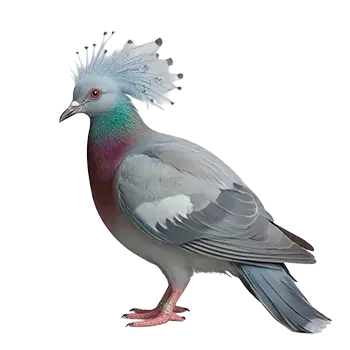

Feeding and Watering Equipment

The feeding and watering equipment selected for a Victoria Crowned Pigeon must accommodate the bird's size, ground-feeding behavior, and distinctive bill morphology. Unlike parrots that perch alongside mounted food cups, crowned pigeons eat exclusively from ground level and approach their food by walking up to it and pecking or picking up items in a swift downward motion. Every dish, hopper, and water system in the aviary should be designed with this terrestrial feeding style in mind, and all equipment must be heavy enough to resist tipping by a bird that weighs up to seven pounds.

Food dishes should be wide, shallow, and made from non-porous materials that can be easily sanitized. Glazed ceramic crocks are an excellent choice because their weight prevents tipping, their smooth surface resists bacterial colonization, and they can withstand repeated washing and disinfecting. Stainless steel dishes offer similar hygiene advantages at lower weight and are virtually indestructible, though they require a weighted base or a mounting bracket at ground level to prevent the bird from pushing them across the aviary floor. Plastic dishes are inexpensive and lightweight but scratch easily, creating grooves where bacteria thrive, and should be replaced frequently if used.

Water delivery is a particularly important consideration because crowned pigeons drink by submerging the entire bill into the water and sucking, a method unique to the pigeon and dove family. This drinking technique means the water dish must be deep enough to submerge the bill, at least two inches, and wide enough that the bird can comfortably lower its head without bumping its elaborate crest against the dish edges. Narrow-necked water bottles used for small birds are completely unsuitable. Open water dishes work well but require changing at least twice daily because the sucking motion rapidly introduces food debris, feather dust, and saliva into the water.

Gravity-fed water dispensers designed for poultry or large pigeons offer a practical middle ground between open dishes and bottle systems. These dispensers feature a reservoir that releases water into a trough as the bird drinks, maintaining a clean supply for longer periods than an open dish. The trough portion must be wide enough for the crowned pigeon's bill, and the reservoir should hold enough water for at least a full day's consumption. Position the dispenser on a level surface and check it daily to ensure the valve is functioning properly and no debris is blocking the water flow.

Bathing and Hygiene Products

Victoria Crowned Pigeons maintain their plumage through regular bathing and dust bathing, and providing appropriate bathing facilities is essential for feather health, skin condition, and behavioral well-being. A bird denied bathing opportunities will develop dull, poorly conditioned plumage and may engage in excessive preening that damages feathers. The bathing setup does not need to be complex, but it does need to be the right size and design for this large species.

A shallow bathing pan is the primary bathing accessory for captive crowned pigeons. The pan should be wide enough for the bird to stand in with room to turn, roughly eighteen to twenty-four inches in diameter, and no more than two to three inches deep. Deeper water is unnecessary and can be hazardous if the bird slips or becomes startled while bathing. Galvanized steel or heavy-duty plastic utility pans marketed for farm and garden use are ideal because they are durable, affordable, and the right general dimensions. Some keepers use large terra cotta saucers designed for plant pots, which have the added advantage of a rough surface that provides traction for wet feet.

Mist bathing provides an alternative or supplement to standing water baths, and many crowned pigeons show an enthusiastic response to fine mist sprayed over the aviary. A garden-style pump sprayer set to a fine mist setting allows the keeper to create a gentle rain effect that the bird can stand in, spread its wings and tail feathers, and shake through. This behavior closely resembles the rain-bathing that wild crowned pigeons engage in during tropical downpours. Misting should be done on warm days or in heated indoor environments, and the bird should always have the option to move away from the mist if it chooses. Automated misting systems on timers provide consistent bathing opportunities and can also help maintain aviary humidity.

Bird-safe plumage sprays and conditioning products are available but generally unnecessary for crowned pigeons maintained on a proper diet with regular bathing access. The species produces copious powder down, a fine keratin dust generated by specialized feathers that waterproofs and conditions the plumage naturally. Supplemental sprays can interfere with this natural conditioning process and may coat the distinctive crest feathers in residue that dulls their appearance. If a bird's plumage appears dry or damaged, the underlying cause is almost always dietary deficiency or inadequate bathing access rather than a need for topical products. Address the root cause rather than masking it with sprays.

Foot care products may be needed for birds housed on hard or abrasive surfaces. Bumblefoot, an infection of the foot pad caused by chronic pressure on hard surfaces, is a risk for any heavy-bodied ground bird. Preventive foot care starts with appropriate substrate and perching surfaces but can be supplemented with veterinary-grade wound barriers and emollient balms applied to the foot pads if early signs of pressure irritation appear. A small first aid kit containing bird-safe antiseptic, styptic powder for minor bleeding, and non-stick wound pads is a worthwhile accessory for any crowned pigeon keeper.

Transport Carriers and Travel Gear

A suitable transport carrier is an essential accessory for any Victoria Crowned Pigeon owner, needed for veterinary visits, temporary relocation during aviary maintenance, and emergency evacuation. The carrier must accommodate a bird that is nearly thirty inches tall when standing fully upright, with an elaborate head crest that adds several more inches and is easily damaged by contact with low ceilings or rough surfaces. Standard cat carriers and small-bird travel cages are wholly inadequate for this species.

Large dog crates made from molded plastic with wire mesh doors are the most practical carrier option for crowned pigeons. A crate sized for a medium to large dog provides enough floor space for the bird to stand and turn around, and the solid plastic construction protects the delicate crest from catching on wire. The interior height should be sufficient for the bird to stand at its full height without the crest pressing against the ceiling, which typically means a crate at least twenty-four inches tall at the interior. Line the floor with a thick layer of towel or fleece to provide traction and cushioning, and secure the crest area by ensuring no internal hardware or rough edges could snag the feathers.

Darkening the carrier with a cover or towel reduces the bird's stress during transport significantly. Crowned pigeons are not accustomed to the visual stimulation of vehicular travel, and the movement of scenery outside a transparent carrier can cause panic, wing-thrashing, and self-injury. A breathable cover that blocks visual input while allowing adequate ventilation transforms the carrier into a calm, cave-like space. Leave a small gap at the bottom or along one side for airflow, and ensure the cover material cannot be pulled into the carrier and ingested.

Carrier training well before the first veterinary visit pays enormous dividends in reducing transport stress. Begin by placing the open carrier in the aviary with the door removed so the bird can investigate it at its own pace. Add food treats inside the carrier over several days until the bird enters voluntarily and without hesitation. Gradually reintroduce the door, first propped open and then briefly closed with the bird inside and immediately reopened. Over a period of two to three weeks, most crowned pigeons can be trained to enter and remain calmly in a closed carrier for the duration of a typical transport. This investment of time prevents the traumatic chase-and-capture scenario that untrained birds experience when carrier loading is attempted for the first time under urgent circumstances.

For longer transport or air travel, which may be necessary for birds being relocated to breeding programs or new ownership, a purpose-built shipping crate that meets IATA live animal regulations is required. These crates are constructed to specific dimensions and ventilation standards, and they must be labeled and secured according to airline requirements. Engaging an experienced animal transport service for long-distance moves is strongly advisable, as the logistics of temperature control, documentation, and handling during transit are complex and mistakes can be fatal.

Grooming and Health Maintenance Tools

Regular grooming maintenance is a modest but important aspect of Victoria Crowned Pigeon care. The species is largely self-maintaining when it comes to plumage, relying on bathing, preening, and powder down production to keep feathers in condition. However, certain grooming tasks require keeper intervention, and having the right tools on hand ensures these tasks are performed safely and efficiently.

Nail trimming is the most common grooming task for captive crowned pigeons. Wild birds naturally wear their nails down through constant walking on rough natural surfaces, but captive birds on softer substrates often develop overgrown nails that can catch on mesh, fabric, and enrichment items. A pair of sharp, appropriately sized avian nail clippers or small guillotine-style pet nail trimmers is essential. Crowned pigeon nails are relatively soft and thin compared to parrot nails, so heavy-duty parrot trimmers are unnecessary. Have styptic powder or cornstarch on hand to stop bleeding in case the quick is nicked during trimming, as the blood supply in pigeon nails can be difficult to visualize through the dark nail surface.

A digital gram scale accurate to at least one-gram resolution is arguably the most important health monitoring tool a crowned pigeon keeper can own. Regular weight checks are the earliest and most reliable indicator of health changes in birds, which are notorious for masking illness until the condition is advanced. Weighing the bird weekly on the same scale at the same time of day establishes a baseline that makes even gradual weight loss or gain immediately apparent. A platform-style kitchen scale with a flat weighing surface works well if the bird is trained to step onto it. For birds that are less cooperative, a perch-mounted scale that captures weight when the bird roosts on it during the evening can provide data without the stress of handling.

A basic avian first aid kit should be assembled and kept accessible near the aviary. The kit should include bird-safe antiseptic solution such as chlorhexidine, styptic powder, non-adherent wound pads, self-adhesive bandaging wrap, blunt-tipped scissors, a small flashlight for visual examination, and a pair of hemostats or tweezers for removing foreign objects. An emergency heat source such as a ceramic heat emitter or electric heating pad provides critical warmth for a bird in shock or recovering from injury. Keep the veterinarian's contact information and the location of the nearest avian emergency clinic posted with the kit.

Beak maintenance is rarely needed in healthy crowned pigeons, as normal feeding and foraging behavior keeps the bill appropriately worn and shaped. However, birds recovering from illness, elderly birds with reduced activity levels, or birds with congenital beak abnormalities may develop overgrowth that requires filing or trimming by an avian veterinarian. Home beak trimming is not recommended for inexperienced keepers because the pigeon bill has a blood supply that extends further toward the tip than many owners expect, and improper trimming can cause hemorrhage and pain.

Cleaning and Sanitation Supplies

Maintaining a clean aviary environment requires a dedicated set of cleaning supplies that are effective against avian pathogens while being safe for use around birds. The wrong cleaning product can be as dangerous as a dirty enclosure, so product selection demands care. Crowned pigeons are ground-dwelling birds in constant contact with their enclosure surfaces, which amplifies both the importance of cleanliness and the risk of chemical exposure from improperly chosen or applied cleaning agents.

Bird-safe disinfectants are the cornerstone of the sanitation toolkit. Chlorhexidine-based solutions are widely used in avian veterinary practice and are available in concentrated form that can be diluted for daily cleaning and dish sanitation. These products are effective against a broad range of bacteria and fungi, have low toxicity after rinsing and drying, and do not produce the harsh fumes associated with bleach. For situations requiring stronger disinfection, such as after a disease outbreak or during deep cleaning, a dilute bleach solution of one part household bleach to thirty parts water provides hospital-grade sanitation but must be thoroughly rinsed and the surfaces allowed to dry completely before bird contact.

Avoid all phenol-based cleaners, pine oil products, and aerosol air fresheners in and around the aviary. These products release volatile compounds that are directly toxic to the avian respiratory system, which is far more efficient at gas exchange than the mammalian lung and therefore far more vulnerable to airborne toxins. Scented candles, plug-in air fresheners, and incense in the same room as the aviary pose the same risk. Even products labeled as natural or plant-based may contain essential oils such as tea tree, eucalyptus, or peppermint that are dangerous to birds in concentrated form.

Physical cleaning tools should include a set of stiff-bristled scrub brushes in multiple sizes for dishes, perches, and surfaces, a dedicated aviary rake or hand cultivator for turning and removing substrate, a handheld dustpan and brush for spot cleaning, and a pressure washer or hose with nozzle attachment for deep cleaning mesh and structural surfaces. Keeping these tools dedicated to aviary use rather than sharing them with household cleaning prevents cross-contamination with household chemicals. Store cleaning supplies in a location accessible to the keeper but physically separated from the aviary to prevent accidental exposure.

Disposable gloves should be worn during cleaning to protect the keeper from zoonotic pathogens including chlamydia, salmonella, and various fungal organisms that can be present in bird droppings and feather dust. A dust mask rated N95 or higher is advisable during deep cleaning and substrate changes, as the process generates significant airborne particulate matter including dried fecal dust and feather dander. These simple protective measures safeguard both the keeper and, by extension, the bird, since a keeper who develops a respiratory infection may transmit opportunistic pathogens back to the aviary.

Identification and Record-Keeping Supplies

Proper identification of Victoria Crowned Pigeons is both a practical management tool and, in many jurisdictions, a legal requirement. As a CITES Appendix II species, Victoria Crowned Pigeons in captivity are subject to documentation requirements that vary by country and sometimes by state or province. Maintaining accurate identification records from the day the bird enters your care protects both the keeper and the bird in the event of a legal inquiry, veterinary emergency, or ownership transfer.

Closed leg bands are the traditional identification method for captive-bred pigeons and are applied when the chick is a few days old, before the foot grows too large for the band to pass over. The band remains in place for life and carries a unique alphanumeric code that identifies the bird's breeder, year of hatch, and individual number. For adult birds acquired without bands, or in cases where a closed band is not available, an avian veterinarian can apply a split aluminum or plastic band that snaps around the leg. These open bands are less secure and may need periodic checking and replacement, but they serve the basic identification function.

Microchipping provides a permanent, tamper-proof identification method that supplements or replaces banding. An avian-specific microchip, much smaller than those used in dogs and cats, is implanted in the breast muscle by an avian veterinarian under brief sedation. The chip contains a unique identification number that can be read by a standard scanner. Microchipping is increasingly expected by avian breed registries, conservation programs, and authorities that regulate the keeping of CITES-listed species. The procedure carries minimal risk when performed by an experienced avian practitioner and provides identification security that external bands cannot match.

Record-keeping supplies complement physical identification. A dedicated binder or digital file for each bird should contain copies of acquisition documentation including any CITES permits or sales receipts, veterinary records including vaccination and parasite treatment history, hatch date and parentage information if known, weight logs, dietary notes, and photographs for visual identification. Maintaining these records diligently is not merely administrative; it creates a comprehensive health history that enables veterinarians to make better-informed treatment decisions, supports breeding program management, and provides documentation of legal ownership. Several software applications and online platforms now cater specifically to avian record-keeping, offering templates for health logs, breeding records, and expense tracking.

Seasonal and Emergency Preparedness Gear

Responsible Victoria Crowned Pigeon ownership includes planning for seasonal challenges and emergency situations that could endanger the bird. The species' tropical origin makes it particularly vulnerable to cold weather emergencies, and its size and ground-dwelling habits create unique challenges during events such as power outages, severe storms, and forced evacuations. Assembling the right gear in advance, before an emergency occurs, can be the difference between a manageable disruption and a catastrophic loss.

Backup heating is the most critical piece of emergency gear for crowned pigeon keepers in temperate climates. A portable ceramic space heater with a built-in thermostat can maintain safe temperatures in a small room during a power outage if paired with a battery backup or generator. Chemical hand warmers and microwavable heat pads designed for pet use provide short-term warming inside a carrier or temporary enclosure when electricity is unavailable. Keep a minimum of twenty-four hours of emergency heat capacity on hand at all times during cold months, and test equipment before each winter season to ensure functionality.

Storm protection for outdoor aviaries includes securing loose panels and roofing materials before severe weather arrives, reinforcing mesh attachments at stress points, and ensuring drainage is clear so the aviary does not flood during heavy rain. A tarpaulin or heavy-duty weather cover that can be deployed quickly over the aviary provides additional wind and rain protection during storms. In regions prone to tornadoes, hurricanes, or severe thunderstorms, have a plan for moving the bird to a secure indoor location before dangerous conditions arrive. This plan should include a practiced route, a pre-positioned carrier, and a prepared indoor holding area.

An emergency supply kit specifically for the bird should be stored in an accessible location and inventoried quarterly. The kit should contain a minimum three-day supply of the bird's regular food, bottled water, medications if the bird is on any ongoing treatment, the first aid kit described in the grooming section, copies of identification and veterinary records, the bird's carrier and cover, disposable bedding material, and contact information for the bird's veterinarian and the nearest avian emergency clinic. If the household is located in an area subject to mandatory evacuation orders, research pet-friendly shelters and evacuation routes in advance and include this information in the kit.

Seasonal accessory adjustments should be anticipated and prepared for before each transition. As winter approaches, inspect and test all heating equipment, seal drafts in indoor aviary rooms, and ensure the bird's shelter section provides adequate wind protection. Before summer, verify that misting systems and water features are functional, check ventilation for adequate airflow, and ensure shaded areas within the aviary are sufficient to prevent heat stress. Between seasons, perform a thorough safety inspection of the entire enclosure, checking mesh for corrosion and gaps, structural connections for loosening, and substrate conditions that may have deteriorated during the preceding months.

Always consult a qualified professional before making any health-related decisions. This content is provided for informational reference only and should not replace professional guidance specific to your animal.