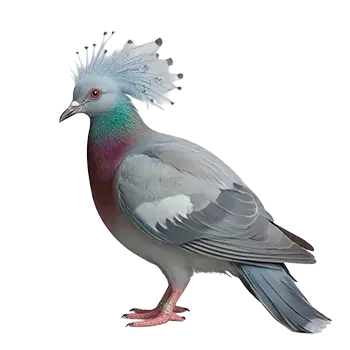

The Victoria Crowned Pigeon is the largest living species in the pigeon and dove family, and its nutritional requirements reflect that substantial body mass. An adult bird weighing between five and seven pounds needs a caloric intake significantly higher than that of common domestic pigeons, and the composition of those calories must support dense plumage, robust bone structure, and the sustained energy demands of a ground-foraging lifestyle. In the wild, these pigeons spend the majority of their waking hours walking the forest floor of New Guinea, consuming fallen fruits, seeds, and invertebrates. Captive diets must replicate both the nutritional profile and the foraging engagement that wild feeding provides.
Protein requirements for Victoria Crowned Pigeons are moderate but consistent. Unlike seed-specialist pigeons that can thrive on relatively low protein levels, crowned pigeons rely on invertebrate prey in the wild to meet amino acid needs, particularly during breeding season and juvenile growth periods. Captive diets should deliver protein levels in the range of twelve to sixteen percent of total intake, sourced from a combination of legumes, high-quality pigeon pellets, and animal-based supplements such as mealworms or hard-boiled egg. Insufficient protein manifests as poor feather quality, slow molt cycles, and reduced reproductive success.
Calcium and phosphorus balance is critical for a bird of this size. The skeletal frame of a Victoria Crowned Pigeon is considerably heavier than that of most companion birds, and maintaining bone density requires reliable calcium intake alongside adequate vitamin D3 for absorption. Hens in breeding condition face even greater calcium demands for eggshell formation. A diet that relies solely on grain will almost certainly fall short on calcium, making supplementation through mineral grit, cuttlebone, or liquid calcium products an essential part of the feeding program.
Fat content in the diet should be carefully managed. While the species does consume oily seeds and fruit pulp in the wild, captive birds are far less active than their free-ranging counterparts and can develop fatty liver disease and obesity if given unrestricted access to high-fat seeds like sunflower and safflower. A diet anchored by low-fat grains and pellets, with controlled portions of higher-fat seeds and nuts, keeps body condition in the optimal range without depriving the bird of essential fatty acids needed for feather condition and immune function.