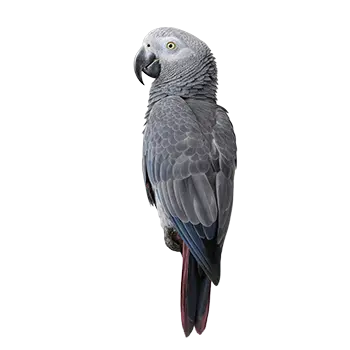

The Timneh African Grey is among the most cognitively advanced companion bird species, with problem-solving abilities and social intelligence that have been documented extensively in avian cognition research. This intellectual capacity is not merely impressive — it creates a genuine welfare obligation. A Timneh without adequate mental stimulation will find ways to occupy itself, and those self-generated activities frequently manifest as feather destructive behavior, repetitive screaming, excessive preening of cage mates, or the development of phobic responses to ordinary household stimuli. Toys and enrichment are not luxuries for this species. They are foundational components of responsible care.
In the wild, Timneh African Greys spend a substantial portion of their waking hours foraging, manipulating objects, navigating complex forest canopy, and engaging in social interactions with flock members. Captivity eliminates most of these activities unless the owner deliberately reintroduces them through environmental enrichment. The goal of a toy and enrichment program is to replace the physical and cognitive challenges that wild life naturally provides, not through a single spectacular toy but through a varied, evolving collection that keeps the bird's environment unpredictable enough to sustain its interest over months and years.
Timnehs tend to be somewhat less neophobic than Congo African Greys, meaning they are generally more willing to approach and investigate unfamiliar objects. This trait makes toy introduction slightly easier but does not eliminate the need for a thoughtful introduction process. Even a relatively bold Timneh may be startled by a large, brightly colored toy suddenly appearing in its cage. New items are best introduced gradually — placed near but outside the cage first, then hung on the exterior bars, then moved inside over the course of several days as the bird demonstrates curiosity rather than fear.
The most effective enrichment programs combine multiple categories of toys — foraging, chewing, puzzle-solving, and physical activity — and rotate them regularly to maintain novelty. A bird that has had the same three toys in its cage for six months has long since exhausted their enrichment value, regardless of how engaging those toys were initially. Regular rotation, where toys are swapped in and out on a weekly or biweekly cycle, keeps each item relatively fresh and prevents the environmental stagnation that leads to boredom.