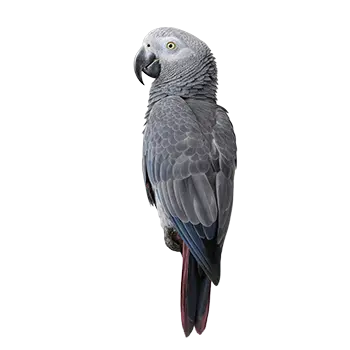

The Timneh African Grey is a mid-sized parrot with a wingspan that belies its compact body, and its housing must accommodate not only its physical dimensions but also the behavioral complexity of one of the most intelligent companion bird species in the world. A cage that meets minimum size requirements but offers no opportunity for climbing, foraging, or environmental variety will produce a bored, stressed bird regardless of how expensive the enclosure was. Housing decisions for a Timneh should be guided by the principle that the cage is the bird's primary living space for the majority of each day, not a temporary holding area between out-of-cage sessions.
Timnehs are climbers rather than strong fliers in a domestic setting. Their natural movement pattern involves lateral traversal across branches and vertical climbing up and down tree trunks, which means cage width and height matter more than depth for most setups. A cage that is tall but narrow restricts the horizontal movement that Timnehs prefer, while a wide cage with adequate height gives the bird room to move in the directions that feel most natural. Understanding this movement preference is the first step toward selecting an enclosure that genuinely serves the bird rather than merely containing it.
The cage must also be structurally sound enough to withstand decades of use by a bird with a powerful beak. Timneh African Greys have strong mandibles capable of bending thin wire, defeating flimsy latches, and gradually weakening spot-welded joints over time. A cage that seems adequate on the day of purchase may develop dangerous weak points within a few years if the construction quality is insufficient. Given that a Timneh can live forty to fifty years, the cage represents an investment in infrastructure that will need to endure for a very long time.
Ventilation and visibility are additional considerations that influence cage selection. Greys are observant, socially oriented birds that become anxious when they cannot see their surroundings. Solid-sided enclosures or cages placed in corners where the bird's sightlines are restricted on multiple sides can trigger stress behaviors including feather destructive behavior and excessive vocalization. The ideal cage offers open visibility on at least three sides while providing one solid or partially covered side where the bird can retreat when it needs a sense of security.