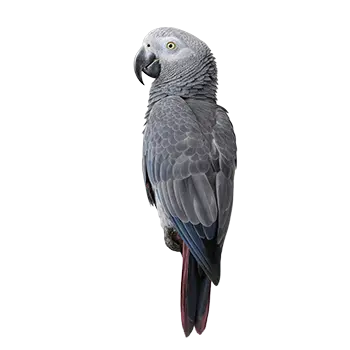

Technology has expanded the toolkit available to Timneh African Grey owners in ways that would have seemed impractical a decade ago. Environmental sensors, networked cameras, smart lighting controllers, and digital health tracking systems now offer real-time visibility into conditions that were previously monitored through guesswork and periodic spot checks. For a species as sensitive to environmental quality as the Timneh, and one whose lifespan demands decades of consistent care, these tools provide data-driven insights that complement traditional husbandry knowledge.
The value of technology in avian care is not in replacing attentive ownership but in augmenting it. A camera cannot substitute for direct social interaction, and a temperature sensor does not eliminate the need for an owner who understands what the readings mean. What technology does exceptionally well is fill the gaps in human attention — monitoring conditions when the owner is at work, alerting to dangerous environmental shifts during the night, and recording patterns over weeks and months that would be impossible to track through memory alone. For working professionals who spend eight or more hours away from their bird each day, monitoring technology provides peace of mind grounded in actual data rather than anxious speculation.
The Timneh African Grey's particular characteristics make it an especially good candidate for technology-assisted care. Its sensitivity to air quality, its need for precise temperature and humidity ranges reflecting its West African origins, its vulnerability to calcium metabolism disruption influenced by UV exposure, and its behavioral complexity all create monitoring opportunities where technology adds genuine value. A species that can live fifty years also generates a longitudinal health dataset that becomes more useful over time as patterns emerge across months and years of recorded observations.
Adopting new technology should be done with the bird's temperament in mind. Electronic devices that produce unfamiliar sounds, flashing lights, or sudden movements can startle any parrot, and while Timnehs are generally less neophobic than Congo Greys, they are still sensitive to abrupt environmental changes. New devices should be introduced gradually, initially powered off and placed where the bird can observe them from a comfortable distance, then activated at low settings and moved closer over days as the bird demonstrates acceptance.