
Nutritional Needs

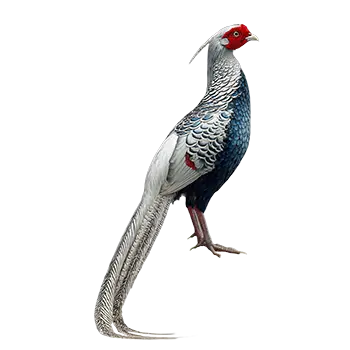
Silver Pheasants (Lophura nycthemera) are omnivorous ground-dwelling birds native to the forests and mountainous regions of mainland Southeast Asia and southern China. In the wild, their diet consists of fallen seeds, grains, berries, tender shoots, roots, insects, larvae, earthworms, and small invertebrates gathered from the forest floor. Replicating this dietary breadth in captivity is essential to maintaining their striking plumage, supporting reproductive health, and sustaining the robust constitution that makes this species one of the hardier pheasants in aviculture. A nutritionally incomplete diet manifests quickly in Silver Pheasants, often appearing first as dull or broken feathers, sluggish behavior, and diminished breeding success.

Protein requirements for Silver Pheasants vary significantly with age, season, and reproductive status. Adult maintenance diets generally require a protein content in the range of fourteen to eighteen percent, but breeding hens and growing chicks need substantially more, often in the range of twenty to twenty-eight percent. Protein quality matters as much as quantity. Animal-derived protein from insects and invertebrates provides amino acid profiles that plant-based protein sources alone cannot fully match, which is why supplemental live or dried insect offerings play an important role in a well-rounded feeding program.

Calcium and phosphorus balance is a critical concern, particularly for breeding females. Egg production places enormous calcium demands on hens, and a diet deficient in bioavailable calcium leads to thin-shelled or shell-less eggs, egg binding, and progressive skeletal weakening. The ideal dietary calcium-to-phosphorus ratio for pheasants falls between two-to-one and two-point-five-to-one. Commercial game bird feeds formulated for breeding season typically address this ratio, but keepers who mix their own rations need to monitor these minerals carefully.

Vitamins A, D, and E are particularly important for Silver Pheasants. Vitamin A supports respiratory health and the integrity of mucous membranes, vitamin D is essential for calcium metabolism and bone density, and vitamin E functions as an antioxidant that supports fertility and immune function. Birds kept in outdoor aviaries with natural sunlight exposure synthesize vitamin D through their skin and preen gland oils, but those in covered or partially shaded enclosures may require dietary supplementation to maintain adequate levels.

What to Look For

Selecting the right commercial feed for Silver Pheasants begins with understanding the difference between game bird feeds and standard poultry or companion bird products. Game bird feeds are formulated with the higher protein content and more complete micronutrient profiles that gallinaceous species require, whereas standard chicken layer feeds tend to be lower in protein and may contain medications or additives inappropriate for pheasants. Always choose a feed explicitly labeled for game birds, pheasants, or ornamental fowl rather than adapting a product designed for domestic poultry.

Ingredient lists deserve careful scrutiny. A quality game bird feed lists whole or cracked grains, soybean meal, and identifiable protein sources among its first ingredients. Avoid products that rely heavily on grain byproducts, mill run, or unspecified animal fats as their primary components. These lower-quality ingredients may provide adequate caloric content but often fall short in digestibility and micronutrient density. Silver Pheasants are relatively efficient at converting feed into body condition, so investing in a higher-quality product at a slightly higher cost per pound typically yields visible results in feather quality and vitality.

Pellet versus crumble form is a practical consideration. Silver Pheasants are ground feeders that naturally peck and scratch through substrate to find food, so crumble or small pellet forms suit their feeding behavior better than large pellets designed for turkeys or waterfowl. Mash formulations work but tend to generate waste as the fine particles scatter and become contaminated with substrate. Crumbles in the two-to-four millimeter range offer a good balance between ease of consumption and minimal waste.

Medicated feeds require special caution. Some game bird starter and grower feeds contain coccidiostats or other medications that are appropriate for commercial pheasant production but may be unnecessary or even harmful for ornamental birds in well-managed aviaries with good hygiene. Unless a veterinarian has recommended medicated feed to address a specific health issue, unmedicated formulations are generally the better choice for Silver Pheasants kept in small collections.

Recommended Feed Types

A tiered feeding program that adjusts with season and life stage serves Silver Pheasants far better than a single year-round feed. During the non-breeding maintenance period, which for most keepers spans late summer through early winter, a game bird maintenance feed with fourteen to sixteen percent protein provides adequate nutrition without promoting excessive weight gain. These maintenance formulations typically have moderate fat content and a balanced vitamin and mineral package designed for adult birds in a resting physiological state.

As breeding season approaches in late winter and early spring, transitioning to a game bird breeder feed with eighteen to twenty-two percent protein and elevated calcium supports the demands of courtship, egg production, and the physical stresses of the breeding period. This transition should happen gradually over a period of two to three weeks rather than abruptly, allowing the birds' digestive systems to adjust to the richer formulation. Breeder feeds also typically contain enhanced levels of vitamin E and selenium, both of which are associated with improved fertility and hatchability.

For chicks and growing juveniles, a game bird starter with twenty-six to twenty-eight percent protein provides the fuel for rapid early growth. Starter feeds should be in crumble form small enough for day-old chicks to consume easily. After six to eight weeks, a transition to a game bird grower feed with twenty to twenty-two percent protein supports continued development at a more moderate pace. Most grower formulations can be maintained until the birds reach adult size at roughly sixteen to twenty weeks of age, at which point they transition to the adult maintenance diet.

Some aviculturists supplement commercial feeds with mixed scratch grains, particularly during colder months when additional caloric intake helps birds maintain body temperature. Scratch grain blends containing cracked corn, wheat, milo, and millet serve this purpose well, but they should be offered as a supplement rather than a replacement for the balanced formulated feed. A useful guideline is to limit scratch grains to no more than fifteen to twenty percent of total daily feed intake to prevent nutritional dilution of the primary diet.

Fresh Foods and Foraging Supplements

Fresh foods add nutritional depth and behavioral enrichment to the Silver Pheasant's diet that commercial feeds alone cannot provide. Dark leafy greens such as kale, dandelion greens, romaine lettuce, and spinach deliver vitamins, minerals, and dietary fiber. These can be offered chopped and scattered across the aviary floor to encourage natural foraging behavior, or hung in bunches from the enclosure frame to provide physical enrichment as birds reach and pull at the leaves. Rotating the types of greens offered throughout the week prevents nutritional monotony and encourages acceptance of a broad range of foods.

Fruits and berries are well-received by Silver Pheasants and mirror the wild diet's seasonal fruit component. Blueberries, blackberries, halved grapes, diced apple, and chopped melon are all suitable offerings. These should be provided in moderation due to their sugar content, with fruit making up no more than five to ten percent of the overall diet. During the summer and early autumn months, keepers with access to wild or garden-grown berries can offer these as a seasonal treat that closely approximates natural food sources.

Live insects represent one of the most nutritionally valuable and behaviorally stimulating food supplements available for Silver Pheasants. Mealworms, waxworms, crickets, and earthworms provide high-quality animal protein, essential fatty acids, and micronutrients. Live insects also trigger intense foraging behavior, with birds actively pursuing, catching, and consuming prey in a manner closely resembling their wild counterparts. Dried insects offer a convenient alternative when live sources are unavailable, though they lack the behavioral enrichment value of live prey.

Germinated and sprouted seeds bridge the gap between dry grain and fresh vegetable offerings. Soaking seeds such as wheat, barley, and sunflower overnight and allowing them to just begin sprouting increases their vitamin content, improves digestibility, and reduces anti-nutritional factors present in raw seeds. Sprouted seeds are especially valuable during breeding season when hens benefit from the enhanced nutritional profile, and they can serve as a transition food for young birds being weaned from starter rations. Hygiene during the sprouting process is essential, as warm, moist conditions that promote germination also favor bacterial growth.

Treats and Supplements

Treats for Silver Pheasants are most effective when they serve double duty as both a reward mechanism for encouraging tameness and a vehicle for delivering additional nutrition. Unlike parrots, pheasants do not typically bond with handlers through food-based training, but regular treat offerings at consistent times do build familiarity and reduce flightiness over time. Mealworms are perhaps the single most effective treat for this purpose, as their movement catches the bird's attention and their taste is universally appealing to gallinaceous species.

Calcium supplementation is a priority for breeding females and should not be left to chance. Crushed oyster shell offered in a separate dish allows hens to self-regulate their calcium intake based on physiological need. This approach is preferable to mixing calcium into the primary feed, which delivers a fixed dose regardless of individual requirements. Oyster shell should be available continuously during the breeding season and offered intermittently during the rest of the year. Limestone grit serves a similar purpose and also aids mechanical digestion in the gizzard.

Grit is a nutritional essential rather than an optional supplement for Silver Pheasants. As birds that lack teeth, pheasants rely on ingested grit held in the muscular gizzard to grind food into digestible particles. Insoluble granite grit provides the abrasive action needed for this process, while solite or calcium-based grit contributes both grinding function and mineral supplementation. Grit should be available at all times in a dedicated container that is protected from contamination by droppings or substrate.

Vitamin and mineral supplements beyond what commercial feeds provide should be used selectively rather than routinely. A broad-spectrum avian vitamin supplement added to drinking water or soft foods can be beneficial during periods of stress, recovery from illness, molt, or dietary transition. However, consistent use of a well-formulated game bird feed combined with varied fresh food offerings typically meets all micronutrient needs without additional supplementation. Over-supplementation, particularly of fat-soluble vitamins, carries a real risk of toxicity and should be avoided unless directed by an avian veterinarian.

Foods to Avoid

Several categories of food are toxic, harmful, or nutritionally inappropriate for Silver Pheasants and must be excluded from the diet entirely. Avocado stands at the top of this list, as the persin compound present in the fruit's flesh, skin, pit, and leaves causes cardiac failure in birds. Even small amounts of avocado can be lethal, and no part of the plant should be accessible to pheasants, including avocado trees growing near outdoor aviaries where fallen fruit or leaves could enter the enclosure.

Chocolate and caffeine-containing foods are toxic to all birds, including pheasants. Theobromine and caffeine cause cardiac arrhythmia, hyperexcitability, tremors, and death. These substances are concentrated in dark chocolate and coffee grounds but are also present in milk chocolate, tea, and cola-flavored products. While it is uncommon for pheasant keepers to deliberately offer these foods, they can enter aviaries accidentally through discarded wrappers, spilled beverages, or well-meaning visitors unfamiliar with avian toxicology.

Moldy or spoiled feed presents a serious and sometimes underestimated danger. Mycotoxins produced by mold species such as Aspergillus and Fusarium are potent toxins that cause liver damage, immune suppression, and chronic illness in birds. Game bird feeds stored in damp conditions, wet feed left in troughs overnight, and improperly stored scratch grains can all harbor dangerous mold growth. Feed should be stored in cool, dry, sealed containers and discarded if any visible mold, musty odor, or clumping from moisture exposure is detected. Wet or fresh foods left in the aviary should be removed within a few hours to prevent spoilage, particularly in warm weather.

Raw dried beans contain lectins, specifically phytohaemagglutinin, that are toxic to birds when consumed uncooked. While cooked beans are safe and nutritious, raw or inadequately cooked beans can cause severe digestive distress and potentially death. Onions and garlic contain sulfur compounds that damage red blood cells in birds, leading to hemolytic anemia with repeated exposure. Rhubarb leaves contain dangerously high concentrations of oxalic acid. Fruit seeds and pits from apples, cherries, peaches, and apricots contain amygdalin, a cyanide precursor, and should be removed before offering any of these fruits. Salt in high concentrations causes dehydration, kidney damage, and electrolyte imbalance, so processed human foods, salted nuts, and cured meats should never be shared with pheasants.

Feeding Schedule and Management

Silver Pheasants thrive on a predictable feeding routine that aligns with their natural activity patterns. In the wild, these birds forage most actively during the early morning hours and again in the late afternoon, spending the midday period resting in shaded cover. A captive feeding schedule that provides fresh food and tops up feeders in the morning, with a second offering of treats or scattered grain in the late afternoon, mirrors this rhythm and supports healthy digestive function. Consistency in timing also helps keepers monitor feed consumption, which is one of the earliest indicators of illness or stress.

Portion control is important even for active outdoor birds. Silver Pheasants are efficient foragers that will consume more than they need if food is available in excess, leading to obesity that impairs breeding performance and overall health. A practical guideline is to offer approximately one-quarter to one-third of a cup of formulated feed per bird per day as the baseline ration, adjusted upward during cold weather, breeding season, or molt. Fresh foods and treats are offered in addition to this base ration but should not displace formulated feed as the primary calorie source.

Feeder placement and design significantly affect feed efficiency and hygiene. Ground-level feeders suit the Silver Pheasant's natural feeding posture but must be designed to minimize contamination from droppings and substrate. Covered trough feeders or hopper-style feeders that dispense feed into a narrow lip reduce waste and keep the feed cleaner than open pans or broadcast feeding. Positioning feeders under shelter protects feed from rain, which accelerates spoilage and mold growth. Multiple feeding stations distributed across the aviary reduce competition in groups and ensure subordinate birds have adequate access.

Water management is an often-overlooked component of the feeding program. Clean, fresh water must be available at all times. Silver Pheasants drink frequently throughout the day and will refuse dirty or stagnant water, which can lead to dehydration before a keeper notices the problem. Waterers should be cleaned and refilled daily, more frequently in hot weather. Nipple-style or cup-style poultry waterers maintain cleaner water than open dishes and are generally recommended for aviary use. During winter, heated waterers or frequent checks prevent water from freezing, which can cut off access for extended periods during cold snaps.

Seasonal adjustments to the feeding program reflect the changing nutritional demands of the annual cycle. Winter diets benefit from a modest increase in energy-dense foods such as cracked corn and sunflower seeds to support thermoregulation. The transition to breeder feed in late winter prepares hens for the calcium and protein demands of egg production. During molt in late summer and early autumn, increased protein supports feather regeneration. Recognizing these seasonal shifts and adjusting the diet accordingly, rather than offering a static ration year-round, produces visibly healthier birds with better plumage and stronger breeding outcomes.

Always consult a qualified professional before making any health-related decisions. This content is provided for informational reference only and should not replace professional guidance specific to your animal.