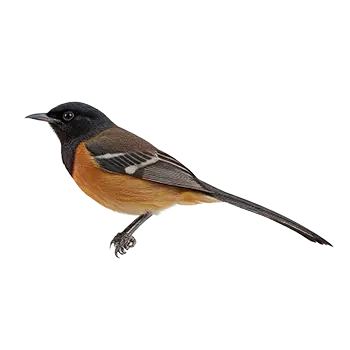

Enrichment Needs

The Shama Thrush is an intellectually engaged and physically active species whose daily life in the wild revolves around hunting, territorial patrol, vocal performance, and social interaction. In captivity, the absence of these natural activities creates a behavioral vacuum that must be filled through deliberate enrichment strategies. A bored or under-stimulated Shama may develop repetitive behaviors such as excessive preening, pacing along the cage floor, or retreat into prolonged silence, all of which signal that the bird's environmental needs are not being met.

Enrichment for softbills differs fundamentally from enrichment for parrots and other hookbills. Parrots interact with their environment primarily through their beaks and feet, manipulating, chewing, and dismantling objects. Shamas engage their environment through visual tracking, rapid ground-level pursuit, bathing, and acoustic interaction. Toys and enrichment devices designed for parrots, with their emphasis on destruction and foot manipulation, are largely irrelevant to a species that does not chew wood, untie knots, or grasp objects with its feet. Effective Shama enrichment targets the behaviors the bird actually performs: hunting, foraging, bathing, exploring, and responding to auditory and visual stimuli.

The goal of a well-designed enrichment program is not merely to prevent boredom but to create an environment in which the bird can express the full range of its behavioral repertoire. A Shama with access to hunting opportunities, varied bathing options, natural materials to explore, and acoustic stimulation will be a more active, more vocal, and healthier bird than one kept in a bare cage with only food and water. Enrichment also builds confidence in shy or newly acquired birds, as investigative behavior gradually replaces the fear responses that are common in the early weeks of captivity.

Rotation is a key principle in enrichment planning. The same foraging device or arrangement of cage furnishings loses its novelty within days, and a Shama that has mapped every feature of its environment will stop investigating. Regularly rearranging perches, introducing new natural branches, rotating foraging methods, and changing the location of enrichment items within the cage maintains the bird's curiosity and engagement. A simple enrichment calendar that schedules different activities for different days of the week prevents the keeper from falling into a repetitive routine that mirrors the monotony enrichment is supposed to combat.

Foraging Devices

Foraging enrichment is the most impactful category of enrichment for a Shama Thrush because it directly engages the hunting and prey-detection behaviors that occupy the largest share of the bird's natural time budget. The simplest and most effective foraging device is a shallow dish or tray filled with leaf litter, clean soil, or coconut fiber into which live insects are released. The bird must then search through the substrate to locate and capture its prey, replicating the forest-floor foraging that defines much of its wild behavior. This can be set up with materials that cost almost nothing, yet it provides more genuine behavioral engagement than most commercial products.

Live insect dispensers take foraging enrichment a step further by controlling the rate and unpredictability of prey availability. Some keepers use simple plastic containers with small holes drilled in the sides, filled with mealworms or small crickets that gradually escape through the openings over the course of several hours. This slow-release mechanism means the bird encounters prey items at irregular intervals throughout the day rather than consuming its entire insect ration in a single feeding session. The unpredictability of prey appearance stimulates vigilance and repeated investigation, closely mimicking the patchy distribution of insects in a natural habitat.

Fruit-based foraging can be created by skewering fruit pieces on stainless steel or food-safe plastic skewers mounted at different points in the cage, requiring the bird to fly to each station and work to remove the food. Alternatively, small pieces of fruit can be hidden among artificial or real foliage within the cage, encouraging the bird to search through vegetation as it would in the wild. These methods transform a routine feeding event into an extended activity that occupies the bird mentally and physically.

Ground-level puzzle feeders designed for small birds can be adapted for Shama use, provided they do not require foot manipulation that the bird cannot perform. Products that conceal food beneath movable lids, inside short tunnels, or under lightweight covers that the bird can flip with its beak are appropriate. Devices that require grasping, pulling strings, or turning mechanisms are designed for psittacine feet and beaks and will frustrate rather than enrich a softbill. When evaluating commercial foraging products, the critical question is whether the extraction method matches the Shama's natural toolkit: its beak, its visual acuity, and its quick ground-level movements.

Natural Materials

Natural materials provide enrichment that cannot be replicated by manufactured products because they carry the textures, scents, and structural complexity of the Shama's native environment. Fresh branches from non-toxic trees offer perching variety, visual cover, and investigative interest as the bird explores bark textures, leaf surfaces, and the small crevices where insects might hide. Apple, willow, birch, and elm branches are safe choices that can be collected locally, rinsed thoroughly, and placed in the cage for the bird to explore. Replacing branches every week or two maintains novelty and prevents the accumulation of droppings on aging wood.

Leaf litter is a profoundly effective and underutilized enrichment material for softbills. A layer of dried leaves from non-toxic deciduous trees spread across the cage floor or in a dedicated foraging tray creates a substrate that the Shama will spend hours investigating, flipping individual leaves and probing beneath them in search of hidden food items. Even without concealed prey, the act of turning leaves and examining the substrate engages natural foraging motor patterns. When live insects are added beneath the leaf layer, the enrichment value multiplies because every rustling leaf becomes a potential prey detection event.

Moss, bark strips, and small pieces of cork provide additional textural diversity. These materials can be arranged on the cage floor, attached to the sides of the cage, or draped over perches to create a more complex visual and tactile environment. Cork bark panels mounted inside the cage offer a naturalistic climbing surface where the bird can cling briefly while investigating crevices, a behavior that mirrors its wild habit of checking bark surfaces for hidden insects. These materials should be sourced from pesticide-free environments and inspected for parasites or mold before use.

Seasonal variation in natural materials adds another dimension of enrichment. Offering fresh spring leaves with their softer texture and brighter color, summer branches with full foliage, autumn leaves in their dried and crinkly state, and bare winter twigs with their exposed bark creates a changing environment that shifts the bird's sensory experience throughout the year. Keepers in urban areas without easy access to wild-collected materials can purchase pesticide-free branches, leaves, and bark from specialty bird supply retailers or from organic gardening suppliers.

Bathing and Water Features

Bathing is one of the most enthusiastic and readily observable behaviors in the Shama Thrush's repertoire, and providing varied bathing opportunities constitutes a significant form of enrichment. In the wild, Shamas bathe in shallow forest streams, rain puddles, and dew-laden foliage. Captive birds deprived of adequate bathing opportunities develop poor feather condition, dry skin, and reduced preening behavior. A Shama with access to a well-designed bathing setup will bathe daily, often multiple times, and the post-bath preening session that follows is itself a prolonged activity that occupies and engages the bird.

The simplest bathing provision is a shallow ceramic or glass dish placed on the cage floor, filled with lukewarm water to a depth of approximately one inch. The dish should be wide enough for the bird to enter fully and splash vigorously without tipping it over. Heavy ceramic dishes are preferable to lightweight plastic, which can flip under the bird's weight during energetic bathing. The dish should have a textured interior surface to provide secure footing, as birds avoid baths where they feel unstable. Placing the bath on a waterproof tray or mat contains the inevitable splashing that accompanies a thorough Shama bath.

Fountain-style bird baths provide moving water that attracts many softbills more effectively than a still dish. Small recirculating fountains designed for cage birds create a gentle flow of water that catches the light and produces quiet splashing sounds, both of which stimulate bathing interest. These units require regular cleaning to prevent algae and biofilm buildup in the pump and reservoir, but the behavioral response they elicit often justifies the additional maintenance. Some models include adjustable flow settings, allowing the keeper to find the water movement level that the individual bird prefers.

Mist bathing offers an alternative for birds that are reluctant to use a standing bath or as an additional bathing method alongside a dish or fountain. A fine mist sprayer filled with lukewarm water can be used to gently spray the bird from a distance, allowing it to choose how much moisture it receives by moving toward or away from the spray. Many Shamas learn to spread their wings and fan their tails in the mist, clearly enjoying the sensation. Automated misting systems on timers can provide regular misting sessions without keeper intervention, though manual misting also serves as a positive interaction between bird and keeper.

Wet foliage bathing replicates a natural behavior that many Shamas find irresistible. Placing freshly washed leafy branches in the cage while they are still wet with water droplets allows the bird to roll and rub against the damp leaves, distributing moisture across its plumage. This method is particularly effective for birds that are nervous about entering a water dish or being sprayed, as the foliage provides both cover and a familiar surface. The wet leaves also release subtle plant scents that add an olfactory dimension to the bathing experience.

Sound and Visual Stimulation

The Shama Thrush is one of the most accomplished vocal performers among passerine birds, and acoustic enrichment holds particular importance for this species. Male Shamas develop complex songs composed of original phrases and mimicked sounds from their environment, and their vocal development is influenced by the sounds they hear throughout their lives. Providing appropriate acoustic stimulation supports vocal health, mental engagement, and the full expression of the bird's remarkable singing ability.

Recordings of wild Shama songs can serve as both enrichment and vocal education. Playing high-quality recordings of wild White-rumped Shamas at moderate volume encourages captive males to respond with their own songs, engaging in a simulated territorial exchange that exercises their vocal apparatus and stimulates natural display behavior. These sessions should be limited in duration, perhaps fifteen to thirty minutes once or twice daily, to prevent overstimulation or chronic territorial stress. The recordings function as a social stimulus that triggers singing behavior without the actual presence of a rival male, providing the benefit of vocal engagement without the stress of true competition.

Natural ambient sounds, such as recordings of forest environments, rainfall, flowing water, and dawn choruses of mixed bird species, create a sonic backdrop that enriches the bird's auditory environment without triggering competitive responses. These softer, more diffuse soundscapes can be played for longer periods and seem to promote calm, settled behavior in many softbills. Some keepers report that their Shamas incorporate elements of ambient sound recordings into their own songs, suggesting active auditory processing and learning.

Visual stimulation contributes to enrichment in ways that are easy to overlook. A window view that provides changing scenery, moving foliage, and visiting wild birds gives the captive Shama a constantly shifting visual field to process and respond to. If a window view is not available, a tablet or screen positioned near the cage and playing nature footage can provide visual interest, though this should be used sparingly and the bird's response monitored for signs of stress or frustration. Mirrors are a more controversial enrichment item for territorial species. While a mirror can stimulate display behavior and singing, it also creates the illusion of a rival male that the bird can never defeat or drive away, which may lead to chronic stress in some individuals. If a mirror is used, it should be offered for limited periods and removed if the bird shows signs of persistent agitation.

Physical visual enrichment within the cage, such as brightly colored natural objects, interesting textures, or gently moving items like a feather suspended from a thin thread, provides investigation targets that engage the bird's keen visual tracking ability. Shamas are naturally curious birds that will investigate novel objects placed in their environment, provided the objects are introduced gradually and do not startle the bird. Rotating visual enrichment items weekly keeps the environment fresh and unpredictable.

Safety Considerations

Safety evaluation of toys and enrichment materials for the Shama Thrush requires attention to hazards that differ somewhat from those relevant to hookbills. While parrots pose the primary risk of ingesting fragments from chewed toys, softbills face greater danger from entanglement, entrapment, and toxic material exposure. Every enrichment item introduced into the enclosure should be assessed for these specific risk categories before the bird has access to it.

Entanglement is the most acute physical hazard for a Shama. The bird's long tail feathers, slender legs, and thin toes are vulnerable to trapping in loose fibers, frayed rope, narrow gaps between cage components, and any material that can wrap around a limb. String, yarn, loose fabric strips, and fraying rope perches are all entanglement risks. Toys designed for parrots that incorporate woven cotton or sisal strands should be avoided entirely, as the Shama may catch a toe in the fibers during flight or while investigating the toy. Any material that can form a loop or tighten around a body part is a potential ligature and should never be present in the enclosure.

Toxic materials present a subtler but equally serious danger. Softbills are generally less inclined to chew and ingest non-food items than parrots, but they do contact surfaces with their beaks during exploration and feeding. Paints, dyes, adhesives, and metallic coatings on toys and cage accessories can contain zinc, lead, or other heavy metals that cause toxicity through repeated oral contact. Only toys made from untreated natural materials, food-grade stainless steel, or certified bird-safe plastics should be used. Vintage or decorative cages and accessories are particularly risky, as older metalwork may contain lead solder or high-zinc coatings.

Small parts that can be swallowed are a choking and impaction risk. Beads, bells with removable clappers, small plastic components, and any item that can break into pieces small enough to swallow should be excluded. When using commercial bird toys, inspect them for small detachable parts and remove any that pose an ingestion hazard. Bells sized for larger birds, with securely welded clappers that cannot be removed, are generally safe, but tiny jingle bells designed for craft projects are not.

Water-related hazards deserve specific mention given the Shama's enthusiasm for bathing. Deep water containers in which the bird could become submerged or from which it could not easily climb out must be avoided. Bath dishes should be shallow enough that the bird can stand comfortably with its head well above the water line, and the sides should be low enough for easy exit. Recirculating fountain baths should be tested to ensure the bird cannot become trapped in the pump housing or water reservoir. All water features should be checked for secure electrical connections if they are powered, with cords positioned where the bird cannot contact them.

Enrichment Rotation and Scheduling

A structured approach to enrichment rotation prevents the habituation that inevitably occurs when the same items and activities are presented day after day. The Shama Thrush's investigative behavior is driven by novelty, and even a highly stimulating enrichment item loses its behavioral effect once the bird has fully mapped its features and possibilities. Developing a rotation schedule ensures that the bird encounters something different each day, maintaining engagement and the motivation to explore.

A practical rotation framework divides enrichment activities into categories and assigns different categories to different days of the week. For example, Monday might feature a new foraging tray with live insects hidden under leaf litter, Tuesday introduces fresh branches with foliage for exploration and wet-leaf bathing, Wednesday offers a rearrangement of perch positions to create new flight paths, Thursday brings a fruit-foraging challenge with hidden fruit pieces, Friday introduces an acoustic enrichment session with wild Shama recordings, and the weekend provides a deeper environmental change such as a novel cork bark panel or a ground-level substrate switch. This schedule is a template, not a rigid prescription, and should be adapted based on the individual bird's responses and preferences.

Observation is the essential feedback mechanism for enrichment evaluation. The keeper should note which activities generate the most sustained engagement, which items are ignored, and whether any enrichment materials cause stress rather than stimulation. A bird that retreats to its highest perch and remains motionless when a new item is introduced is showing fear, not interest, and the item should be removed and reintroduced more gradually. Conversely, an enrichment activity that produces extended investigation, increased vocalization, or enthusiastic physical activity is clearly effective and should be retained in the rotation.

Seasonal variation adds a macro-level rotation that complements the weekly schedule. During the breeding season, enrichment can be oriented toward nesting material provision and increased protein-rich foraging opportunities. During molt, when the bird may be less active and more irritable, enrichment should emphasize comfortable bathing options and low-stress environmental complexity rather than challenging foraging tasks. Outside of these physiological periods, the enrichment program can be more varied and experimental, testing new items and activities to discover what resonates with the individual bird.

Documentation of enrichment activities and the bird's responses creates a reference that improves the program over time. A simple log noting the date, the enrichment offered, the duration of engagement, and any notable behavioral responses builds a profile of the individual bird's preferences and sensitivities. Over months and years, this record becomes an invaluable guide for designing enrichment that is tailored to a specific bird rather than applied generically. It also provides useful historical context if behavioral changes occur, helping to distinguish between environmental factors and potential health issues.

Always consult a qualified professional before making any health-related decisions. This content is provided for informational reference only and should not replace professional guidance specific to your animal.