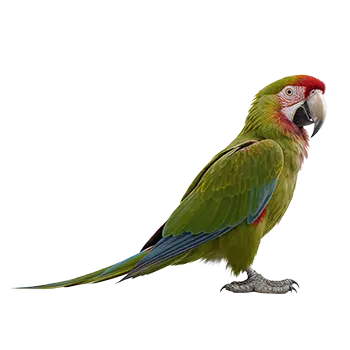

Technology for Bird Care

Technology has transformed companion bird care from a practice based almost entirely on direct observation and intuition into one supplemented by continuous data collection, remote monitoring, and automated environmental management. For Red-Fronted Macaw owners, this technological layer addresses a fundamental challenge of caring for a long-lived, environmentally sensitive species: the bird's needs do not pause when the owner leaves the house, and many of the environmental parameters most critical to avian health, such as temperature fluctuations, humidity drops, and air quality changes, are invisible to unassisted human senses until they have already caused harm.

The value proposition of avian care technology is not about replacing attentive ownership but about extending the owner's awareness beyond what direct observation can cover. A temperature sensor that records overnight lows catches the heating system failure at three in the morning that no one is awake to notice. A camera positioned on the cage reveals the feather-plucking episode that happens only when the household is empty. A digital scale that logs daily weights exposes the gradual two-gram-per-week weight loss that is invisible to the eye but obvious on a graph. Each of these data points represents an early intervention opportunity that technology provides and manual care alone would miss.

Adopting bird-care technology should follow a priority sequence based on impact. Environmental monitoring, meaning temperature and humidity tracking in the bird's immediate space, provides the highest return for the lowest cost and complexity. Cameras offer the next tier of value by revealing behaviors that occur outside the owner's presence. Air quality management becomes increasingly important as the owner becomes aware of the particulate and chemical load that bird-keeping generates. Smart feeders, automated lighting, and health-tracking tools layer on additional capability for owners who are ready to integrate them into their routines.

A practical caution applies to all technology placed near a macaw: the bird will attempt to chew, dismantle, and investigate any device within its reach. Cables, sensors, cameras, and control units must be positioned outside the bird's access range or protected by chew-proof housing. A single unsupervised encounter between a Red-Fronted Macaw and an exposed electrical cable can result in electrocution, wire ingestion, or destruction of equipment that took time and money to install. Planning the physical placement of every device with the assumption that the bird will try to reach it prevents these predictable disasters.

Environmental Monitors

Environmental monitoring is the foundational technology investment for any serious Red-Fronted Macaw owner. The bird's immediate environment, meaning the air temperature, relative humidity, and ambient conditions within a few feet of the cage, determines respiratory health, feather condition, and overall comfort on an ongoing basis. Small deviations from the ideal range that persist for days or weeks produce cumulative health effects that are difficult to trace without recorded data, because the owner may not perceive the gradual drift that a sensor logs precisely.

Digital thermometer-hygrometer units designed for indoor use are inexpensive, widely available, and provide real-time readings of temperature and humidity at the cage location. The most useful models include memory functions that record daily high and low values, allowing the owner to check each morning whether overnight conditions remained within the acceptable range of sixty-five to eighty degrees Fahrenheit and forty to sixty percent relative humidity. Placement matters: the sensor should be mounted at cage height, near but not inside the cage where the bird can reach it, and away from direct sunlight, heating vents, or humidifier output that would skew the readings.

Wireless sensor systems that transmit data to a smartphone application represent the next level of environmental monitoring capability. These systems typically consist of one or more sensor modules placed in the bird's room that communicate via Bluetooth or Wi-Fi to a base station or directly to a phone. The companion application logs continuous data, displays trend graphs, and most importantly sends push notifications when readings cross user-defined thresholds. An alert that fires when the temperature drops below sixty degrees or humidity falls below thirty-five percent gives the owner time to intervene before the bird is affected, even when the owner is away from home.

Multi-room monitoring is valuable for owners who move the bird between locations during the day, such as a cage in one room and a play stand in another, or who maintain a separate bird room. Placing sensors in each location the bird occupies ensures that conditions are tracked wherever the bird actually is rather than only at the primary cage site. Some environmental monitoring platforms support integration with smart home systems, enabling automated responses such as activating a humidifier when humidity drops below a set point or triggering a space heater when temperature falls, though any automated heating device near a bird cage must be flameless and fume-free.

Cameras & Surveillance

Remote camera monitoring allows Red-Fronted Macaw owners to observe their bird's behavior, activity level, and cage environment in real time from any location with an internet connection. The primary value of camera surveillance is behavioral visibility during the owner's absence, when the bird is most likely to exhibit behaviors it suppresses during social interaction, including feather-destructive picking, repetitive stereotypic movements, excessive inactivity, or adverse reactions to household events like construction noise, visitor entry, or other pets' proximity to the cage.

Camera selection for a bird room should prioritize image clarity, wide-angle coverage, and reliable remote access over advanced features that add cost without relevant function. A resolution of at least 1080p ensures that feather condition, food consumption, and subtle body language are discernible on a phone screen rather than appearing as an indistinct blur. Wide-angle lenses of 120 degrees or more capture the full cage and surrounding area in a single frame, eliminating the need for multiple cameras in most single-bird setups. Night vision capability using infrared illumination allows observation during the bird's covered nighttime hours without disturbing its sleep with visible light.

Two-way audio is a feature that deserves thoughtful consideration rather than automatic adoption. Many bird cameras include a speaker and microphone that allow the owner to hear the bird and speak to it remotely. While this can be reassuring for the owner, the bird's response to a disembodied human voice may range from comforted to confused to agitated depending on the individual. Some Red-Fronted Macaws respond positively to hearing their owner's voice through a speaker, vocalizing back and appearing engaged. Others react with distress, searching for the source of the voice and becoming frustrated when they cannot locate their companion. Testing the bird's reaction before relying on two-way audio as a daily comfort tool is advisable.

Cloud storage versus local storage for recorded footage affects both ongoing cost and data privacy. Cloud-based camera systems store footage on remote servers accessible through the manufacturer's application, typically requiring a monthly subscription for continuous recording and extended playback history. Local storage systems save footage to a microSD card or a network-attached storage device within the home, avoiding subscription costs but requiring manual management of storage space. For most bird-monitoring purposes, a combination of live viewing and short-term cloud recording of motion-triggered clips captures the relevant behavioral data without generating excessive storage volume or ongoing expense.

Smart Feeders & Water Systems

Automated feeding and water management technology offers convenience for bird owners with demanding schedules and provides fail-safe nutrition delivery during short absences. Smart feeders designed for birds dispense measured portions of dry food at programmed intervals, ensuring the bird has access to fresh pellets even when the owner is delayed or away for the day. The most applicable designs for macaw use feature stainless steel or heavy-duty food-grade plastic construction, portion-control mechanisms sized for pellet-format food, and tamper-resistant housings that prevent the bird from accessing the full food reservoir.

The limitations of smart feeders must be clearly understood. No automated feeder can replicate the fresh food component of a macaw's diet, which requires preparation, serving at appropriate temperatures, and removal before spoilage. A smart feeder that dispenses dry pellets handles only one element of the Red-Fronted Macaw's daily nutrition, and the bird still requires human intervention for fresh vegetables, cooked mixes, and supervised treat delivery. Automated feeders are best understood as a backup and convenience layer that ensures the pellet baseline is met, not as a replacement for hands-on feeding.

Automated water dispensers and recirculating water fountains maintain a continuous supply of clean drinking water and are particularly useful for birds that contaminate their water dishes rapidly through food-dunking behavior. Gravity-fed dispensers release water into a drinking cup as the bird consumes it, maintaining a consistent water level without requiring frequent manual refills. Recirculating fountains filter and aerate the water, which can encourage increased water consumption in birds that are attracted to moving water. Any water device used for a macaw must be constructed from bird-safe materials and positioned or shielded to prevent the bird from dismantling the mechanism.

Maintenance requirements for smart feeders and water systems are higher than for simple dishes and should not be underestimated. Automated feeders accumulate fine food dust, oils from pellets, and moisture that promote bacterial and fungal growth within the dispensing mechanism. Complete disassembly and thorough cleaning on at least a weekly basis is essential to prevent the feeder from becoming a contamination source rather than a hygiene improvement. Water fountains require filter replacement on the manufacturer's recommended schedule, pump cleaning to prevent biofilm buildup, and full sanitization of all water-contact surfaces. Owners who are not prepared for this maintenance workload are better served by high-quality manual dishes that are simple to clean and replace daily.

Air Quality & Purification

Air quality management is one of the most impactful technology investments a Red-Fronted Macaw owner can make, yet it is frequently overlooked in favor of more visible equipment. Birds have extraordinarily efficient respiratory systems designed to extract maximum oxygen from thin high-altitude air, and this same efficiency makes them acutely vulnerable to airborne contaminants that barely affect mammals in the same environment. Macaws generate significant feather dust, dander, and fine particulate matter that accumulates in indoor air and on surfaces, creating a respiratory burden for both the bird and the humans sharing the space.

HEPA air purifiers are the cornerstone of bird-room air quality management. A true HEPA filter captures ninety-nine point ninety-seven percent of particles down to zero point three microns in diameter, which encompasses feather dust, dander, mold spores, and most airborne allergens. The purifier should be sized for the room where the bird lives, with a clean air delivery rate sufficient to cycle the room's air volume at least four to six times per hour. Placement near the cage at floor or mid-height level captures the highest concentration of particulate fallout before it disperses throughout the room.

Ionizers, ozone generators, and scented air treatment devices must be strictly avoided in any space a bird occupies. Ozone, even at concentrations below human detection thresholds, causes severe irritation and damage to the avian respiratory epithelium. Some air purifiers marketed as HEPA units include built-in ionizers or optional ozone-generation modes that must be permanently disabled or the unit must be replaced with one that does not include these features. Similarly, scented candles, incense, essential oil diffusers, and air freshener sprays release volatile organic compounds and particulates that are hazardous to birds. The air purifier replaces these products, not supplements them.

Carbon monoxide and volatile organic compound detectors positioned in the bird's room provide an additional safety layer that extends beyond particulate management. Non-stick cookware fumes, cleaning product off-gassing, paint fumes, and natural gas leaks all produce compounds that are lethal to birds at concentrations far below what triggers symptoms in humans. A combination CO and VOC detector with an audible alarm installed in the bird room alerts the household to invisible air quality emergencies that could otherwise go undetected until the bird is already in respiratory distress. Testing the detector monthly and replacing batteries or the unit on the manufacturer's schedule ensures this safety device functions when needed.

Lighting Automation

Automated lighting systems bring consistency and precision to the photoperiod management that directly governs the Red-Fronted Macaw's hormonal cycles, sleep quality, molt timing, and behavioral stability. Birds are exquisitely sensitive to day length, and irregular light schedules caused by varying human routines, seasonal changes in natural light, or forgotten light switches can disrupt circadian rhythms in ways that manifest as hormonal aggression, chronic egg-laying in hens, sleep deprivation, and irritability.

Programmable timers are the simplest and most cost-effective lighting automation tool. A basic mechanical or digital timer connected to the bird's full-spectrum light fixture ensures that the light turns on and off at the same time every day regardless of the owner's schedule or presence. For the Red-Fronted Macaw, a photoperiod of approximately twelve hours of light and twelve hours of darkness year-round is appropriate for non-breeding birds, mimicking the near-equatorial day length of their native Bolivian range. Breeding programs may adjust the photoperiod to stimulate or suppress reproductive behavior, but this should be done under experienced guidance.

Smart lighting systems controlled through home automation platforms offer additional capability beyond simple on-off timing. Gradual dimming and brightening that simulates dawn and dusk transitions over a fifteen to thirty minute period is gentler on the bird's circadian system than an abrupt switch from darkness to full brightness. Some smart bulb systems allow color temperature adjustment throughout the day, starting with warmer tones in the morning, shifting to full-spectrum white during midday, and returning to warm tones before the evening shutdown. This mimics the natural color temperature shift of sunlight and may contribute to more natural behavioral rhythms.

Cage covers and blackout curtains work in conjunction with lighting automation to create a controlled light environment. Even with timers managing the dedicated bird light, ambient light from windows, hallway fixtures, or screens can penetrate the cage area and extend the bird's perceived day length. A breathable, opaque cage cover applied at the evening timer shutoff blocks residual light and signals the transition to sleep. For bird rooms with windows, blackout curtains or shades ensure that early summer sunrises do not override the timer's schedule by flooding the room with light hours before the programmed wake time.

Backup power for lighting timers deserves consideration in areas prone to power outages. A brief outage that resets a mechanical timer may shift the light schedule by hours, and repeated outages cause chronic photoperiod disruption. Battery-backed digital timers or smart plugs connected to an uninterruptible power supply maintain the programmed schedule through short outages. For extended outages, the natural ambient light from windows provides a reasonable interim photoperiod, though the full-spectrum UVB component will be absent until power is restored.

Health Tracking & Scales

Systematic health tracking transforms scattered daily observations into a longitudinal record that reveals trends, supports veterinary diagnostics, and enables early intervention before subtle health changes become clinical emergencies. The Red-Fronted Macaw's natural tendency to mask signs of illness, an evolved survival behavior that prevents attracting predator attention in the wild, means that visible symptoms often appear only when a disease process is already well advanced. Data-driven tracking catches the numerical shifts that precede visible symptoms.

A digital gram scale is the single most important health-tracking tool for any companion parrot. Daily morning weigh-ins, taken before the first meal when the crop is empty, produce a consistent data stream that tracks the bird's weight trend with precision no visual assessment can match. A healthy adult Red-Fronted Macaw typically weighs between four hundred twenty and five hundred fifty grams, with individual baseline weights varying based on build, age, and sex. The absolute number matters less than the trend: a gradual decline of ten grams over two weeks, representing less than three percent of body weight, is easily missed by eye but immediately obvious in a weight log and warrants a veterinary consultation.

Scale selection for macaw use should prioritize accuracy to at least one gram, a perching platform large enough for the bird to stand comfortably, and a tare function that zeroes the weight of the perch before the bird steps on. Kitchen scales with flat stainless steel platforms work adequately when fitted with a removable perch, and purpose-built avian scales offer the added convenience of a pre-attached perch and sometimes a hold function that locks the displayed weight while the bird is still moving. Consistency in scale use matters more than the specific model: using the same scale at the same time of day under the same conditions produces the most reliable trend data.

Digital record-keeping elevates raw weight data into actionable health intelligence. A simple spreadsheet application tracking date, morning weight, food consumption estimate, droppings observations, and behavioral notes creates a comprehensive daily health record that an avian veterinarian can review during annual examinations or when investigating a health concern. Some owners use dedicated pet health tracking applications that generate visual weight trend graphs and flag statistical deviations from the established baseline. Over the twenty-five to fifty year lifespan of a Red-Fronted Macaw, this longitudinal record becomes an invaluable medical history that no memory-based recall can replicate.

Emerging wearable and non-contact health monitoring technologies are beginning to appear in the avian care market, though most remain in early development or research phases. Activity monitors that attach to leg bands and track movement patterns throughout the day could eventually provide automated detection of lethargy or hyperactivity that correlates with illness or behavioral disturbance. Infrared thermography applications that detect surface temperature variations across the bird's body may identify areas of inflammation or circulatory compromise before they produce visible symptoms. While these technologies are not yet mainstream consumer products, their trajectory suggests that the data-driven approach to avian health management will continue to expand in scope and accessibility over the coming years.

Always consult a qualified professional before making any health-related decisions. This content is provided for informational reference only and should not replace professional guidance specific to your animal.