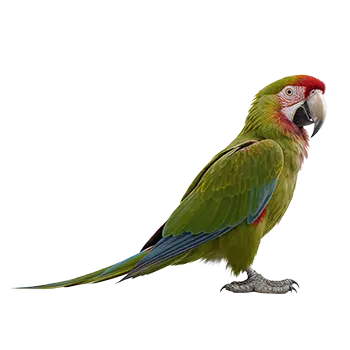

Outfitting a Red-Fronted Macaw's living environment goes well beyond the cage and the food that fills it. A thoughtfully selected set of accessories addresses the daily realities of caring for a medium-sized macaw that will share the household for decades: feeding logistics, hygiene management, safe transportation, physical grooming, environmental quality, and the ongoing maintenance tasks that become second nature over time. Each accessory category has products that range from barely functional to genuinely well-designed, and the difference in quality directly affects both the bird's welfare and the owner's convenience.
The initial accessory investment for a new Red-Fronted Macaw may feel substantial, but quality items purchased once will outlast cheap alternatives many times over. A stainless steel food dish set, for example, costs more upfront than plastic cups but will never crack, stain, harbor bacteria in surface scratches, or leach chemicals, and it will still be in service when the bird is twenty years old. A durable travel carrier purchased before the bird's first veterinary visit avoids the scramble for a makeshift transport solution on the day an emergency arises. Building the accessory kit deliberately rather than reactively results in a more functional, safer, and ultimately less expensive setup over time.
Seasonal accessories deserve advance planning as well. A room humidifier for winter heating season, a misting bottle for summer grooming, cage covers for evening light management, and backup lighting elements all become urgent needs on the day they are needed rather than the day they are purchased. Maintaining a checklist of accessory categories and replacing worn or expiring items before they fail keeps the care infrastructure reliable. The sections that follow break down each major accessory category with the specifics that apply to the Red-Fronted Macaw's size, temperament, and care requirements.
Quality assessment for bird accessories follows many of the same principles as cage and toy selection. Materials must be non-toxic, hardware must be macaw-proof, and construction must withstand the beak pressure of a bird that investigates everything in its environment with its strongest tool. Stainless steel, food-grade plastics, uncoated hardwoods, and natural fibers are consistently safe material choices. Zinc, lead, thin plastics that shatter into sharp fragments, and treated or painted materials of unknown composition should be excluded from any accessory that the bird can access.