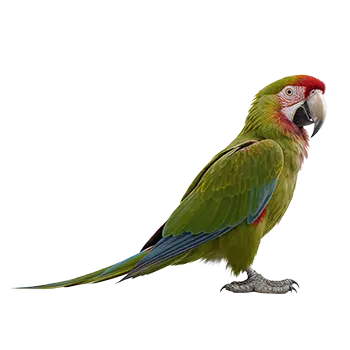

The Red-Fronted Macaw is an athletic, medium-sized macaw that requires substantially more living space than its body length alone might suggest. At twenty-one to twenty-four inches from head to tail tip, this species falls between the smaller mini-macaws and the large Ara species in physical stature, but its activity level and muscular build demand housing proportions closer to what a larger macaw would need. Cramped quarters lead to feather destructive behavior, excessive screaming, muscular atrophy, and psychological deterioration in a bird that has evolved to navigate cliff faces and open scrubland across its native Bolivian range.
The absolute minimum cage dimensions for a single Red-Fronted Macaw are thirty-six inches wide, twenty-four inches deep, and forty-eight inches tall, but these minimums should be understood as the floor below which welfare is compromised rather than a comfortable target. A cage measuring forty-eight inches wide, thirty-six inches deep, and sixty inches tall provides a meaningfully better quality of life, allowing the bird to spread its wings fully, climb without constantly contacting the walls, and engage in short flights or wing-flapping exercises that maintain pectoral muscle tone. The difference in cost between a minimum-size and a properly generous cage is modest relative to the decades of use the cage will see.
For owners who keep the bird caged for significant portions of the day, a flight cage or walk-in enclosure is strongly recommended. Flight cages measuring six feet or longer allow sustained horizontal flight, which is the most natural and beneficial form of exercise for any parrot. These larger enclosures also accommodate a more complex interior layout with multiple perching zones, feeding stations, and enrichment areas that prevent the monotonous pacing and bar-chewing associated with understimulated macaws.
Paired or colony housing for Red-Fronted Macaws requires proportionally more space and careful attention to social dynamics. While this species is social and generally tolerates conspecifics well, pairs need enough room to establish personal space within the shared enclosure. A general rule for paired macaws is to double the width of the single-bird minimum and add at least fifty percent to the depth, creating distinct zones where each bird can retreat without confrontation. Breeding pairs need additional vertical space and a nest box area that does not encroach on the general living space.