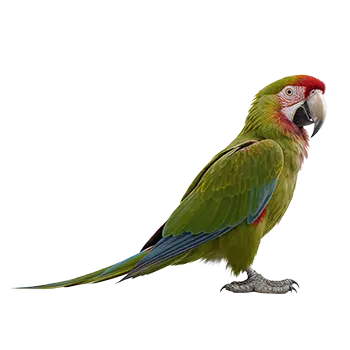

The Red-Fronted Macaw is a medium-sized macaw endemic to a small semi-arid region of central Bolivia, and its dietary requirements reflect the unique ecology of its native habitat. In the wild, Ara rubrogenys feeds on the seeds, fruits, and nuts of drought-adapted trees and cacti, supplementing with agricultural crops where its range overlaps with farmland. This natural diet is relatively high in fat and fiber compared to the diets of tropical-forest macaws, and captive feeding strategies should account for this evolutionary background while preventing the obesity that sedentary captive life encourages.
Protein requirements for the Red-Fronted Macaw are moderate but consistent. Growing juveniles and breeding adults need elevated protein levels to support feather development and egg production, while mature non-breeding birds do well on a maintenance level of roughly twelve to fourteen percent protein by dry weight. Amino acid balance matters as much as total protein quantity, and a diet built on varied whole-food sources alongside a quality pellet generally delivers a more complete amino acid profile than any single food source can provide.
Fat intake demands careful management in this species. Red-Fronted Macaws are muscular, active birds in the wild, but captive individuals rarely expend the same caloric energy. A diet excessively rich in sunflower seeds, peanuts, or safflower seeds can lead to hepatic lipidosis, atherosclerosis, and chronic obesity. Healthy fats from walnuts, almonds, and flaxseed should be offered in controlled portions rather than as free-choice dietary staples, with total fat comprising no more than about fifteen percent of daily caloric intake for most adults.
Micronutrient needs include adequate vitamin A, vitamin D3, calcium, and a spectrum of trace minerals. The semi-arid origin of this species means it is adapted to relatively mineral-rich foods and hard water, so captive diets should not neglect mineral supplementation. Calcium-to-phosphorus ratios should remain in the range of roughly two to one, and vitamin D3 from either direct sunlight exposure or full-spectrum lighting supports the calcium metabolism that keeps bones and beak strong over decades of captive life.