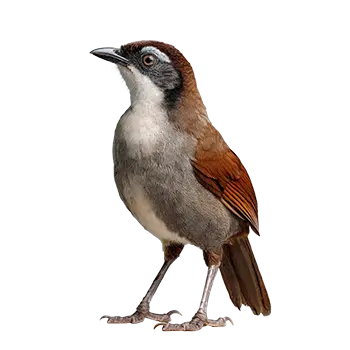

Monitoring Needs

Technology serves Laughing Thrush keepers best when it extends the keeper's awareness beyond what direct observation can provide. These birds are active during daylight hours, relatively quiet at night, and evolved to conceal signs of vulnerability as a predator-avoidance strategy. By the time a health or environmental problem becomes visible to the naked eye during a routine check, it may have been developing for hours or days. The right monitoring technology closes this gap by providing continuous or frequent data on environmental conditions, behavioral patterns, and physiological indicators that the keeper cannot personally observe around the clock.

The monitoring priorities for a Laughing Thrush collection center on three domains: environmental parameters, behavioral observation, and health tracking. Environmental monitoring captures temperature, humidity, light levels, and air quality in real time, alerting the keeper to deviations that could stress or harm the birds before symptoms appear. Behavioral observation through camera systems reveals activity patterns, social dynamics, and subtle changes in movement or posture that may signal developing health issues. Health tracking through weight monitoring and droppings analysis provides physiological data that complements the behavioral picture.

The level of technological investment should match the scale and goals of the collection. A keeper with a single pair of Laughing Thrushes in an indoor flight cage may need nothing more than a simple thermometer-hygrometer and a digital gram scale to maintain excellent care. A breeder managing multiple pairs across several aviaries faces a fundamentally different management challenge that benefits from networked sensors, camera systems, and data logging that would be excessive for a smaller setup. Technology should solve real problems and fill genuine observational gaps rather than adding complexity for its own sake.

Reliability trumps sophistication in aviary technology. A simple digital thermometer that reads accurately every time is more valuable than a smart sensor network that drops connectivity, produces false alerts, or requires frequent recalibration. Every piece of technology introduced into the management system adds a potential failure point, and failures in environmental monitoring can have direct consequences for bird welfare. When evaluating technology options, prioritize proven reliability, readily available replacement parts, and simplicity of operation over feature counts and connectivity options.

What to Look For in Aviary Technology

Accuracy is the foundational requirement for any monitoring device. A temperature sensor that reads three degrees high or a humidity gauge that drifts ten percent over six months produces data that is worse than useless because it creates false confidence. Before deploying any sensor, verify its accuracy against a known reference and establish a calibration schedule that catches drift before it becomes clinically significant. Devices that include self-calibration features or that can be checked against a reference standard without specialized equipment are preferable for avicultural use.

Environmental resistance determines whether a device survives the conditions it is meant to monitor. Aviary environments are humid, subject to splashing water, organic dust, and temperature fluctuations that exceed the operating parameters of many consumer electronics. Devices rated for outdoor or high-humidity use, typically indicated by an IP65 or higher ingress protection rating, withstand these conditions reliably. Devices without environmental protection ratings will corrode, fog, or malfunction in the aviary environment within months, wasting the initial investment and potentially failing at the worst possible moment.

Data accessibility affects how much value the keeper actually extracts from the monitoring system. A sensor that logs data internally but requires physical connection to a computer for download is technically functional but practically inconvenient, and inconvenient systems get checked less frequently than they should. Wireless sensors that transmit data to a smartphone app or web dashboard in real time enable continuous awareness without requiring the keeper to physically visit each sensor. Alert thresholds that trigger push notifications when parameters move outside acceptable ranges convert passive data logging into active early warning, which is the highest-value application of monitoring technology.

Power reliability is a practical concern that is easy to overlook during the selection phase. Battery-powered devices offer installation flexibility but require a maintenance schedule for battery replacement, and a dead battery means a blind spot in the monitoring coverage. Hardwired devices eliminate battery concerns but constrain placement options and require access to electrical outlets that may not be conveniently located near the monitoring point. Solar-powered sensors with battery backup offer a good compromise for outdoor aviaries, maintaining operation through cloudy periods while recharging during sunny conditions. For any monitoring system, establish a routine for checking power status as part of the regular maintenance cycle.

Environmental Sensors and Controllers

Temperature and humidity sensors form the baseline environmental monitoring layer for any Laughing Thrush enclosure. Combined thermometer-hygrometer units that display current readings and record daily highs and lows provide essential data with minimal complexity. For more sophisticated monitoring, wireless sensor modules that transmit readings to a central hub or smartphone application at regular intervals create a continuous environmental record that reveals patterns not visible from spot checks. Placing sensors at multiple locations within a larger aviary, including the warmest and coolest zones, the roosting area, and near ground level where the birds spend most of their time, provides a comprehensive thermal and humidity map of the habitat.

Thermostat controllers connected to heating and cooling equipment automate temperature management and provide a safety net against equipment failure and extreme weather events. A quality thermostat controller for aviary use should include a high-temperature and low-temperature alarm, a probe that can be positioned at bird level rather than at the controller location, and a manual override capability for situations where the keeper needs to adjust conditions outside the normal program. Dual-stage controllers that manage both heating and cooling equipment from a single unit simplify the control architecture and prevent the conflicting signals that can occur when separate thermostats control competing systems.

Humidity controllers operate on similar principles, activating humidifiers or ventilation fans when ambient humidity moves outside the target range. For Laughing Thrush environments that require humidity levels between fifty and seventy percent, a controller paired with an ultrasonic humidifier or misting system maintains consistent conditions without manual intervention. The controller should be positioned at bird level and away from direct moisture sources that could produce artificially high local readings. A hygrostat with data logging capability allows the keeper to review humidity trends over time, identifying seasonal patterns that may require adjustments to the humidification strategy.

Air quality monitoring is an emerging technology category with genuine relevance to avian husbandry. Sensors that measure volatile organic compounds, ammonia levels, carbon dioxide concentration, and particulate matter provide data on the invisible atmospheric conditions that affect avian respiratory health. The avian respiratory system is significantly more efficient and more sensitive than the mammalian system, meaning that air quality problems that go unnoticed by humans can cause subclinical respiratory stress in birds. While dedicated air quality monitors are a relatively new addition to the avicultural toolkit, the technology has matured to the point where affordable, reliable units are available from consumer electronics manufacturers.

Camera and Video Monitoring

Camera systems provide the keeper with observational access to the enclosure during periods of absence and capture behavioral data that is impossible to collect through direct observation alone. Laughing Thrushes are sensitive to human presence and modify their behavior when they know they are being watched, suppressing some natural behaviors and amplifying others. A well-positioned camera reveals the unobserved behavioral repertoire, including social interactions, feeding patterns, nesting behavior, and nighttime roosting dynamics, that the birds display when they believe they are alone.

Camera selection for aviary use should prioritize image quality in variable lighting conditions, wide-angle coverage, and infrared or low-light capability for nighttime observation. Resolution of 1080p or higher ensures that the video feed is detailed enough to assess feather condition, identify individual birds in a group, and detect subtle behavioral indicators such as fluffed posture, wing droop, or labored breathing. Wide-angle lenses covering 120 degrees or more reduce the number of cameras needed to monitor the full enclosure, and pan-tilt-zoom capability allows the keeper to focus on specific areas of interest without physically accessing the aviary.

Infrared night vision is a particularly valuable feature for Laughing Thrush monitoring. Nighttime observation reveals roosting behavior, sleep quality, and nocturnal disturbances that the keeper would never witness during daytime checks. A bird that sleeps peacefully through the night on a stable perch presents a very different health picture from one that shifts restlessly, falls from perches, or shows respiratory distress during sleep. Infrared illumination is invisible to birds and does not disrupt their natural dark period, making it the appropriate technology for nighttime surveillance.

Video recording and storage extend the utility of camera systems beyond live observation. Continuous recording with motion-triggered highlighting allows the keeper to review a full day of activity in a fraction of the time by jumping to the segments where significant movement occurred. Cloud storage services provide off-site backup and the ability to review footage remotely, while local storage on a network-attached drive or SD card avoids recurring subscription costs. For breeding pairs, recorded video of nest construction, incubation behavior, and chick development creates a valuable archive that informs future breeding management and can be shared with veterinarians or avicultural colleagues for consultation.

Automated Feeding Systems

Automated feeding technology addresses the logistical challenge of providing consistent, timed nutrition without requiring the keeper to be physically present for every feeding event. For Laughing Thrushes, which benefit from multiple daily feedings aligned with their natural activity peaks, an automated system can deliver the dry component of the diet at programmed intervals while the keeper focuses fresh food delivery on the single daily visit that most schedules allow. The technology is particularly valuable for keepers who travel frequently, work irregular hours, or manage multiple aviaries where simultaneous manual feeding is impractical.

Gravity-fed dispensers represent the simplest automated feeding approach, releasing dry softbill food into a dish as the existing supply is consumed. These devices have no electronic components, no moving parts that can jam, and no power requirements, making them the most reliable option for unattended operation. The limitation is that they provide continuous access rather than timed portions, which works well for maintaining a baseline food supply but does not replicate the scheduled feeding events that stimulate natural foraging rhythms. For Laughing Thrush keepers who want simple assurance that dry food is always available, gravity dispensers are a low-cost, low-maintenance solution.

Programmable electronic feeders offer timed delivery of measured portions, replicating a scheduled feeding routine without manual intervention. These devices use motorized mechanisms to dispense a pre-set quantity of food at programmed times, and the better units offer multiple daily feeding events with individually adjustable portion sizes. When selecting an electronic feeder for softbill use, verify that the dispensing mechanism can handle the particle size and texture of the softbill food being used, as many pet feeders are designed for uniform kibble and may jam on the irregular shapes of softbill crumbles or mixed diets.

Automated feeding should supplement rather than replace the keeper's daily presence and observation. The fresh food, live insect, and supplementation components of the Laughing Thrush diet cannot be automated with current consumer-level technology, and the daily feeding visit serves an equally important function as an observation opportunity during which the keeper assesses each bird's appearance, behavior, and food consumption. A system that automates dry food delivery while the keeper maintains daily fresh food service and health monitoring strikes the right balance between convenience and attentive care.

Lighting Automation and Acoustic Monitoring

Automated lighting control transforms one of the most important environmental variables in Laughing Thrush husbandry from a manual task into a consistent, programmable system. Photoperiod, the daily ratio of light to dark, regulates circadian rhythms, hormonal cycles, and seasonal behavioral patterns in birds, and inconsistent lighting schedules can disrupt all three. Basic outlet timers plugged into the fixture powering the aviary light switch the fixture on in the morning and off in the evening at preset times, while digital timers with minute-level precision allow dawn-dusk simulation that ramps light levels gradually rather than switching abruptly between full dark and full brightness.

Smart lighting systems connected to home automation platforms offer the most sophisticated control options, including gradual dimming curves that simulate sunrise and sunset over fifteen to thirty minutes, seasonal photoperiod adjustments that track natural day length changes throughout the year, and remote control capability that allows the keeper to adjust lighting from any location. For breeders who manipulate photoperiod to stimulate or suppress breeding condition, smart lighting provides the precision that manual or basic timer control cannot deliver. Gradually adjusting the light schedule over a period of weeks to simulate natural seasonal changes keeps captive birds in sync with their evolved reproductive rhythms, which typically produces better breeding outcomes than maintaining a constant photoperiod year-round.

Acoustic monitoring leverages one of the Laughing Thrush's most distinctive behavioral characteristics, its complex and voluminous vocal output, as a data source for assessing health, breeding status, and environmental comfort. Changes in vocalization patterns often precede visible behavioral or physical symptoms, making audio monitoring a potential early warning system. Basic audio monitoring can be as simple as a baby monitor transmitting sound from the aviary to the keeper's living area, providing ambient awareness of vocal activity without requiring constant physical presence. The human ear is remarkably good at detecting deviations from established patterns, and a keeper who routinely hears the normal vocal output of their birds quickly learns to recognize when something is different.

Dedicated acoustic monitoring devices designed for wildlife research are beginning to find applications in aviculture. These devices record continuously or on a schedule, and companion software analyzes the recordings for patterns including call frequency, call complexity, duration of vocal bouts, and periods of silence. While the software is not yet sophisticated enough to diagnose specific health conditions from vocalizations alone, it can flag statistical deviations from baseline patterns that warrant the keeper's attention. Sound-level monitoring serves an additional purpose: protecting both the birds and the keeper from noise-related stress, as Laughing Thrushes can produce calls exceeding ninety decibels at close range, and persistent high noise levels in the aviary environment can indicate stress, territorial conflict, or environmental disturbance that should be investigated.

Integration and Data Management

The value of aviary technology increases substantially when individual devices feed data into a unified system that allows the keeper to see the complete picture in one place. A temperature spike viewed in isolation might not be concerning, but the same spike viewed alongside a simultaneous drop in vocal activity and a reduction in feeding station visits tells a story that no single data point could convey alone. Integration platforms, whether purpose-built avicultural software, general-purpose home automation dashboards, or even a well-organized spreadsheet that aggregates data from multiple sources, transform scattered data points into actionable management intelligence.

Home automation platforms built around common smart home ecosystems provide a ready-made integration layer for aviary technology. Environmental sensors, smart plugs controlling lighting and heating, camera feeds, and automated feeder status can all be consolidated into a single dashboard that the keeper monitors from a phone or tablet. Automation routines can link devices to each other: a temperature sensor reading below the critical threshold can trigger a heater to activate and simultaneously send an alert to the keeper's phone, creating a responsive safety net that operates without human intervention during the critical initial response window.

Data logging and trend analysis transform raw monitoring data into management insights over time. A single temperature reading tells the keeper what conditions are right now. Six months of logged temperature data reveals the thermal patterns of the aviary across seasons, identifies the times of day and year when supplemental heating or cooling is needed, and documents the effectiveness of insulation or ventilation improvements. The same longitudinal perspective applies to humidity data, feeding patterns, weight trends, and behavioral observations. The keeper who maintains organized records across all monitoring domains builds a knowledge base that continuously improves the quality of care.

Backup and redundancy planning protects against the consequences of technology failure. Every electronic system can fail, and the failure of a critical monitoring or control device can have direct consequences for bird welfare. The minimum backup strategy includes manual thermometers and hygrometers as independent references for electronic sensors, manual override capability for all automated controls, a notification system that alerts the keeper when a device goes offline rather than simply ceasing to transmit, and a written protocol for manual management during technology outages. The technology should enhance the keeper's capabilities without creating dependencies that leave the birds vulnerable when systems fail.

Always consult a qualified professional before making any health-related decisions. This content is provided for informational reference only and should not replace professional guidance specific to your animal.