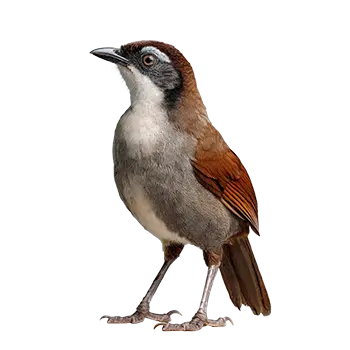

Laughing Thrushes are true omnivores whose wild diet spans a remarkably broad range of food sources. In their native habitats across South and Southeast Asia, these birds spend the majority of their active hours foraging through leaf litter, underbrush, and low canopy for invertebrates, fallen fruit, and the occasional small vertebrate. Replicating this dietary breadth in captivity is the central challenge of Laughing Thrush nutrition, and the consequences of falling short are measurable in feather quality, reproductive success, and overall vitality.
The insect component of the diet is non-negotiable. Unlike seed-eating species that can thrive on formulated pellets alone, Laughing Thrushes are physiologically adapted to derive a substantial portion of their protein and fat from animal sources. Chitin from insect exoskeletons provides fiber that supports digestive motility, while the amino acid profile of whole insects differs meaningfully from plant-based protein sources. A Laughing Thrush maintained on a diet without adequate insect protein will often develop dull plumage, reduced vocal activity, and a general lethargy that signals nutritional insufficiency.
Fruit and berries constitute the second dietary pillar. Wild Laughing Thrushes are enthusiastic frugivores that seek out ripe and overripe fruit throughout the day. The natural sugars in fresh fruit provide quick energy for their high-activity lifestyle, while the pigments and antioxidants in deeply colored berries and tropical fruits contribute to feather pigmentation and immune function. A diet that neglects the fruit component tends to produce birds that look washed out and lack the vibrancy of well-fed individuals.
Vitamin and mineral balance requires deliberate planning rather than reliance on any single food source. Calcium-to-phosphorus ratios are a particular concern, as insect-heavy diets tend to skew toward excess phosphorus unless corrected with calcium supplementation or calcium-rich food items. Iron storage disease is another consideration for softbill species, making it important to monitor iron intake and avoid foods or supplements with unnecessarily high iron content. A varied diet built from quality commercial softbill food, live insects, and fresh produce provides the best foundation for meeting these complex requirements.