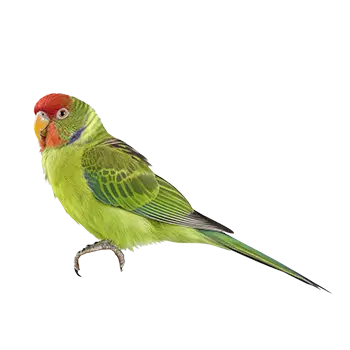

Kakariki are among the most playful and physically active parakeets in aviculture, and their play style reflects their natural foraging and exploratory behaviors. In the wild, these birds spend hours on the forest floor digging through leaf litter, tearing apart bark, and investigating crevices for food. This translates directly into captive play preferences — Kakariki are drawn to toys they can shred, dismantle, dig through, and manipulate with their feet and beaks.
Unlike many parrot species that engage with toys primarily through beak work, Kakariki are remarkably foot-oriented. They frequently hold objects, flip items over, and use their feet to manipulate small parts with surprising dexterity. This foot play is a distinctive characteristic that should influence toy selection — look for items with components small enough to grip, varied textures to explore, and parts that can be moved, turned, or repositioned.
Their curiosity is relentless and sometimes mischievous. A Kakariki will investigate every new object in its environment within minutes, often with an intensity that leads to rapid destruction of less durable toys. This is not a design flaw in the bird — it is a feature. Destructible toys serve an essential psychological function by providing an outlet for natural behaviors that would otherwise be directed at cage fixtures, feathers, or the bird's own skin.
Because of their high activity level, Kakariki can become bored and frustrated quickly if their environment remains static. Rotating toys on a weekly or biweekly basis keeps the enclosure feeling novel and engaging. You do not necessarily need to purchase new toys constantly — simply removing an item for a few weeks and reintroducing it later can renew the bird's interest entirely.