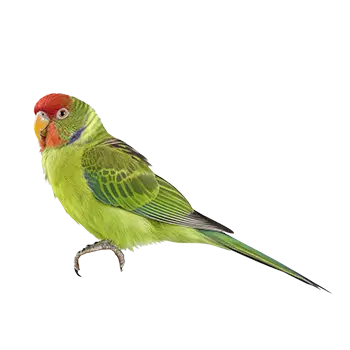

Kakariki are among the most physically active parakeet species kept in captivity, and their housing must reflect that energy. These birds spend much of their day hopping, climbing, and exploring every surface within reach. A cage that might seem adequate for a similarly sized but more sedentary species will feel cramped and restrictive for a Kakariki, leading to stress behaviors, feather issues, and diminished quality of life.
The minimum recommended cage size for a single Kakariki is approximately 24 inches long by 18 inches wide by 24 inches tall, though larger is always better. Flight cages that prioritize horizontal length over height are particularly well suited, as Kakariki tend to move laterally rather than climbing straight up and down. A cage measuring 36 inches or more in length allows the bird to make short flights between perches, which is essential for physical fitness and mental well-being.
Bar spacing is a critical safety consideration. Kakariki are small-bodied birds with relatively slender heads, and they can squeeze through gaps that would contain a larger parrot. Bar spacing should not exceed half an inch to prevent escape or injury. Horizontal bars on at least two sides of the cage provide climbing surfaces that Kakariki use constantly, turning the cage walls into functional living space rather than mere boundaries.
For keepers with the space and resources, an indoor aviary or dedicated bird room represents the gold standard in Kakariki housing. These setups allow full flight, natural foraging behavior, and social interaction in a way that even the largest cage cannot replicate. An aviary measuring four feet or more in length provides room for meaningful flight exercise and can be furnished with natural branches and enrichment to simulate a more naturalistic environment.