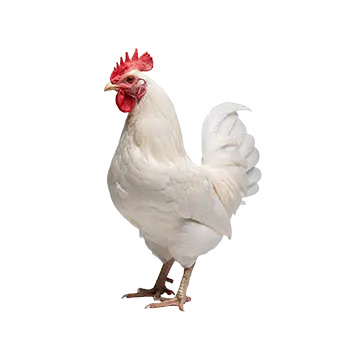

Japanese Bantams are a true bantam breed, meaning there is no large-fowl counterpart from which they were miniaturized. Their small body size, characteristically short legs, and large upright tail create a metabolic profile that differs meaningfully from standard-sized chickens. Caloric requirements are lower in absolute terms, but the energy density of their feed must be carefully managed because these birds burn calories rapidly to maintain body temperature, particularly in cooler climates. An adult Japanese Bantam weighing roughly one to one and a half pounds requires approximately seventy to eighty percent of the feed volume consumed by a bird twice its size, which means nutrient concentration per ounce of feed matters more than with larger breeds.
Protein is the single most important macronutrient to get right across the life stages of a Japanese Bantam. Chicks require a starter feed with twenty to twenty-two percent protein to support rapid feather development and skeletal growth during the first six to eight weeks. Once birds transition to a grower formula, protein can drop to around sixteen to eighteen percent, and laying hens need a layer feed offering sixteen percent protein alongside elevated calcium. Roosters and non-laying hens maintained on layer feed long-term risk kidney strain from excess calcium, so a general maintenance or all-flock formula at around sixteen percent protein with supplemental oyster shell offered on the side is often the more prudent approach in mixed flocks.
Calcium and phosphorus balance is critical for hens that are laying, even though Japanese Bantams are not prolific egg producers. Their small eggs still demand substantial calcium relative to their body weight, and a deficiency manifests quickly as thin-shelled or shell-less eggs, lethargy, and in severe cases, egg binding. Layer feeds typically contain three and a half to four percent calcium, but free-choice oyster shell should always be available so that individual hens can self-regulate their intake based on their own laying cycle and metabolic needs.
Because Japanese Bantams are kept primarily as ornamental and exhibition birds, feather quality carries outsized importance. The breed's plumage, including the dramatic tail carriage and clean leg feathering, depends on adequate methionine and other sulfur-containing amino acids. Feeds formulated for show poultry or game birds often have slightly elevated methionine levels compared to standard layer rations, and this can make a noticeable difference in feather sheen, structure, and molt recovery.