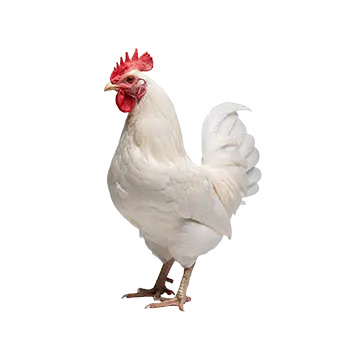

Japanese Bantams are among the smallest of all chicken breeds, and their housing requirements reflect both their diminutive stature and their ornamental heritage. The breed's extremely short legs, large upright tail, and proud carriage demand a living environment that protects delicate plumage from mud, moisture, and rough surfaces while providing adequate space for natural behaviors. Unlike hardy dual-purpose breeds that tolerate a wide range of coop conditions, Japanese Bantams are more sensitive to cold, dampness, and drafts, which means their housing must be designed with greater attention to climate control and environmental quality.
The minimum coop space recommended for Japanese Bantams is two square feet per bird for the enclosed sleeping area, though three to four square feet per bird is preferable and results in noticeably calmer flock dynamics. Despite their small body size, these birds carry proportionally large tails that require clearance, and overcrowding leads to feather damage from contact with walls, other birds, and fixtures. Exhibition keepers who maintain birds in show condition often house them at even lower densities or in individual breeding pens to preserve plumage integrity in the weeks leading up to competition.
The outdoor run should provide a minimum of eight to ten square feet per bird, fully enclosed on all sides including overhead. Japanese Bantams are poor fliers compared to many bantam breeds, owing to their short wings and heavy tail, but they are also exceptionally vulnerable to aerial predators because of their small size and ground-level foraging habits. A covered run is not optional for this breed; it is a fundamental safety requirement. The run floor should be well-drained and ideally covered with a material that dries quickly, since wet conditions degrade foot health and soil tail feathers that trail near the ground.
Climate considerations are particularly important because Japanese Bantams have less body mass to generate and retain heat than standard-sized chickens. Their large single combs are susceptible to frostbite in freezing temperatures, and their short legs position their bodies closer to cold ground surfaces. In regions that experience harsh winters, the coop must be insulated or weatherproofed sufficiently to keep interior temperatures above freezing, and supplemental heat may be necessary during extreme cold snaps, particularly for single birds or very small groups that cannot generate enough collective body warmth.