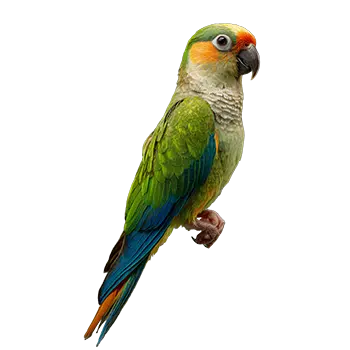

The Half-Moon Conure is a small but highly active parrot that requires substantially more cage space than its nine-to-ten-inch body length might suggest. These birds are energetic fliers and enthusiastic climbers, and a cramped cage leads to muscle atrophy, feather-destructive behaviors, and psychological stress that manifests as screaming or aggression. The minimum recommended cage size for a single Half-Moon Conure is twenty-four inches wide by twenty-four inches deep by thirty inches tall, but experienced owners and avian veterinarians strongly advocate for larger enclosures whenever space and budget permit.
Width and depth matter more than height for this species. Half-Moon Conures fly horizontally rather than vertically, and a cage that prioritizes vertical height at the expense of horizontal floor space forces the bird to climb rather than fly between perches. A flight cage measuring thirty-six inches wide by twenty-four inches deep by thirty-six inches tall provides enough room for short flight hops and multiple activity stations at different heights. Birds housed in larger enclosures consistently show better feather condition, more natural behavior patterns, and fewer stress-related health problems than those kept in minimum-sized cages.
For owners with the space to accommodate one, an indoor aviary or dedicated bird room transforms the housing experience entirely. A walk-in flight enclosure four to six feet in length allows genuine sustained flight, which is the single most beneficial form of exercise for any captive parrot. Aviaries constructed from welded mesh panels on powder-coated steel frames are available in modular configurations that can be assembled to fit specific rooms. Even a repurposed closet or section of a room enclosed with appropriate mesh can serve as an aviary if ventilation and lighting are adequate.
Housing for pairs or small groups requires proportionally more space. Two Half-Moon Conures housed together need a minimum enclosure roughly fifty percent larger than what a single bird requires, with multiple feeding stations and perching options distributed so that a subordinate bird can maintain comfortable distance from a dominant cagemate. Breeding pairs in particular benefit from an enclosure large enough to accommodate a nest box without significantly reducing the available living space.